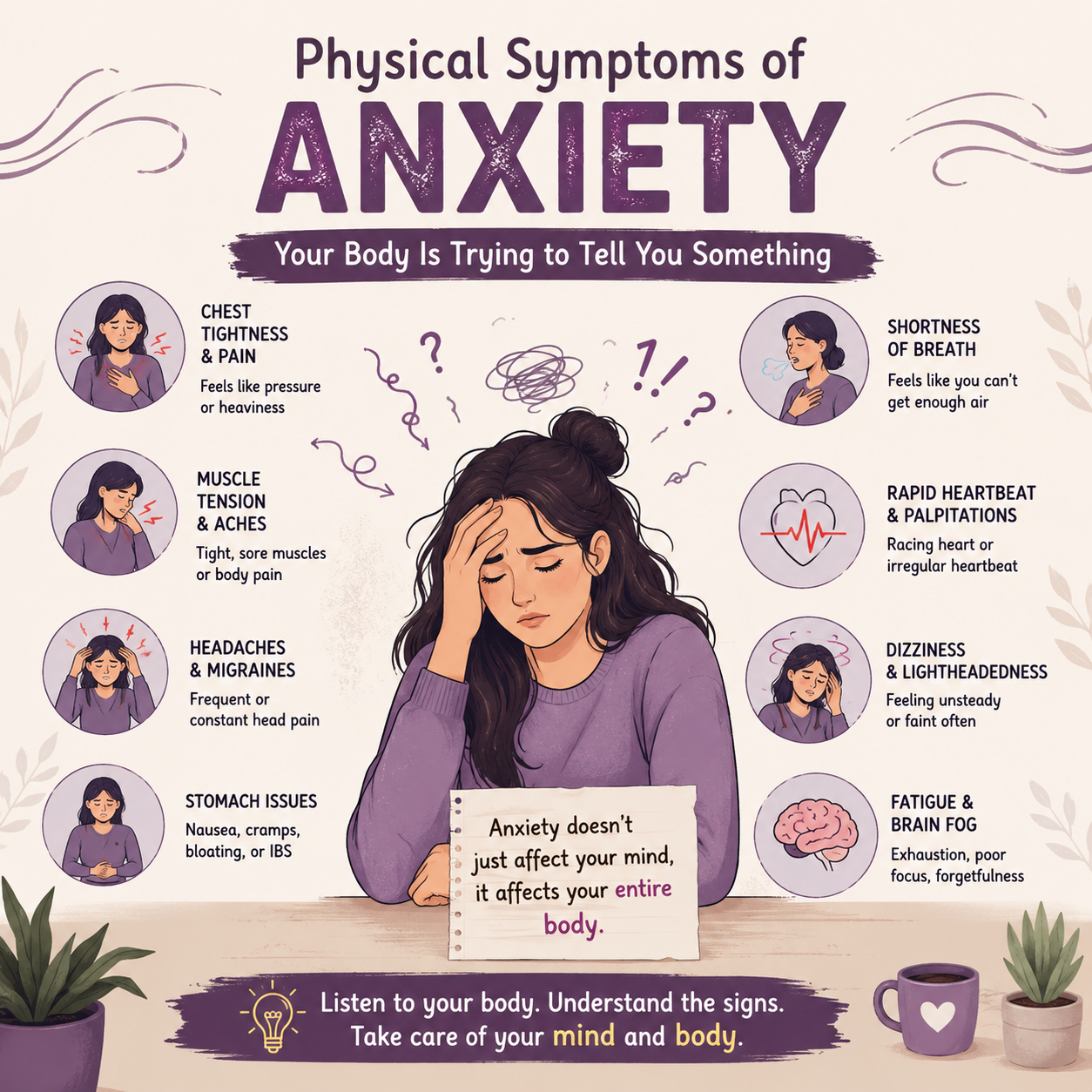
You’ve had chest pain that every doctor says is “nothing.” You get headaches that appear from nowhere. Your muscles tighten until they spasm. You can’t catch a full breath. You forget things constantly and can’t concentrate for more than two minutes. You’ve spent years treating these as separate physical problems. But what if they’re all one thing? What if your body has been trying to tell you something your mind refuses to hear? This is the complete, science-backed guide to the physical symptoms of anxiety — what they are, why they happen, and what to actually do about them.
| Updated: August 2026 | 20 Min Read | Anxiety & Psychology | Fully Researched |
Anxiety is not just a feeling in your head. It is a full-body physiological event triggered by your nervous system. The physical symptoms it produces are real, measurable, and often mistaken for unrelated health problems — sometimes for years. Understanding the connection between anxiety and physical symptoms is one of the most important things you can do for your health.
Here is something that changes the way you understand your own health: anxiety is not primarily a psychological experience. It is a physiological one. When your anxiety system activates — whether in response to a genuine threat, a perceived threat, or for no consciously identifiable reason at all — it triggers a cascade of real, physical, measurable changes throughout your body. Changes that produce symptoms. Symptoms that feel exactly like medical problems, because in a very real sense they are medical problems, just ones with a psychological root rather than a structural one.
The physical symptoms of anxiety send millions of people to emergency rooms, specialist clinics, and diagnostic tests every year. Cardiologists see patients with chest pain that turns out not to be cardiac. Neurologists see patients with headaches that have no structural cause. Gastroenterologists see patients with digestive problems that don’t respond to any gut-specific treatment. Pulmonologists see patients whose shortness of breath has no respiratory origin. In many of these cases — not all, but many — the actual cause is anxiety that has never been identified or treated.
This is not in your head. The pain in your chest is real. The tension in your muscles is real. The shortness of breath is real. The inability to concentrate is real. What this article will show you is that these real, physical experiences have a specific biological explanation rooted in anxiety — and that understanding that explanation is the first step toward actually resolving them.
☰ TABLE OF CONTENTS
- Why Anxiety Causes Physical Symptoms: The Neuroscience
- The Fight-or-Flight Response and Your Body
- Chest Pain and Heart Palpitations: The Most Frightening Anxiety Symptom
- Shortness of Breath: When Anxiety Steals Your Air
- Muscle Tension, Spasms, and Chronic Pain
- Headaches and Migraines Caused by Anxiety
- Digestive Problems: The Gut-Brain Connection
- Concentration Problems: Why Anxiety Breaks Your Focus
- Anger, Irritability, and Emotional Dysregulation
- Fatigue That Sleep Doesn’t Fix
- The Anxiety-Pain Cycle: Why It Gets Worse Without Help
- How to Tell If Your Physical Symptoms Are Anxiety
- The Science-Backed Treatment Approaches That Work
- When to See a Doctor First
- Frequently Asked Questions
1. Why Anxiety Causes Physical Symptoms: The Neuroscience Explained Simply
To understand the physical symptoms of anxiety, you need to understand what anxiety actually is at the biological level. Anxiety is your brain’s threat-detection system firing — specifically, a structure called the amygdala sending an emergency signal to the rest of your body through the autonomic nervous system and the hypothalamic-pituitary-adrenal (HPA) axis.
When the amygdala detects what it perceives as a threat — whether that threat is a car swerving toward you at 60 mph, an email from your boss, a social situation, or simply a vague feeling of wrongness that you can’t identify — it triggers the release of adrenaline (epinephrine) and cortisol into your bloodstream within milliseconds. These hormones then produce a specific set of physical changes across your entire body, designed by evolution to prepare you to fight a predator or run from one.
The critical thing to understand is that this system cannot distinguish between a physical threat and a psychological one. Your body responds to the thought of an embarrassing social situation with the same physiological cascade it would use for a tiger attack. The symptoms you experience are not imaginary. They are the direct, intended product of a survival system running in a context it was not designed for — and when anxiety is chronic, those symptoms are present at a low level almost all the time.
| 40M Americans affected by anxiety disorders annually |
77% Of anxiety sufferers report regular physical symptoms |
7yr Average time between onset and diagnosis |
1st Most common mental health condition globally (WHO) |
2. The Fight-or-Flight Response: What Happens in Your Body Every Time Anxiety Fires
The fight-or-flight response is the biological engine behind every physical symptom of anxiety you have ever experienced. Understanding it in detail transforms your relationship with those symptoms — because instead of mysterious, frightening, unexplained physical events, they become recognizable responses from a system that is trying, clumsily but earnestly, to protect you.
Within milliseconds of the amygdala detecting a threat, your adrenal glands release adrenaline into your bloodstream. This triggers a remarkable chain of simultaneous physiological changes. Your heart rate increases dramatically — sometimes doubling within seconds — to pump more oxygenated blood to your muscles. Your breathing rate increases and shifts from your diaphragm to your chest — taking in more oxygen faster but also making each breath feel shallower and less satisfying. Your muscles tense throughout your body — particularly in your shoulders, neck, jaw, and legs — preparing for physical action. Your digestive system slows or stops as blood is redirected away from non-essential functions. Your pupils dilate. Your skin may sweat. Your pain sensitivity decreases temporarily.
All of these changes are perfectly designed for their evolutionary purpose. They are terrible for anything else. When anxiety is chronic — when the fight-or-flight system fires repeatedly or stays partially activated most of the time — these changes become chronic too. Chronic muscle tension becomes chronic pain. Chronic shallow breathing becomes chronic breathlessness. Chronic heart rate elevation becomes chronic palpitations. The body gets stuck in emergency mode and the symptoms are what that looks like over time.
“Anxiety is a normal, necessary, life-preserving system. The problem is not that it exists. The problem is that for many people, it cannot turn off.”
— Dr. Joseph LeDoux, neuroscientist and anxiety researcher, New York University Center for Neural Science
3. Chest Pain and Heart Palpitations: The Most Frightening Physical Symptom of Anxiety
Chest pain and palpitations are among the most common physical symptoms of anxiety — and among the most frightening, because they feel exactly like heart problems. Anxiety-related chest pain is real pain caused by muscle tension, hyperventilation, and temporary changes in blood flow. It is not dangerous. But it deserves to be understood and treated, not just dismissed.
Chest pain and heart palpitations are the physical symptoms of anxiety most likely to send someone to an emergency room. And understandably so: when your chest tightens, your heart races or skips beats, and you feel like you cannot breathe, your brain immediately goes to the worst explanation. Heart attack. Cardiac event. Something catastrophic. The terror of that thought then activates the anxiety system further, producing more adrenaline, which makes the symptoms worse, which makes the terror worse. This is the anxiety spiral at its most visceral.
Anxiety-related chest pain has three primary mechanisms. First, the muscles of the chest wall — particularly the intercostal muscles between the ribs — tense under anxiety and can produce genuine sharp, aching, or pressure-type pain that is indistinguishable from cardiac pain to the person experiencing it. Second, hyperventilation — the rapid, shallow breathing that accompanies anxiety — causes carbon dioxide levels in the blood to drop, which produces chest tightness, tingling in the extremities, and dizziness. Third, adrenaline causes the heart to beat faster and sometimes irregularly — producing palpitations that can feel alarming even when the cardiac system is perfectly healthy.
If you have chest pain and have not been evaluated by a doctor, please do so first — chest pain always warrants medical assessment to rule out cardiac causes. But if you have been evaluated, had tests done, and been told your heart is fine — and the chest pain continues — anxiety is one of the most common explanations for exactly this clinical picture.
4. Shortness of Breath: When Anxiety Literally Steals Your Air
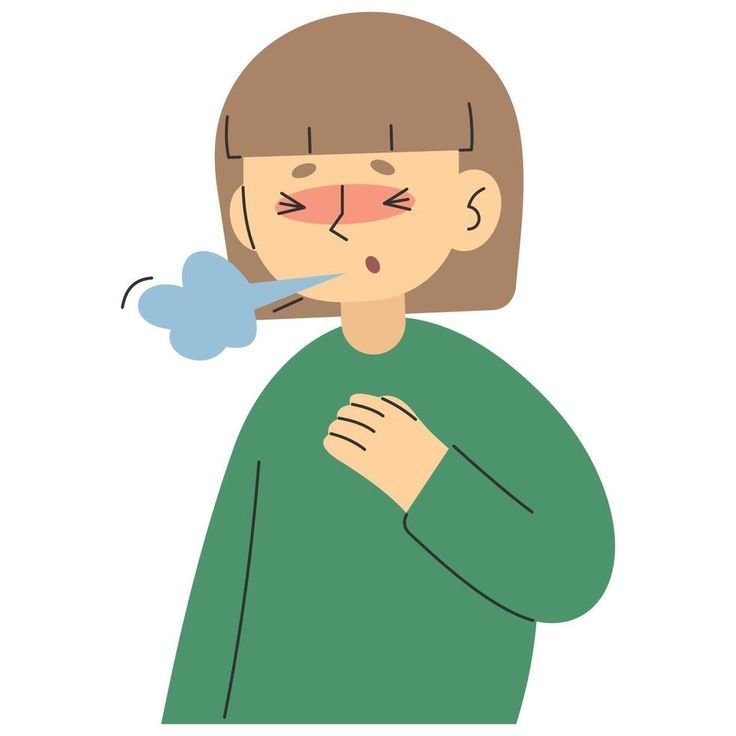
Shortness of breath — the feeling that you cannot get a full, satisfying breath, that each inhalation leaves you feeling unsatisfied, that you need to take bigger and bigger breaths to feel okay — is one of the most common and most misunderstood physical symptoms of anxiety. People who experience it often assume they have asthma, a breathing condition, or some form of respiratory problem. Many have inhalers they don’t actually need. Many have been told there is nothing wrong with their lungs and felt dismissed by that answer because they know they cannot breathe properly.
The mechanism behind anxiety-related breathing difficulty is well-understood. When anxiety activates, breathing shifts from diaphragmatic (belly) breathing to chest breathing — faster, shallower breaths that take in more air but less efficiently. This pattern, when sustained, causes hyperventilation: the over-breathing of oxygen relative to carbon dioxide. Despite the name, hyperventilation does not mean breathing too little — it means breathing too much. And paradoxically, breathing too much creates the sensation of not being able to breathe enough, because the drop in CO2 causes the blood vessels to constrict and makes the brain interpret the situation as oxygen deprivation.
The treatment for anxiety-related breathing difficulty is the opposite of what instinct suggests. Instead of taking bigger breaths, the most effective approach is to slow your breathing dramatically — breathing out for longer than you breathe in, which raises CO2 levels back to normal and reverses the hyperventilation spiral. Inhale for 4 counts. Hold for 2. Exhale slowly for 6. Repeat for 5 minutes. This physiologically interrupts the anxiety-breathing cycle in a way that thinking about calming down never can.
5. Muscle Tension, Spasms, and Chronic Pain: When Anxiety Lives in Your Body
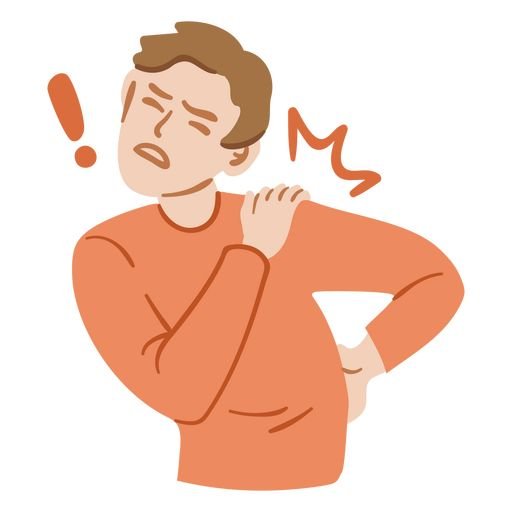
Muscle tension is one of the most pervasive and least recognized physical symptoms of anxiety. When anxiety keeps your fight-or-flight system partially activated, your muscles stay in a state of readiness — tensed for action that never comes. Over time, this produces chronic pain, stiffness, spasms, and the particular kind of tension headache that sits at the base of the skull.
Muscle tension is perhaps the most widespread and most chronic of all the physical symptoms of anxiety. When the fight-or-flight response fires, every major muscle group in your body tenses — ready for immediate physical action. When anxiety is chronic, this tension becomes a near-permanent state. Your muscles are always slightly clenched, always slightly ready, always holding a posture of braced alertness that they never get to release.
The areas most commonly affected are the neck, shoulders, jaw, upper back, and the base of the skull. Many people with chronic anxiety carry extraordinary amounts of tension in these areas without being aware of it — they have lived with it so long that they no longer notice it unless someone points it out or they experience a period of genuine relaxation and feel the contrast. This chronic muscle tension produces a specific constellation of symptoms: tension headaches that sit at the back of the head and neck, jaw pain and grinding (bruxism), shoulder and upper back pain that doesn’t respond to stretching, and muscle spasms that seem to appear without obvious physical cause.
There is a somatic therapy concept that has gained significant research support: the idea that the body “holds” unprocessed anxiety and trauma in patterns of chronic muscle tension. This is not mystical. It is the neurophysiological reality that the autonomic nervous system stores threat responses in postural and muscular patterns that persist until the underlying activation is resolved. Your tight shoulders are not just tight. They may be anxiety you have never processed, held in your body for years.
■ WHERE ANXIETY TENSION LIVES IN YOUR BODY — THE MOST COMMON SITES
► Neck and shoulders — The most common site; produces stiffness, reduced range of motion, and tension headaches
► Jaw and temples — Clenching and grinding (bruxism); often causes earaches, facial pain, and dental problems
► Upper back between shoulder blades — Chronic aching that doesn’t respond to simple stretching
► Base of skull (occipital region) — Characteristic location of anxiety-related tension headaches
► Abdomen and diaphragm — Produces nausea, “butterflies,” and difficulty taking full breaths
► Chest wall muscles — Produces the chest tightness and pain that mimics cardiac symptoms
► Legs and feet — Restlessness, jitteriness, the “can’t sit still” feeling of anxious energy with nowhere to go
6. Headaches and Migraines: The Anxiety-Pain Connection in Your Head
Headaches are among the most commonly reported physical symptoms of anxiety, and the relationship between anxiety and head pain runs in multiple directions. Anxiety causes headaches. Headaches cause anxiety. And the anticipatory fear of getting a headache can itself trigger anxiety — which then causes the headache you were dreading. Understanding the mechanisms breaks this cycle.
Tension headaches are the most direct anxiety-related headache type. They are caused by the sustained muscle tension in the neck, scalp, and shoulder muscles that anxiety produces. They typically feel like a band of pressure around the head, or a weight pressing down on the skull, or tightness at the base of the neck. Unlike migraines, they are not usually accompanied by nausea or light sensitivity, and they tend to be bilateral (on both sides of the head). They can last hours or days and often worsen as the day progresses and anxiety accumulates.
Anxiety can also trigger migraines in people who are genetically susceptible to them. The mechanism involves the cortisol-mediated effects on the trigeminal nerve and the blood vessels of the brain — stress hormones can trigger the neurological cascade that produces a migraine in predisposed individuals. Research consistently shows that people with anxiety disorders have higher rates of migraine than the general population, and that anxiety treatment reduces migraine frequency.
7. Digestive Problems: The Gut-Brain Connection That Makes Anxiety a Full-Body Experience
The relationship between anxiety and the digestive system is one of the most fascinating and most clinically significant connections in all of medicine. Your gut has its own extensive nervous system — the enteric nervous system, sometimes called the “second brain” — containing approximately 500 million neurons and producing around 95% of the body’s serotonin. The gut and the brain communicate constantly through the vagus nerve and the bloodstream, and this bidirectional communication means that physical symptoms of anxiety in the gut are among the most reliable and the most disruptive.
When anxiety activates the fight-or-flight response, digestion is one of the first systems to be deprioritized. Blood flow is redirected from the digestive organs to the muscles. Digestive motility (the rhythmic contractions that move food through the system) can either accelerate dramatically — producing diarrhea — or slow dramatically — producing constipation and bloating. Gastric acid production changes. The gut microbiome is affected by stress hormones. Nausea is produced by the vagus nerve response to anxiety activation.
Irritable Bowel Syndrome (IBS) — a condition characterized by abdominal pain, bloating, and alternating constipation and diarrhea — has a remarkably high rate of co-occurrence with anxiety disorders. Research suggests that up to 60% of IBS sufferers have comorbid anxiety. Many are treated for years for IBS without the anxiety being identified or addressed. When the anxiety is treated, the digestive symptoms frequently improve significantly — because the underlying driver of the gut disturbance is the nervous system state, not the gut itself.
8. Concentration Problems: Why Anxiety Breaks Your Focus and Memory
Anxiety does not just affect how you feel. It directly impairs cognitive function — particularly the working memory and sustained attention processes managed by the prefrontal cortex. When the amygdala is hyperactive and flooding the brain with threat-signals, the prefrontal cortex loses resources and the ability to concentrate deteriorates. This is not a character flaw. It is neuroscience.
One of the most disruptive and least-discussed physical symptoms of anxiety is its effect on cognitive function — specifically on concentration, working memory, and the ability to sustain attention. People with anxiety often describe feeling like their brain won’t work properly. They read the same paragraph four times without retaining it. They lose their train of thought mid-sentence. They struggle to make decisions. They forget things they said or did minutes ago. They sit down to work and cannot focus for more than two minutes.
The neurological mechanism is the “amygdala hijack” — a term coined by Daniel Goleman based on the research of Joseph LeDoux. When the amygdala detects threat and fires, it essentially competes with the prefrontal cortex for neural resources. The prefrontal cortex — responsible for sustained attention, working memory, rational thought, and decision-making — loses resources and its function degrades. Your attention system becomes hyper-focused on scanning the environment for threat and cannot allocate resources to the task in front of you.
Additionally, elevated cortisol from chronic anxiety directly suppresses hippocampal function — impairing both the encoding of new memories and the retrieval of existing ones. This is why people with chronic anxiety frequently report feeling like they have early cognitive decline — their memory actually is functioning worse than it should, not because anything is wrong with their brain structurally, but because the anxiety chemistry is actively suppressing the neural systems responsible for memory and focus. This is entirely reversible when the anxiety is properly addressed.
9. Anger and Irritability: The Anxiety Symptom That Damages Relationships
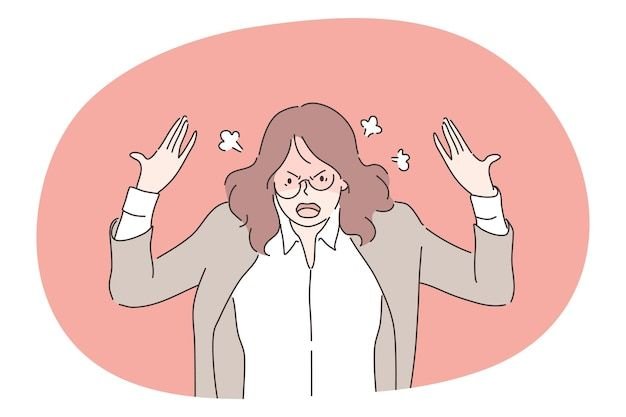
This is the anxiety symptom that most surprises people when they first hear it — and the one that causes the most damage to relationships before it is understood. Irritability and anger as physical symptoms of anxiety are not commonly discussed in mainstream conversations about anxiety, which tend to focus on worry and fear. But they are well-documented clinically and incredibly common.
Anxiety and anger share the same biological infrastructure. Both are mediated by the amygdala. Both involve adrenaline release. Both are fight-or-flight responses — anxiety being the “flight” side of that equation and anger being the “fight” side. For many people, anxiety is not primarily experienced as fear and worry but as a constant low-grade irritability and an exaggerated reactive anger to minor provocations. The anxious nervous system is already running hot — already primed for threat — and small annoyances trigger responses that are disproportionate because they land on a system that is already near its limit.
People who experience anxiety primarily as irritability and anger are often the last to be diagnosed — and the most likely to be told they have a “bad temper” or “anger management issues” rather than anxiety. They may spend years in anger management programs that help them manage the expression of the anger but never address the underlying anxiety that is generating it. If you recognize yourself in this description — if your primary experience is that small things make you disproportionately furious, and you feel like you are always running two degrees hotter than everyone else — anxiety deserves serious consideration as the underlying cause.
“Many people with anxiety disorders never identify as anxious. They just feel perpetually on edge, easily overwhelmed, and quicker to anger than they think they should be. That IS anxiety. The body just found a different exit for the same energy.”
— Dr. Claire Weekes, pioneering anxiety researcher and author of Hope and Help for Your Nerves
10. Anxiety Fatigue: The Exhaustion That Sleep Cannot Fix
Profound, persistent fatigue is one of the most underrecognized physical symptoms of anxiety. People associate anxiety with being wired, hyperactive, unable to sleep. And for many people, anxiety does produce exactly that. But it also — particularly in the context of chronic, long-standing anxiety — produces profound, bone-deep exhaustion that doesn’t respond to sleep.
The explanation is metabolic. Running your body’s alert system continuously is energetically expensive. The constant muscle tension consumes energy. The sustained elevated heart rate consumes energy. The chronic cortisol production and its downstream effects consume energy. The hypervigilant scanning of the environment for threats consumes cognitive energy. People with chronic anxiety are, in a very real metabolic sense, running a significant portion of their physiological capacity in emergency mode constantly — and the cost of that is fatigue that accumulates and does not resolve with ordinary rest.
Additionally, anxiety frequently disrupts sleep even when the person manages to fall asleep. Chronic cortisol elevation suppresses the production of melatonin and disrupts the deep sleep stages during which genuine physical and neurological restoration occurs. You may sleep 8 hours and wake feeling unrestored because the architecture of your sleep — the proportion of deep sleep and REM sleep — has been disturbed by the anxiety chemistry running in the background.
11. The Anxiety-Physical Symptom Cycle: Why It Gets Worse Without Intervention
The most important thing to understand about physical symptoms of anxiety is that they do not simply occur in parallel with anxiety — they actively feed back into the anxiety itself, creating a cycle that intensifies over time without intervention.
Here is how the cycle works: Anxiety produces a physical symptom — chest pain, shortness of breath, a racing heart. The brain perceives this physical symptom as evidence of something wrong — which triggers further anxiety about the symptom. The additional anxiety produces more adrenaline, which intensifies the physical symptom. The intensified physical symptom triggers more alarm. And so the spiral turns, each revolution amplifying the one before.
This cycle is particularly vicious with cardiac and breathing symptoms — which is why anxiety-related chest pain so frequently presents at emergency rooms, and why people who have anxiety-related heart palpitations often develop health anxiety as a secondary condition. But the same cycle runs with every physical symptom. People with anxiety-related headaches develop anxiety about getting headaches. People with anxiety-related digestive problems develop anxiety about food, restaurants, and leaving home. Breaking the cycle requires addressing the anxiety, not just the symptom. Treating the symptom in isolation leaves the generator running.
12. How to Tell If Your Physical Symptoms Are Caused by Anxiety
■ SIGNS YOUR PHYSICAL SYMPTOMS MAY BE ANXIETY-RELATED
► Medical tests have come back normal despite persistent symptoms
► Symptoms worsen under stress or in situations that feel threatening or pressured
► Symptoms improve when you are relaxed, on holiday, or in situations you feel safe
► Symptoms vary in intensity throughout the day — often worse in mornings or at the end of demanding days
► You experience multiple apparently unrelated symptoms simultaneously (chest pain + headache + digestive issues + fatigue)
► Symptoms began or worsened during a particularly stressful period in your life
► You have a history of worry, perfectionism, or feeling “on edge” much of the time
► You have a family history of anxiety or depression
► Thinking about the symptoms makes them worse immediately
► You feel temporary relief after reassurance but the symptoms return
Important: These signs suggest anxiety as a possible contributor but do not rule out physical causes. Always have persistent or severe physical symptoms medically evaluated first — particularly chest pain, breathing difficulty, or any symptom that is new, severe, or getting rapidly worse. The goal is not to dismiss physical symptoms as “just anxiety” but to ensure that anxiety is part of the investigation when it has been overlooked.
13. The Science-Backed Treatments That Work for Anxiety and Its Physical Symptoms
The research on treating physical symptoms of anxiety is extensive and clear: the most effective approaches address the anxiety directly rather than each physical symptom in isolation. Here are the interventions with the strongest evidence base.
✓ Cognitive Behavioral Therapy (CBT)
The most extensively researched psychological treatment for anxiety. CBT works by identifying and restructuring the thought patterns that trigger anxiety responses, and by using behavioral experiments to break the avoidance cycles that maintain anxiety. Meta-analyses consistently show that CBT for anxiety disorders produces lasting improvement in both psychological and physical symptoms. Typically 8–20 sessions with a trained therapist. Also available in self-guided formats and apps for mild-to-moderate anxiety.
✓ Diaphragmatic Breathing and Controlled Breathing
Slow, diaphragmatic breathing directly activates the parasympathetic nervous system — the “rest and digest” counterpart to the fight-or-flight response. Research shows that paced breathing at approximately 6 breaths per minute (5-second inhale, 5-second exhale) produces measurable reductions in cortisol, heart rate, and amygdala activity within minutes. This is one of the few anxiety interventions that works in real time during acute anxiety episodes. Daily practice for 10–15 minutes also produces cumulative baseline improvements in anxiety levels.
✓ Regular Aerobic Exercise
A 2023 meta-analysis in the British Journal of Sports Medicine found exercise to be 1.5 times more effective than medication or therapy for anxiety and depression. Aerobic exercise at moderate intensity (brisk walking, cycling, swimming) for 30 minutes, 3–5 times per week, produces significant and durable reductions in anxiety through multiple mechanisms: it burns off the adrenaline and muscle tension that anxiety produces, it increases BDNF (which promotes neuroplasticity), it regulates cortisol, and it improves sleep quality dramatically.
✓ Progressive Muscle Relaxation (PMR)
PMR is a specific technique for releasing the chronic muscle tension that anxiety produces. It involves systematically tensing and then releasing major muscle groups across the body, which teaches the nervous system what genuine relaxation feels like and builds the ability to access it voluntarily. Research shows PMR is particularly effective for the muscular and somatic physical symptoms of anxiety — tension headaches, muscle pain, jaw clenching, and generalized bodily tension.
✓ Medication When Appropriate
For moderate-to-severe anxiety, medication can be an important part of treatment — particularly in the initial period when symptoms are severe enough to prevent engagement with psychological treatments. SSRIs and SNRIs are the first-line pharmacological treatments for anxiety disorders and have strong evidence bases. Discussing medication with a GP or psychiatrist is worthwhile when anxiety is significantly affecting daily life. Medication works best in combination with therapy rather than as a standalone treatment.
14. Frequently Asked Questions About Physical Symptoms of Anxiety
❓ Can anxiety really cause physical pain?
Yes, absolutely and definitively. Anxiety causes real, physical pain through several documented mechanisms. Chronic muscle tension from sustained fight-or-flight activation produces genuine musculoskeletal pain, particularly in the neck, shoulders, back, and jaw. Hyperventilation produces chest tightness and pain. The neurological effects of chronic cortisol elevation can increase pain sensitivity through central sensitization — essentially turning the volume up on the pain processing system. Research consistently shows that anxiety disorders are associated with higher rates of chronic pain, and that treating the anxiety reduces the pain. The pain is not imagined. It is not psychosomatic in the dismissive sense. It is real pain with an anxiety-mediated mechanism.
❓ What are the most common physical symptoms of anxiety?
The most commonly reported physical symptoms of anxiety include: heart palpitations and racing heart; chest tightness or pain; shortness of breath or difficulty taking a full breath; muscle tension, particularly in the neck, shoulders, and jaw; tension headaches; digestive problems including nausea, IBS-like symptoms, and appetite changes; excessive sweating, particularly in the palms and underarms; dizziness or lightheadedness; trembling or shaking; difficulty concentrating and memory lapses; sleep disturbances; fatigue; and irritability or anger. Not everyone experiences all of these, and the specific presentation varies significantly between individuals.
❓ How do I know if my chest pain is anxiety or a heart problem?
If you have chest pain and have not been medically evaluated, please see a doctor — chest pain always requires cardiac assessment to rule out dangerous causes. If you have been evaluated and told your heart is healthy, the features that suggest anxiety rather than cardiac origin include: pain that worsens with stress or resolves with relaxation; pain that is accompanied by other anxiety symptoms like racing thoughts, breathing difficulty, or sweating; pain that varies throughout the day; pain in someone under 40 with no cardiac risk factors; and pain that has been present for years without any evidence of cardiac deterioration. Anxiety-related chest pain is typically sharp or squeezing, located in the chest wall rather than centrally, and often moves around. Cardiac pain typically radiates to the arm or jaw and is accompanied by specific EKG changes.
❓ Can anxiety cause shortness of breath even without a panic attack?
Yes. While breathing difficulty is a central feature of panic attacks, it also occurs as a chronic, low-level symptom in generalized anxiety. Chronic anxiety shifts breathing patterns toward shallow chest breathing rather than diaphragmatic breathing. This pattern, sustained over hours and days, produces a persistent feeling of not being able to get a full breath, of needing to sigh frequently, and of air hunger — the sensation that each breath doesn’t quite satisfy. This can be present all day long at low intensity without ever reaching panic attack levels. It is also extremely common in people who would not describe themselves as anxious but are carrying significant background stress.
❓ Why does anxiety cause muscle tension and pain?
Muscle tension is a direct product of the fight-or-flight response — when adrenaline is released, every major muscle group tenses in preparation for immediate physical action. In acute anxiety, this resolves when the threat passes. In chronic anxiety, the nervous system stays partially activated and the muscles stay partially tensed — continuously, often for months or years. This sustained low-level tension produces chronic pain in the most affected areas (typically neck, shoulders, jaw, and upper back), creates the conditions for muscle spasms, and contributes significantly to tension headaches. The tension is often so habitual that people are unaware of it. Progressive Muscle Relaxation (PMR) and body-scan meditation are particularly effective at helping people identify and release this stored tension.
❓ Will the physical symptoms of anxiety go away with treatment?
Yes, in the majority of cases, the physical symptoms of anxiety improve significantly and often resolve entirely when the underlying anxiety is properly treated. Research on CBT for anxiety consistently shows improvements not just in psychological symptoms but in physical symptoms including pain, digestive problems, and cardiovascular symptoms. Exercise reduces muscular tension and headache frequency. Breathing retraining resolves anxiety-related breathing difficulty in most people within weeks. The timeline varies — some symptoms improve quickly while others take months — but the overall trajectory for people who engage genuinely with anxiety treatment is significantly positive. The most important thing is addressing the anxiety itself rather than each physical symptom separately.
One More Thing Before You Go
If you have been suffering with physical symptoms that doctors keep telling you are “nothing,” or that you have been managing in isolation for years — please consider anxiety as a possible explanation that deserves proper investigation. Not because the symptoms are in your head. They are not in your head. They are very much in your body. But they may be in your body because of what is happening in your nervous system.
You deserve an explanation that actually fits your experience. You deserve a treatment that addresses the real cause rather than patching symptoms one by one. And you deserve to know that what you have been carrying — for however long you have been carrying it — has a name, a mechanism, and a path through it.
The body keeps the score. But the body can also heal. And understanding is where healing begins.
▪ RELATED MENTAL HEALTH ARTICLES
→ You’re Not Lazy. You’re Mentally Exhausted: The Complete Burnout Guide
→ How to Actually Stop Overthinking: The Science-Backed Guide
→ What Sleep Deprivation Actually Does to Your Brain
→ High-Functioning Anxiety: When You Look Fine But Feel Anything But
→ Panic Attack vs. Anxiety Attack: The Difference That Matters
▤ SOURCES & RESEARCH
▸ LeDoux, J.E. — The Emotional Brain: The Mysterious Underpinnings of Emotional Life (Simon & Schuster, 1996)
▸ Goleman, D. — Emotional Intelligence: Why It Can Matter More Than IQ (Bantam, 1995)
▸ Weekes, C. — Hope and Help for Your Nerves (Signet, 1969, reprinted 2021)
▸ Singh B. et al. — Physical activity interventions for depression and anxiety, British Journal of Sports Medicine (2023)
▸ Porges, S.W. — The Polyvagal Theory: Neurophysiological Foundations of Emotions (W.W. Norton, 2011)
▸ World Health Organization — Mental Health Report: Anxiety Disorders (2022)
▸ Anxiety and Depression Association of America (ADAA) — adaa.org — Physical symptoms resource library