What Is a Psychopath? A Clear Definition
The question “what is a psychopath?” is one of the most searched psychology queries worldwide, yet it remains deeply misunderstood by the general public.

A psychopath is an individual with a specific personality disorder characterized by a profound lack of empathy, absent guilt or remorse, superficial charm, manipulative behavior, and emotional shallowness, often masked by an appearance of normalcy or even exceptional social competence.
This is not “madness” in the traditional sense. Psychopaths are fully aware of reality. They understand the difference between right and wrong. They simply do not care. Their brains are wired differently, a fact confirmed by decades of neuroimaging research.
Key Point: Psychopathy is a neurological condition, not a choice. Brain scans consistently show structural and functional differences in psychopathic individuals compared to the general population.
Dr. Robert Hare, the world’s foremost authority on psychopathy, describes it this way:
“Psychopaths know the words but not the music. They can mimic emotions convincingly without actually experiencing them.”
This distinction is crucial. A psychopath possesses cognitive empathy (understanding what others feel) without affective empathy (actually sharing those feelings). They know you’re in pain. They understand why. They simply feel nothing about it.
The Clinical Framework
Psychopathy is not a formal diagnosis in the DSM-5 (Diagnostic and Statistical Manual of Mental Disorders). Instead, it falls under the broader umbrella of Antisocial Personality Disorder (ASPD). However, researchers universally agree that psychopathy is a distinct, more severe subset of ASPD.
Key distinctions:
- All psychopaths meet ASPD criteria
- Only 25-30% of ASPD patients qualify as psychopaths
- Psychopathy specifically requires the emotional/interpersonal deficits, not just antisocial behavior
- The PCL-R (Psychopathy Checklist-Revised) is the gold standard for assessment
Prevalence in the General Population
- 1-2% of the general population exhibits significant psychopathic traits
- 15-25% of incarcerated populations meet the clinical threshold
- 4-12% of corporate executives show elevated psychopathic traits
- Estimated male-to-female ratio: 3:1 (though female psychopathy is likely underdiagnosed)
The Neuroscience: How a Psychopath’s Brain Is Different
Understanding what is a psychopath at the biological level requires examining the brain. Modern neuroimaging has revealed consistent, measurable structural and functional differences in psychopathic brains.
1. The Amygdala: Emotional Processing Deficit
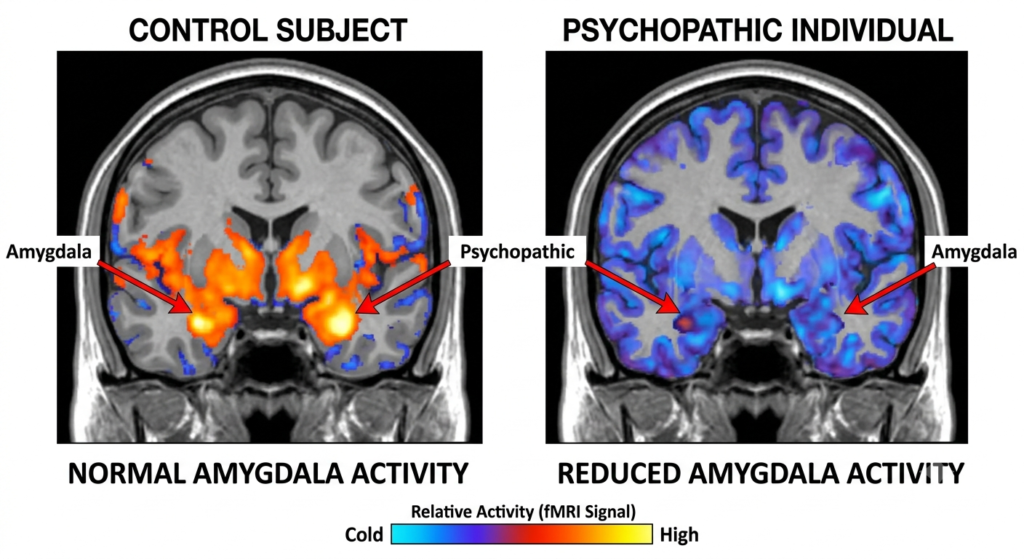
The amygdala is the brain’s emotional alarm system. It processes fear, empathy, and emotional memory. In psychopathic individuals:
- 18% reduction in grey matter volume (University of Wisconsin-Madison, 2012)
- Significantly reduced activation when viewing emotional stimuli
- 40-50% impairment in fear recognition tasks
- Nearly flat response to others’ distress signals
Clinical significance: This explains why psychopaths can witness suffering without any internal emotional response. The neural hardware for empathic distress is physically diminished.
2. The Ventromedial Prefrontal Cortex (vmPFC): Moral Decision-Making
The vmPFC integrates emotional information into decision-making. It’s essentially the brain’s moral compass. Research shows:
- Reduced structural connectivity between vmPFC and amygdala in psychopaths
- Impaired integration of emotional consequences into behavioral choices
- Weakened “stop signal” that normally prevents harmful actions
Research Insight: The connection between knowing something is wrong (cognitive) and feeling that it’s wrong (emotional) is physically weaker in psychopathic brains. They understand morality intellectually without experiencing moral emotions.
3. The Striatum: Reward Processing (2026 Discovery)
A groundbreaking May 2026 study from Nanyang Technological University (published in ScienceDaily) revealed:
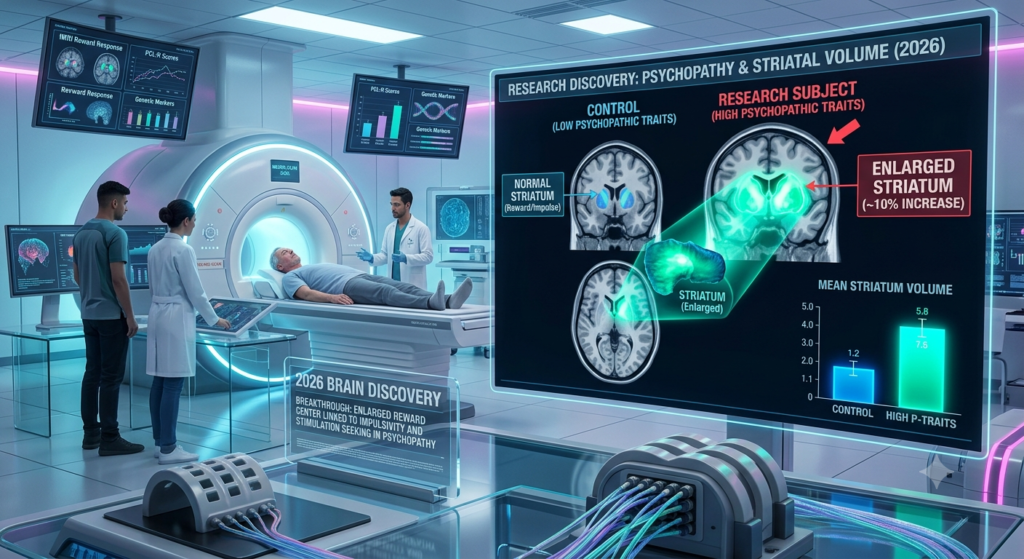
- Psychopathic individuals have a striatum that is approximately 10% larger than average
- The striatum governs reward, motivation, and decision-making
- This enlargement directly correlates with thrill-seeking behavior, impulsivity, and chronic need for stimulation
- The finding provides a biological explanation for why psychopaths are perpetually bored by normal life
Study parameters: 120 participants underwent psychological assessment and structural MRI scanning. The correlation between striatal volume and psychopathic trait scores was statistically significant.
4. White Matter Integrity (2025 Research)
Published in the European Archives of Psychiatry and Clinical Neuroscience (2025), a study of 39 psychopathic males found:
- Reduced white matter integrity between emotional and rational brain regions
- Poor inter-hemispheric communication
- Weakened neural pathways that normally coordinate emotion with behavior
5. The Paralimbic System: The Unified Theory
Dr. Kent Kiehl’s research at the Mind Research Network proposes that psychopathy results from dysfunction across the entire paralimbic system, a network including the amygdala, hippocampus, anterior cingulate cortex, and orbitofrontal cortex.
Rather than a single brain region being “broken,” psychopathy appears to involve a system-wide deficit in emotional processing circuitry.
The 20 Warning Signs of Psychopathy (PCL-R Breakdown)
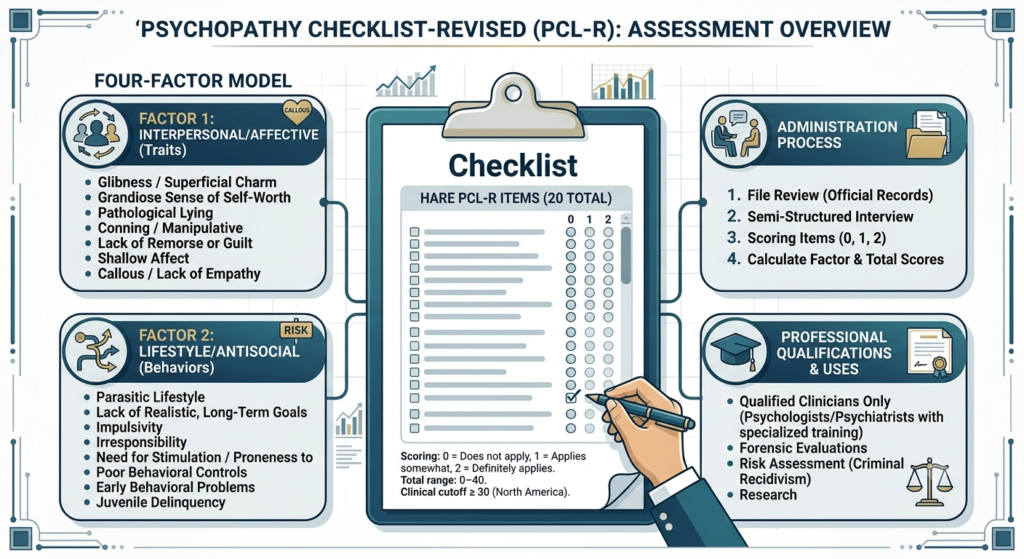
The Psychopathy Checklist-Revised (PCL-R), developed by Dr. Robert Hare in 1991, remains the international gold standard for psychopathy assessment. Understanding its 20 items provides the most scientifically validated answer to “what is a psychopath?“
Factor 1: Interpersonal/Affective Traits
These represent the core personality features of psychopathy:
Interpersonal (Factor 1a):
| # | Trait | Behavioral Manifestation |
| 1 | Glibness/Superficial Charm | Effortlessly engaging, articulate, and socially skilled; first impressions are exceptionally positive |
| 2 | Grandiose Self-Worth | Inflated sense of importance; believes rules don’t apply to them |
| 3 | Pathological Lying | Lies fluently, without hesitation or physiological stress response |
| 4 | Conning/Manipulative | Systematic exploitation of others for personal gain |
Affective (Factor 1b):
| # | Trait | Behavioral Manifestation |
| 5 | Lack of Remorse/Guilt | Absolutely no emotional consequence from harming others |
| 6 | Shallow Affect | Emotional displays are performed rather than felt; brief and inconsistent |
| 7 | Callousness/Lack of Empathy | Complete indifference to others’ pain, suffering, or needs |
| 8 | Failure to Accept Responsibility | Externalizes blame; constructs elaborate justifications |
Factor 2: Lifestyle/Antisocial Traits
These represent the behavioral manifestations:
Lifestyle (Factor 2a):
| # | Trait | Behavioral Manifestation |
| 9 | Need for Stimulation | Chronic boredom; constant need for novelty and excitement |
| 10 | Parasitic Lifestyle | Financial dependence on others; exploits resources without reciprocation |
| 11 | Lack of Realistic Goals | Either grandiose fantasies or complete absence of planning |
| 12 | Impulsivity | Actions without consideration of consequences |
| 13 | Irresponsibility | Chronic disregard for obligations, commitments, and duties |
Antisocial (Factor 2b):
| # | Trait | Behavioral Manifestation |
| 14 | Poor Behavioral Controls | Explosive anger disproportionate to provocation |
| 15 | Early Behavioral Problems | Conduct issues beginning before age 12 |
| 16 | Juvenile Delinquency | Criminal or severely antisocial behavior in adolescence |
| 17 | Revocation of Conditional Release | Violation of probation, parole, or supervised release |
| 18 | Criminal Versatility | Engagement in multiple types of criminal activity |
Additional Items:
| # | Trait | Behavioral Manifestation |
| 19 | Many Short-Term Relationships | Serial, superficial romantic partnerships |
| 20 | Promiscuous Sexual Behavior | Exploitative or reckless sexual conduct |
Scoring and Interpretation
- Each item scored: 0 (absent), 1 (possibly present), 2 (definitely present)
- Maximum total: 40 points
- Clinical threshold for psychopathy: 30+ (North America) or 25+ (European standard)
- Average score for incarcerated offenders: 22
- Average score for general population: 4-5
Critical Note: The PCL-R must be administered by a trained clinical professional following a 2-3 hour semi-structured interview and comprehensive file review. Self-diagnosis is impossible and online quizzes are not valid instruments.
Groundbreaking 2026 Brain Scan Discovery
The most significant psychopathy research of 2026 arrived in May, when Nanyang Technological University published findings that made headlines worldwide:
“Brain scans reveal a shocking difference between psychopaths and other people” — ScienceDaily, May 10, 2026
Study Design
- Sample size: 120 participants
- Methodology: Psychological assessment batteries combined with structural MRI
- Focus: Volumetric analysis of the striatum and its correlation with psychopathic traits
- Controls: Carefully matched for age, sex, education, and socioeconomic status
The Key Finding
Individuals with elevated psychopathic traits showed a striatum approximately 10% larger than those without such traits. This is one of the largest structural brain differences ever documented in psychopathy research.
Why the Striatum Matters
The striatum is the brain’s reward and motivation center. It processes:
- Reward anticipation (the excitement before getting something you want)
- Motivation and drive (the push to pursue goals)
- Decision-making under reward/risk conditions
- Habit formation and reinforcement learning
An oversized striatum means the reward system requires more stimulation to achieve satisfaction. Normal pleasures feel underwhelming. This creates a perpetual drive toward:
- Higher-risk behavior
- Sensation-seeking
- Impulsive decision-making
- Boredom with routine existence
- Exploitation of others for stimulation
Implications
This finding suggests psychopathic behavior may partly result from an understimulated reward system that demands extreme input to achieve normal levels of satisfaction. It reframes psychopathy not just as an empathy deficit but also as a reward processing abnormality.
Psychopath vs. Sociopath: The Critical Differences
The distinction between psychopathy and sociopathy is one of the most frequently confused topics in popular psychology. Here’s what the science actually shows:
Origin
| Factor | Psychopath | Sociopath |
| Primary Cause | Genetic/neurological | Environmental (trauma, abuse, neglect) |
| Brain Structure | Measurably different from birth | Altered by experience |
| Heritability | ~50-60% genetic contribution | Primarily environmental |
| Onset | Traits observable in early childhood | Typically develops in adolescence/early adulthood |
Behavioral Presentation
| Factor | Psychopath | Sociopath |
| Social Skills | Exceptionally polished; blends seamlessly | Erratic; often perceived as “off” |
| Emotional Capacity | Near zero genuine emotion | Limited but present in some contexts |
| Planning | Calculated, methodical, patient | Impulsive, reactive, disorganized |
| Violence (if present) | Cold, instrumental, purposeful | Hot, emotional, reactive |
| Attachments | Entirely simulated | Capable of limited genuine bonds |
| Career | Often highly successful | Typically unstable |
Criminal Pattern
| Factor | Psychopath | Sociopath |
| Crime Type | Organized, pre-planned | Opportunistic, impulsive |
| Detection | Extremely difficult | More likely to be caught |
| Recidivism | Very high | High |
Treatment Prognosis
| Factor | Psychopath | Sociopath |
| Therapy Response | Resistant; may worsen | Marginally responsive |
| Capacity for Change | Extremely limited | Possible with intensive intervention |
| Self-Awareness | Often aware; doesn’t care | Variable |
The Fundamental Distinction
Psychopaths are largely born. Sociopaths are largely made.
A psychopath can emerge from a loving, stable family environment because the condition is primarily neurological. A sociopath typically develops antisocial patterns as an adaptation to abuse, neglect, or chronic trauma.
How Psychopaths Operate in Relationships
Understanding what is a psychopath in romantic and interpersonal contexts reveals a predictable three-phase cycle documented extensively in clinical literature.
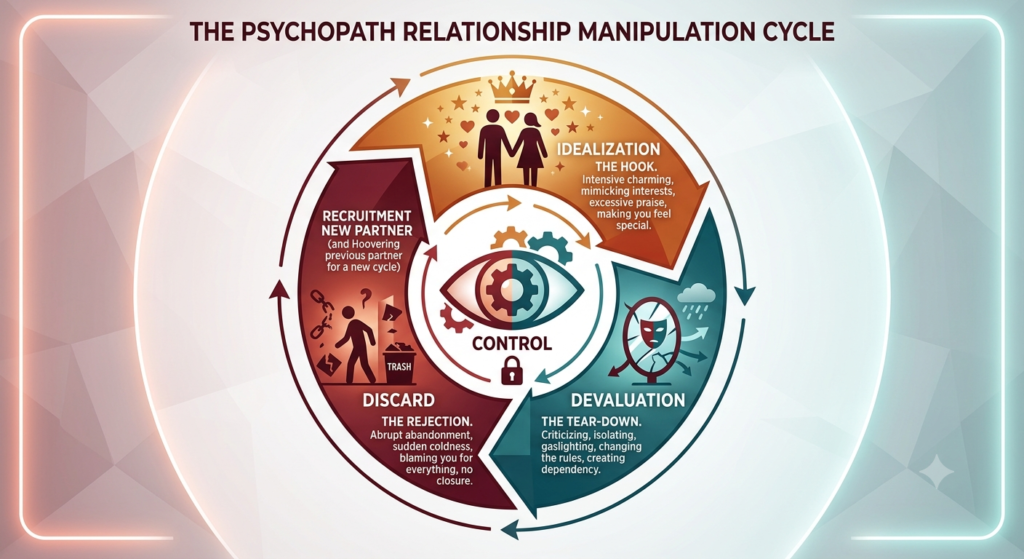
Phase 1: Idealization (The Love Bomb)
Duration: Days to months
During this phase, the psychopath presents as the perfect partner:
- Mirror effect: They adopt your interests, values, and personality traits
- Excessive attention: Constant texts, calls, gifts, compliments
- Future faking: Premature promises of commitment, marriage, life together
- Isolation groundwork: Subtle positioning as your “only true friend”
- Intensity: The relationship moves at an abnormal pace
The purpose: To create emotional dependency and investment before revealing true nature.
Phase 2: Devaluation (The Breakdown)
Duration: Months to years
Once emotional investment is secured, systematic destruction begins:
- Gaslighting: Denying reality, making you question your own perception
- Intermittent reinforcement: Alternating cruelty with brief kindness (the most addictive behavioral pattern known to psychology)
- Triangulation: Introducing third parties to create jealousy and insecurity
- Moving goalposts: Standards for your behavior constantly shift
- Projection: Accusing you of the behaviors they’re committing
- Silent treatment: Weaponizing withdrawal of attention
The purpose: To maintain control while extracting narcissistic supply (attention, resources, sex, status).
Phase 3: Discard (The Disposal)
Duration: Can be sudden or gradual
When the victim is depleted or a better target is identified:
- Abrupt emotional withdrawal with no explanation
- Replacement with a new target (often already cultivated during Phase 2)
- Complete absence of closure or accountability
- Potential “hoovering” (returning months/years later when new supply runs dry)
For anyone recognizing this pattern in their own life: This cycle is not your fault. Psychopaths are expert predators who have successfully manipulated therapists, judges, law enforcement professionals, and researchers. Seeking professional help (specifically trauma-informed therapy) is not weakness. It is the appropriate response to psychological abuse.
Corporate Psychopaths: The Boardroom Predators
One of the most important modern developments in understanding what is a psychopath is the recognition that many psychopathic individuals never enter the criminal justice system. Instead, they thrive in corporate environments.
The Research
- Dr. Robert Hare’s book “Snakes in Suits: When Psychopaths Go to Work” (2006) first systematically documented this phenomenon
- Studies consistently find psychopathic traits in 4-12% of corporate executives vs. 1% of the general population
- A 2010 study by Babiak, Neumann, and Hare found psychopathic traits in ~4% of a sample of 203 corporate professionals
Why Corporations Reward Psychopathic Traits
The traits that define psychopathy overlap disturbingly with those valued in corporate leadership:
| Psychopathic Trait | Corporate “Virtue” |
| Superficial charm | “Charismatic leadership” |
| Lack of empathy | “Tough decision-making” |
| Fearlessness | “Boldness and vision” |
| Manipulativeness | “Strategic thinking” |
| Grandiosity | “Confidence and ambition” |
| Shallow affect | “Emotional resilience” |
The Damage They Cause
Corporate psychopaths create measurable organizational harm:
- Employee burnout and turnover (toxic leadership)
- Ethical violations (fraud, safety shortcuts, regulatory breaches)
- Bullying cultures (normalized cruelty cascading downward)
- Short-term gains, long-term destruction (decisions that boost quarterly results while hollowing organizational health)
- $460 billion annual cost to the US criminal justice system alone (Frontiers in Psychiatry, 2026)
How to Identify a Corporate Psychopath
Red flags in professional settings:
- Takes credit for others’ work systematically
- Leaves a trail of burned relationships at previous companies
- Charming to superiors, cruel to subordinates
- Rules don’t apply to them (and they’re never held accountable)
- Rapid career advancement despite questionable competence
- Creates division between team members
- Stories don’t add up when you fact-check their claims
Can Psychopathy Be Treated or Cured?
This is perhaps the most sobering section of this guide. The honest answer to whether psychopathy can be cured is: with current science, no.
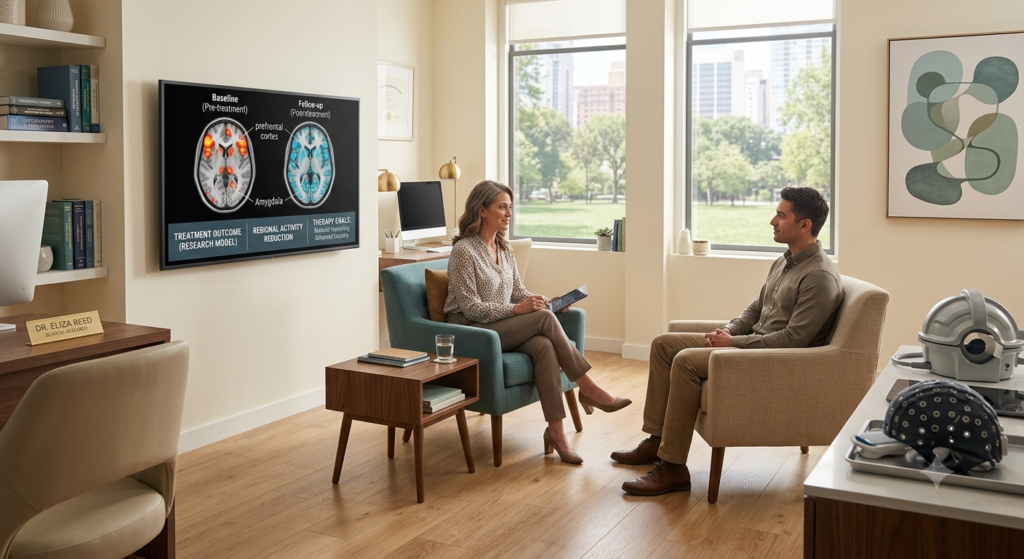
Why Traditional Therapy Fails
- Therapy requires emotional foundation: Psychopaths lack the affective substrate that therapy builds upon
- Manipulation enhancement: Psychopaths use therapy sessions to learn better manipulation techniques
- Zero internal motivation: They don’t perceive their behavior as problematic
- Treatment gaming: They learn what therapists want to hear without genuine change
Research Evidence
- Cognitive Behavioral Therapy (CBT): Minimal to no effect on core Factor 1 (interpersonal/affective) traits
- Group Therapy: May actually worsen outcomes (psychopaths learn vulnerabilities of other patients)
- Pharmacotherapy: No medication specifically targets psychopathy
- Punishment-based deterrence: Ineffective because psychopaths process punishment differently (reduced anticipatory anxiety)
The 2026 Oxytocin Study (A Potential Direction)
Published in Nature Scientific Reports (January 2026), researchers tested intranasal oxytocin on individuals with ASPD:
Findings:
- Oxytocin temporarily modified resting-state brain function in social processing regions
- Measurable (but inconsistent) changes in social brain activity
- Different responses between ASPD with psychopathy vs. ASPD without psychopathy
Limitations:
- Effects were temporary
- Results were inconsistent across participants
- No evidence of long-term behavioral change
- Far from a viable treatment protocol
What Does Work?
The most evidence-supported approaches are not cures but risk management strategies:
- Early identification of callous-unemotional traits in children (when the brain is still developing)
- Reward-based interventions for juvenile psychopathic traits (more effective than punishment)
- Structured environmental controls (reducing opportunity for harmful behavior)
- Containment rather than rehabilitation in severe cases
The uncomfortable truth: For victims of psychopathic individuals, the most effective “treatment” is removing yourself from the relationship entirely. No amount of love, patience, or therapy will fundamentally alter the brain structure of a psychopathic adult.
Shocking Statistics About Psychopathy
Population Data
- 75 million people worldwide have significant psychopathic traits (based on 1% prevalence across 7.5 billion population)
- In a typical office of 100 people: 1-2 individuals likely have clinically significant psychopathic traits
- 70% of psychopaths are male (documented); 30% female (likely undercount due to different presentation)
Criminal Justice Data
- Psychopaths represent ~1% of the population but commit ~25% of violent crimes
- Recidivism rate: Psychopaths are 3-4x more likely to reoffend upon release
- Serial homicide: An estimated 50% of serial killers meet psychopathy criteria
- Parole violation: ~80% of psychopaths violate parole conditions
Financial Impact
- $460 billion/year: Cost to US criminal justice system (Frontiers in Psychiatry, 2026)
- $1.8 million: Estimated average lifetime societal cost per psychopathic individual
- Workplace losses: Billions annually in employee turnover, lawsuits, and productivity loss from corporate psychopaths
Relationship Impact
- The average psychopath has multiple simultaneous relationships throughout their lifetime
- Partners of psychopaths show elevated rates of PTSD, anxiety, depression, and C-PTSD
- Recovery from a psychopathic relationship averages 2-5 years of intensive therapeutic work
How to Protect Yourself From a Psychopath
Now that you understand what is a psychopath, here are evidence-based protection strategies:
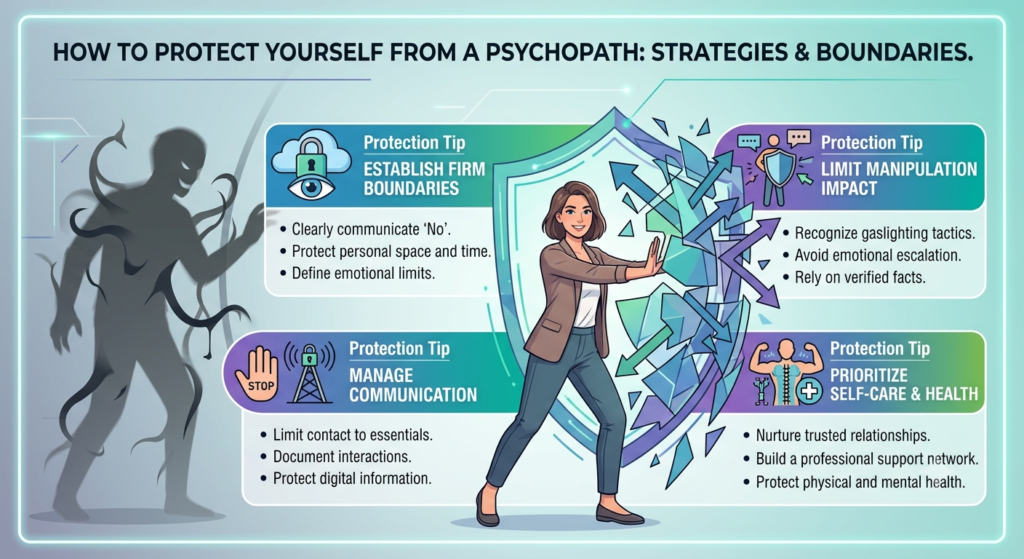
1. Trust Behavioral Patterns Over Words
Psychopaths are exceptional verbal communicators. Ignore what they say. Watch what they do. Look for:
- Inconsistencies between stated values and actions
- Pattern of broken promises
- History of damaged relationships behind them
- Discrepancies in their personal narrative
2. Recognize the Speed of Intimacy
Healthy relationships develop gradually. Be cautious when someone:
- Declares love within days or weeks
- Shares extraordinarily personal information immediately (creating false intimacy)
- Pressures for commitment before you’ve had time to evaluate them
- Claims you’re “different from everyone else they’ve known”
3. Maintain Your Support Network
Psychopaths isolate their targets. Deliberately maintain:
- Regular contact with family and long-term friends
- Professional relationships outside the psychopath’s influence
- Independent hobbies and social circles
4. Set and Enforce Boundaries
- State boundaries clearly and without excessive explanation
- Observe how they respond to “no” (healthy people respect it; psychopaths test it)
- Escalating boundary violations are diagnostic of manipulative intent
5. Document Everything
In professional or legal contexts:
- Communicate via email/text (creating records)
- Keep witnesses present for important interactions
- Save evidence of commitments made
- Track patterns over time (individual incidents seem minor; the pattern reveals the predator)
6. Implement No Contact
The only reliable protection from a psychopath is complete cessation of contact:
- Block on all platforms and phone numbers
- Do not respond to indirect contact attempts through mutual connections
- Abandon the pursuit of “closure” (it will never come)
- Seek trauma-informed therapy for recovery
Expert Opinions and Latest Research
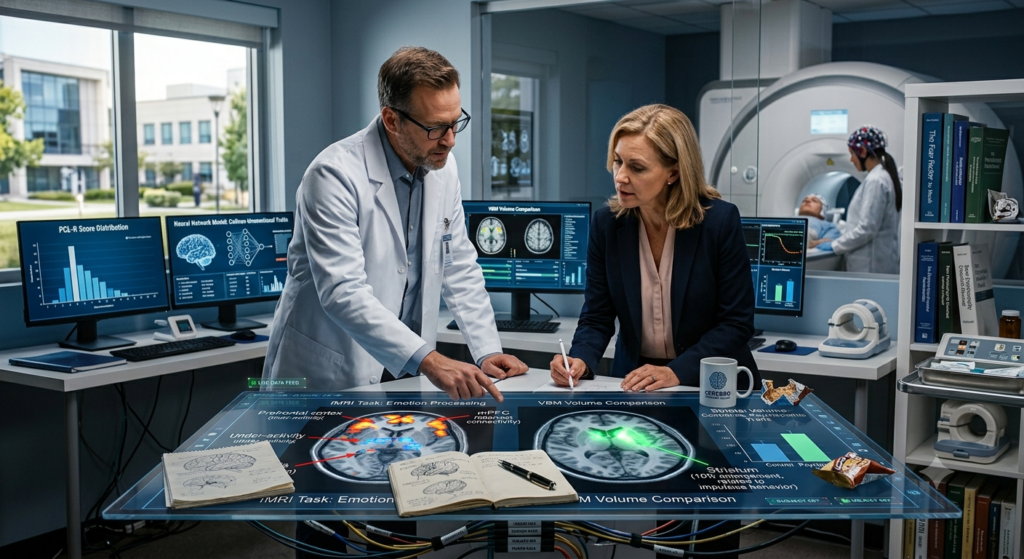
Dr. Robert Hare (University of British Columbia)
The father of modern psychopathy research, Dr. Hare developed the PCL-R and has published over 200 papers on the subject across 50+ years:
“Psychopaths are social predators who charm, manipulate, and ruthlessly plow their way through life, leaving a broad trail of broken hearts, shattered expectations, and empty wallets.”
His 2026 legacy was honored in a special issue of the Journal of Psychopathology and Behavioral Assessment (February 2026), which reviewed the psychophysiological investigation of psychopathy from Hare’s early work to contemporary research.
Dr. Keanan Joyner (UC Berkeley)
A leading voice in modernizing psychopathy assessment:
“The PCL-R was revolutionary in the 1970s, but we now understand psychopathy exists on a spectrum. Many people with psychopathic traits never commit crimes but still cause significant harm in relationships and workplaces.”
Joyner advocates for updated measurement tools that capture the full spectrum of psychopathic traits beyond criminal populations.
Frontiers in Psychiatry (January 2026)
A landmark perspective paper declared psychopathy a “neglected public health problem”:
- Authors: Chinchilla, Reidy, and Kosson
- Argument: Psychopathy’s societal impact vastly exceeds current research and intervention funding
- Called for public health framework rather than purely criminal justice approach
- Estimated cost: $460 billion annually to US systems alone
Nanyang Technological University (May 2026)
The striatum discovery represents the most significant structural finding in psychopathy neuroscience in recent years, providing biological evidence for the reward-seeking hypothesis of psychopathic behavior.
Nature Scientific Reports (January 2026)
Oxytocin research on ASPD with and without psychopathy demonstrates that even within antisocial populations, psychopathy represents a neurobiologically distinct condition with unique treatment challenges.
Frequently Asked Questions
What is the difference between a psychopath and a narcissist?
While both involve exploitation of others, the core motivation differs. Narcissists need admiration and validation (they’re emotionally dependent on others’ opinions). Psychopaths need control and stimulation (they’re emotionally independent but strategically exploit). A narcissist is devastated by rejection. A psychopath simply moves to the next target without emotional disruption.
Are psychopaths born or made?
Primarily born. Research indicates approximately 50-60% genetic contribution to psychopathic traits. Brain structural differences (smaller amygdala, larger striatum, reduced connectivity) appear developmental rather than acquired. Environmental factors can modulate expression but do not create the underlying neurology.
Can a psychopath love someone?
Not in the conventional sense. Psychopaths can experience attachment (wanting to possess someone) and desire (wanting something from someone), but the deep emotional bond characterized by genuine empathy, sacrifice, and reciprocal vulnerability, what most people mean by “love”, is neurologically inaccessible to them.
How do you know if someone is a psychopath?
You cannot definitively identify psychopathy without clinical assessment. However, warning signs include: chronic lying without physiological distress, complete absence of genuine remorse, a pattern of exploited relationships, superficial charm that doesn’t match their treatment of others, and a history that doesn’t add up when investigated.
Are all psychopaths violent?
No. The majority of psychopaths never commit violent crimes. Many channel their traits into socially acceptable (or at least legal) pursuits: business, law, politics, finance. “Successful psychopaths” cause enormous harm through manipulation, exploitation, and emotional abuse rather than physical violence.
Can children be psychopaths?
Psychopathy is not formally diagnosed before age 18. However, callous-unemotional (CU) traits can be identified in children and adolescents. Early identification is clinically important because the developing brain may be more responsive to intervention than the adult brain. Not all children with CU traits become adult psychopaths.
What percentage of CEOs are psychopaths?
Studies estimate 4-12% of corporate executives exhibit significant psychopathic traits, compared to 1% of the general population. This 4-12x overrepresentation occurs because psychopathic traits (charm, fearlessness, decisiveness, emotional detachment) are rewarded in corporate advancement systems.
Is psychopathy the same as Antisocial Personality Disorder?
No. Psychopathy is considered a severe subset of ASPD. While all psychopaths meet ASPD criteria, only 25-30% of those with ASPD are psychopathic. The key distinction: ASPD focuses on antisocial behavior, while psychopathy specifically requires the interpersonal/affective deficits (lack of empathy, shallow affect, manipulativeness).
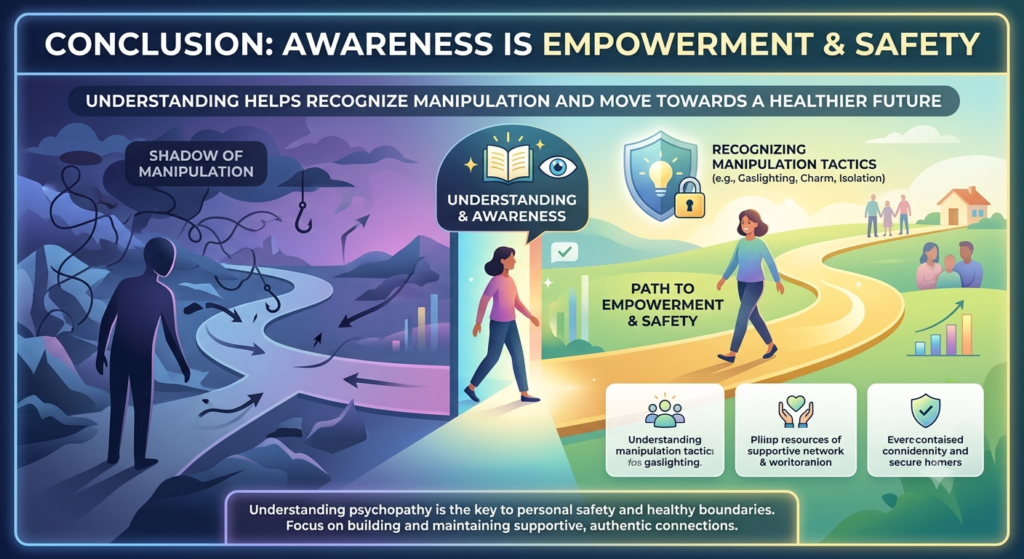
Conclusion: Why Understanding Psychopathy Matters
The question “what is a psychopath?” is not academic curiosity. It is practical survival knowledge.
Approximately 75 million people worldwide carry significant psychopathic traits. They occupy every sector of society: families, workplaces, communities, governments. They are, by neurological design, invisible predators operating behind masks of charm and normalcy.
The damage they inflict is staggering: shattered relationships, destroyed careers, depleted finances, and psychological trauma that can take years to overcome. And they do it all without a moment’s genuine remorse.
Knowledge is the primary defense. Understanding the signs, recognizing the patterns, and accepting the science gives you tools that most people lack. It won’t make you invulnerable, but it will make you significantly harder to exploit.
If you recognize these patterns in someone in your life, the most important actions are:
- Accept the reality of who they are (not who they pretended to be)
- Protect yourself through boundaries or no-contact
- Seek professional support from a therapist experienced with personality disorders
- Rebuild without guilt or self-blame
Psychopaths are not monsters in the cinematic sense. They are humans with fundamentally different neural architecture. Understanding that distinction, without minimizing the harm they cause, is the foundation of protecting yourself and those you care about.
Sources:
- Hare, R.D. (1991/2003). Psychopathy Checklist-Revised (PCL-R). Multi-Health Systems.
- Hare, R.D. & Neumann, C.S. (2008). “Psychopathy as a Clinical and Empirical Construct.” Annual Review of Clinical Psychology, 4, 217-246.
- Nanyang Technological University. “Brain scans reveal a shocking difference between psychopaths and other people.” ScienceDaily, May 10, 2026.
- Springer Nature (2026). “Psychophysiological Investigation of Psychopathy: From Robert Hare to Contemporary Research.” Journal of Psychopathology and Behavioral Assessment, 48(8).
- Nature Scientific Reports (2026). “Resting-state brain function and its modulation by intranasal oxytocin in ASPD.” January 2026.
- Chinchilla, M.A., Reidy, D.E., & Kosson, D.S. (2026). “Psychopathy is a neglected public health problem.” Frontiers in Psychiatry, 16.
- European Archives of Psychiatry and Clinical Neuroscience (2025). “Associations of brain structure with psychopathy.”
- UC Berkeley News (2025). “Psychopathic personality is measured with a 1970s checklist.”
- Babiak, P., Neumann, C.S., & Hare, R.D. (2010). “Corporate Psychopathy.” Behavioral Sciences & the Law, 28, 174-193.