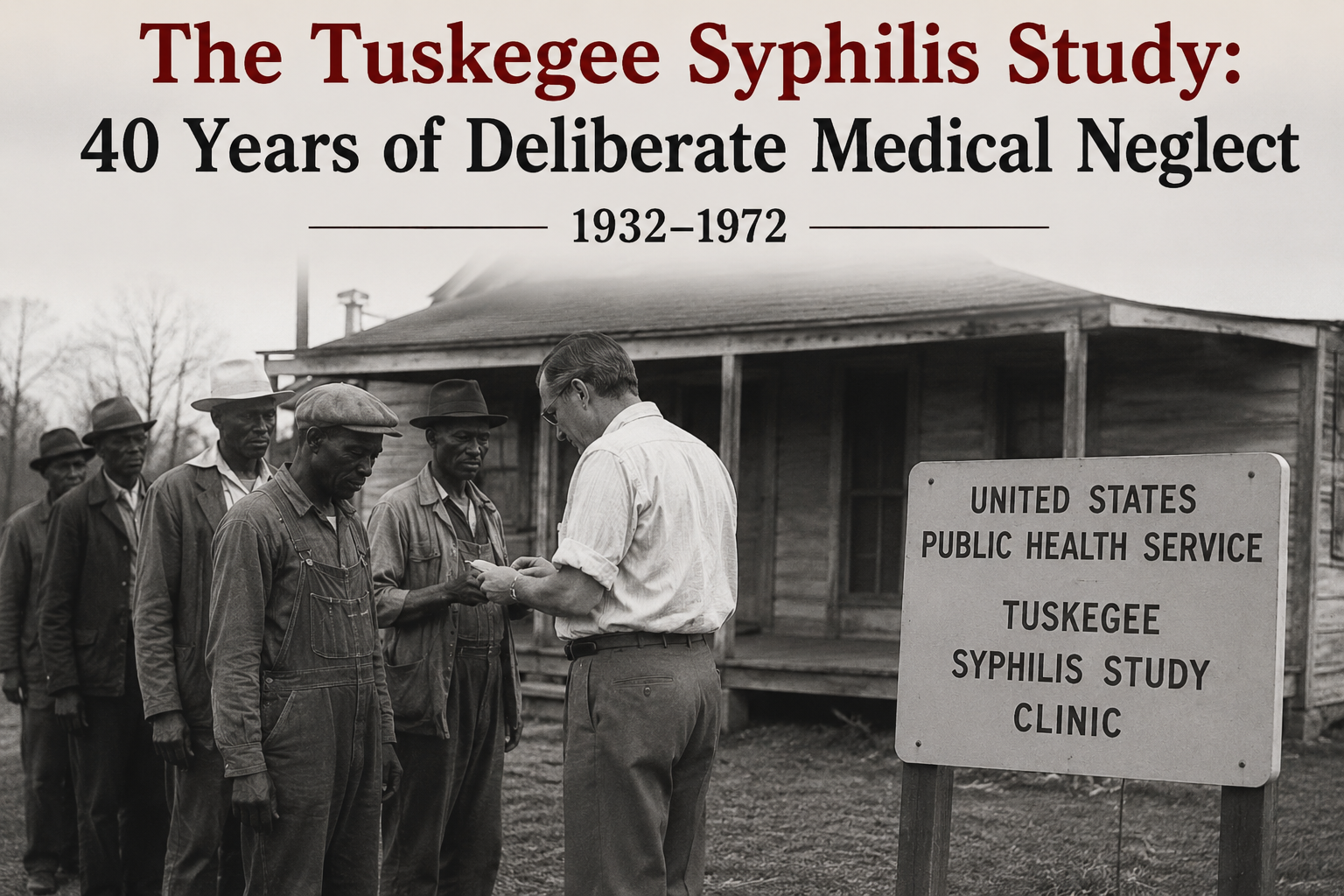
For 40 years, the United States Public Health Service told 399 Black men in Alabama that they were receiving treatment for “bad blood.” They were not. They were being deliberately observed as they suffered, went blind, went insane, and died — all so that government doctors could study the natural progression of untreated syphilis. Even after penicillin was discovered and could have cured every single one of them, the Tuskegee Syphilis Study continued. This is one of America’s most documented and most shameful crimes.
| Updated: July 2026 | 20 Min Read | Tuskegee, Alabama · 1932–1972 | Disturbing Historical Content |
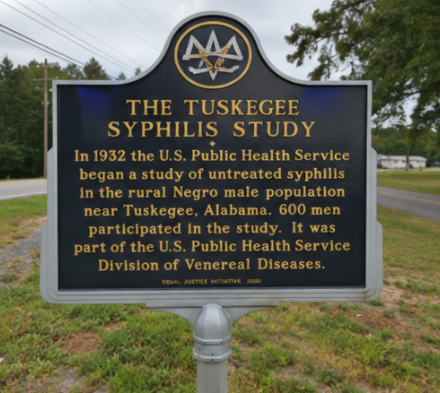
The Tuskegee Syphilis Study ran from 1932 to 1972 in Macon County, Alabama. 399 Black men with syphilis were deliberately denied treatment so that government researchers could study the disease’s natural progression. Even after penicillin became widely available in the 1940s and could have cured every single participant, the study continued. (US National Archives / Public Domain)
There is a certain kind of historical crime that is hard to fully absorb because it goes on for so long, involves so many institutions, and requires so many ordinary people making ordinary professional decisions to sustain it. The Tuskegee Syphilis Study is one of those crimes. For forty years, the United States Public Health Service deliberately withheld treatment from 399 Black men in Alabama who had syphilis — a disease that, left untreated, causes blindness, heart disease, neurological damage, insanity, and death.
They were not told they were in a study. They were told they were receiving treatment for “bad blood” — a term used locally to describe a range of ailments. They were given placebos and vitamins and aspirin. They were given hot meals on the days researchers came to examine them. They were given free burial insurance. And they were systematically, deliberately denied the medicine that could have saved their lives, their sight, their minds, and their families.
When penicillin was established as the definitive cure for syphilis in the 1940s — a cure so effective that the US military was treating soldiers routinely — the Tuskegee Syphilis Study did not end. The researchers took active steps to ensure that their subjects could not access the treatment. They contacted local draft boards to make sure men called up during World War II were not treated by the military. They continued for another thirty years. The study ended in 1972 not because the government decided it was wrong, but because a whistleblower leaked it to the press.
☰ TABLE OF CONTENTS
- Background: Syphilis in the American South in the 1930s
- How the Tuskegee Study Began: The Original Justification
- Who Were the 399 Men? The Human Beings Behind the Study
- What the Men Were Told vs. What Was Actually Happening
- The Nurse Who Made It Possible: Eunice Rivers
- Penicillin Changes Everything — and the Study Continues
- World War II: How the Government Blocked Treatment for Drafted Men
- The Health Consequences: What Happened to the Men
- The Families: Wives and Children Who Were Also Infected
- How the Tuskegee Syphilis Study Was Finally Exposed
- Peter Buxtun: The Whistleblower Who Ended the Study
- The Aftermath: Investigations, Settlements, and the Presidential Apology
- The Long Shadow: How Tuskegee Still Affects Black Healthcare Today
- The Broader Pattern: Tuskegee Was Not Unique
- Why the Tuskegee Syphilis Study Still Matters
- Frequently Asked Questions
1. Background: Syphilis in the American South and the Origins of the Tuskegee Study
To understand how the Tuskegee Syphilis Study was possible, you need to understand the world it emerged from. In 1932, Macon County, Alabama, was one of the poorest rural counties in the United States. Roughly 82% of its population was Black. The county had almost no healthcare infrastructure for Black residents. There were no Black doctors in private practice. There was no hospital that would admit Black patients. Access to any medical care at all was extremely limited.
Syphilis was widespread in the rural South. It is a bacterial infection transmitted primarily through sexual contact that, in its later stages, attacks the heart, brain, and nervous system, causing catastrophic damage. By the 1930s, treatments existed — primarily arsenic-based compounds that were partially effective but came with serious side effects. They were also expensive and difficult to administer in rural settings. Most poor Black men in Macon County who had syphilis had never been diagnosed, let alone treated.
The United States Public Health Service (USPHS) had been running syphilis treatment programs across several Southern states in the late 1920s. When funding was cut during the Great Depression in 1932, Dr. Taliaferro Clark of the USPHS proposed a study: since treatment was ending anyway, why not observe the untreated progression of syphilis in Black men for six months? It was originally intended to be a short-term observational study. It ran for forty years.
2. How the Tuskegee Syphilis Study Began: The Original Justification
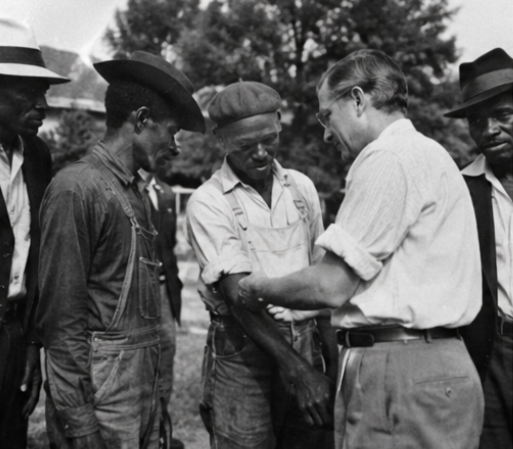
The study was formally launched in 1932 under the name “Tuskegee Study of Untreated Syphilis in the Negro Male.” It was conducted in partnership with the Tuskegee Institute — a historically Black university founded by Booker T. Washington — and run out of its hospital. The USPHS recruited 399 Black men with syphilis and 201 without syphilis as a control group.
The researchers’ stated scientific justification rested on a deeply racist assumption: that syphilis progressed differently in Black bodies than in white bodies. This was not based on evidence. It reflected the medical racism of the era — a widespread belief among white physicians that Black patients were physiologically different and that findings from white patient studies could not be generalized to Black populations. The study was designed to “prove” this assumption.
To recruit participants, researchers offered incentives that were genuinely valuable to desperately poor men during the Great Depression: free medical examinations, free hot meals on study days, free transportation to and from the clinic, and — most significantly — free burial insurance. For men who worried about dying and leaving their families with nothing, the burial insurance was a powerful draw.
“The men’s intent in submitting to the examination and their acceptance of the various benefits were founded on the belief that they were being treated for their illness.”
— Final Report of the Tuskegee Syphilis Study Ad Hoc Advisory Panel, 1973
3. Who Were the 399 Men? The Human Beings Behind the Tuskegee Study
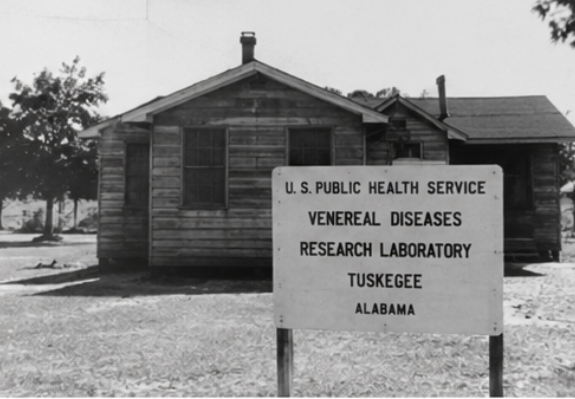
The 399 men who participated in the Tuskegee Syphilis Study were primarily sharecroppers and farm laborers in Macon County, Alabama — among the poorest and most medically underserved people in the United States. They trusted the government doctors who came to examine them. That trust was systematically betrayed for forty years. (Historical record)
The 399 men enrolled in the Tuskegee Syphilis Study were not abstractions or statistics. They were real human beings with families, lives, and futures that were systematically destroyed by a program they trusted. They were primarily sharecroppers and farm laborers — men who worked the cotton fields of Macon County for a share of the harvest, living in conditions of extreme poverty in the Jim Crow South.
Many were illiterate. Few had ever received any medical care. When government doctors came to their community, driving vehicles with official markings, speaking with authority, offering free examinations and free meals, these men had no reason not to trust them. The government was offering something these men had never had: access to healthcare. The fact that this “healthcare” was a deliberate deception — that the doctors were withholding treatment while pretending to provide it — was something these men could never have imagined.
When participants were recruited, they ranged from their twenties to their sixties. The youngest men were still young enough that, with proper treatment, they might have lived long, healthy lives. They were husbands, fathers, grandfathers. They had wives who would be infected. They had children who would grow up watching their fathers deteriorate. They had grandchildren who were born after the study ended and still carry the legacy of what was done to their families.
| 399 Black men with syphilis — denied treatment |
40yr Duration 1932–1972 |
128 Died of syphilis or its complications |
$10M Settlement paid in 1974 |
4. What the Men Were Told vs. What Was Actually Happening to Them
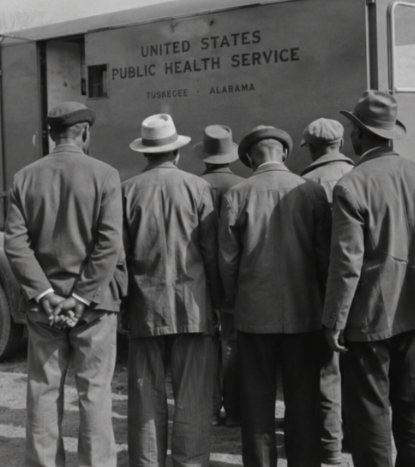
The systematic deception at the heart of the Tuskegee Syphilis Study operated on multiple levels simultaneously. Understanding it requires comparing what participants were told at each stage with what was actually happening to them.
What they were told: That they had “bad blood” — a general term used in the rural South to describe a range of conditions including syphilis, anemia, and general fatigue — and that the government doctors were treating it. They were told that the spinal taps performed for diagnostic purposes were a form of “special free treatment.” They were told that the study was in their interest and that the government cared about their health.
What was actually happening: They were receiving no treatment whatsoever. The “treatments” they were given were placebos — aspirin, vitamins, and iron supplements. The spinal taps — a painful and somewhat risky procedure — were purely diagnostic, performed to track the progression of the disease. The researchers were watching their patients deteriorate and die while recording the data. No treatment. No cure. No end.
■ THE DECEPTION — WHAT MEN WERE TOLD vs. REALITY
► Told: “We are treating your bad blood” — Reality: No treatment whatsoever
► Told: “This spinal tap is special free treatment” — Reality: Painful diagnostic test only
► Told: “These pills will help you” — Reality: Aspirin and vitamins — placebos
► Told: Nothing about penicillin — Reality: Penicillin could have cured every single man
► Told: “The government is here to help you” — Reality: The government was watching them die
► Told: “You will receive free burial insurance” — Reality: True — the only genuine benefit provided
5. The Nurse Who Made It Possible: Eunice Rivers and the Tuskegee Study
One of the most complex figures in the Tuskegee Syphilis Study is Eunice Rivers Laurie — a Black nurse who was the study’s most consistent human face for its entire 40-year duration. Rivers served as the primary community liaison, maintaining relationships with participants over decades, following up with families when men missed appointments, driving participants to examinations, and ensuring the study’s continuity through five changes of research leadership.
Rivers is a genuinely difficult figure to assess historically. She was a trained professional working within an institution she trusted and respected. She believed, at some level, that the participants were receiving care and that participation offered them benefits they would not otherwise have had. She also, over four decades, maintained a relationship with these men and their families that made her central to why the study succeeded in retaining participants for so long.
Eunice Rivers is neither a hero nor a straightforward villain. She is something more disturbing: an ordinary, competent professional who participated in an atrocity by doing her job well within a system that had made the atrocity its purpose. That is a lesson about institutional evil that goes far beyond the Tuskegee Syphilis Study.
“I kept them coming back. I made sure they trusted us. I believed we were helping them. I was wrong.”
— Eunice Rivers Laurie, in later interviews, reflecting on her role in the Tuskegee Syphilis Study
6. Penicillin Changes Everything — and the Tuskegee Study Continues Anyway
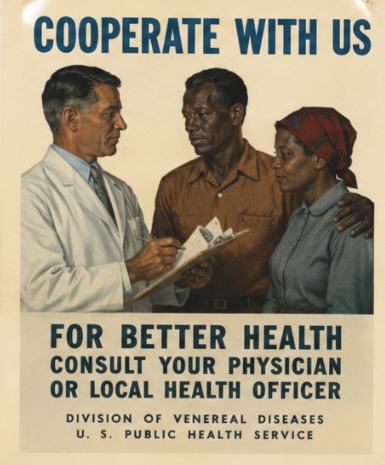
By the mid-1940s, penicillin had been established as a safe, effective, and widely available cure for syphilis. The US military was routinely treating soldiers diagnosed with the disease. The 399 men in the Tuskegee study — a short drive from the nearest military base — were being actively denied this treatment by the same government that was giving it to soldiers. (Historical record)
This is the moment that transforms the Tuskegee Syphilis Study from a morally questionable observational study into something clearly and unambiguously criminal. By the early 1940s, penicillin had been established as a safe, effective, and inexpensive cure for syphilis. By 1947, the US Public Health Service itself was running penicillin treatment campaigns across the South. Every sexually transmitted disease clinic in the United States was offering penicillin to syphilis patients.
Every single one of the 399 men in the Tuskegee Syphilis Study could have been cured. A few doses of penicillin — available, affordable, and widely distributed — would have stopped the disease in its tracks. Their hearts would not have been damaged. Their nervous systems would not have been destroyed. They would not have gone blind. They would not have lost their minds. Many would have lived significantly longer lives.
The researchers knew this. They made a deliberate decision to continue the study anyway. They chose the data over the men. The study’s scientific value — observing untreated syphilis progression — depended on the men remaining untreated. So untreated they remained. For another twenty-five years.
7. World War II: How the Government Blocked Treatment for Men Called Up to Serve
During World War II, the United States military required all inductees to be tested and treated for sexually transmitted infections, including syphilis, before deployment. This policy created an unexpected problem for the Tuskegee Syphilis Study researchers: some of their untreated subjects were being called up by local draft boards and would inevitably receive penicillin treatment through the military, ruining the study’s data.
The solution the researchers chose was extraordinary. They compiled a list of 256 Tuskegee study participants who had received their draft notifications and contacted the Macon County draft board directly, providing the names and asking that these men be excluded from military service so they could not receive treatment. The United States Public Health Service actively intervened to prevent American citizens from receiving medical care they were legally entitled to as military inductees.
This single documented fact is perhaps the clearest proof of the deliberate, active nature of the denial of treatment. This was not passive neglect or bureaucratic failure. This was an active, purposeful intervention by government officials to ensure that 256 men with a curable disease remained uncured — not for their benefit, not for any conceivable public health purpose, but so that the government’s research data would remain uncontaminated.
8. The Health Consequences: What Forty Years of Untreated Syphilis Did to These Men

Syphilis untreated for decades does not simply kill you. It destroys you, in stages, over years and decades. Understanding what the Tuskegee Syphilis Study actually did to these men requires understanding what late-stage syphilis looks like in a living human being.
Cardiovascular syphilis — the most common late-stage complication — attacks the heart and major blood vessels. It can cause aortic aneurysms, heart valve damage, and cardiac failure. Neurosyphilis attacks the brain and nervous system, causing personality changes, loss of coordination, chronic pain, progressive dementia, blindness, deafness, and eventually death. In its most severe form, it produces a condition called general paresis — a gradual descent into madness that was well-documented and well-known to the researchers running this study.
By the time the study ended in 1972, 128 of the 399 men had died directly of syphilis or its complications. Forty wives had been infected. Nineteen children had been born with congenital syphilis. The health consequences extended far beyond the original 399 participants — they rippled through entire families and communities.
■ THE TOLL OF THE TUSKEGEE SYPHILIS STUDY
► 128 men died directly of syphilis or its complications
► 40 wives of participants were infected with syphilis
► 19 children were born with congenital syphilis
► Uncounted men suffered blindness, heart disease, and neurological damage
► Uncounted men experienced dementia and loss of mental function from neurosyphilis
► All of this was preventable with penicillin from the 1940s onwards
► The study actively blocked men from accessing treatment elsewhere
9. The Families: Wives and Children Who Were Also Infected
The victims of the Tuskegee Syphilis Study were not only the 399 enrolled men. The study’s refusal to treat its participants meant that infected men continued to have intimate relations with their wives, who were never warned of the risk, never tested, and never offered treatment. Forty wives of Tuskegee participants contracted syphilis as a direct result of the study.
Nineteen children were born with congenital syphilis — a devastating condition in which the disease is transmitted from mother to child during pregnancy, causing a range of catastrophic outcomes including stillbirth, severe neurological damage, bone deformities, blindness, and chronic illness. These children never participated in any study. They never signed anything. They never received any benefit. They were simply the collateral damage of their fathers’ enrollment.
The 1974 class action settlement eventually included wives, widows, and children of participants as entitled to compensation — an implicit acknowledgment that the government’s culpability extended far beyond the 399 men who had been directly enrolled. The families were not simply affected by the study. They were its uncounted victims.
10. How the Tuskegee Syphilis Study Was Finally Exposed After 40 Years
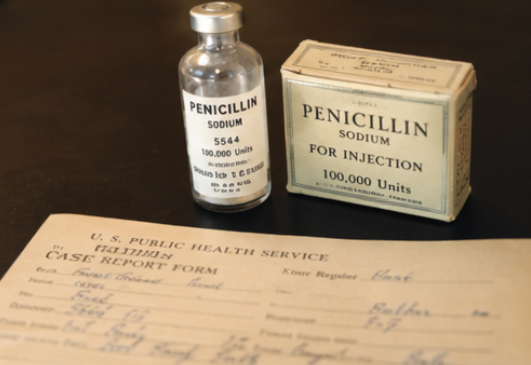
The Tuskegee Syphilis Study was not ended by government conscience or internal review. It was ended because Peter Buxtun, a US Public Health Service venereal disease investigator, leaked the story to journalist Jean Heller of the Associated Press. Her story, published July 25, 1972, caused the public outrage that finally forced the government to act. (Historical record)
The Tuskegee Syphilis Study did not end because the government developed a conscience. It did not end because of an internal ethics review. It did not end because researchers decided enough data had been collected. It ended because one man decided he could not stay silent any longer — and went to the press.
Peter Buxtun was a venereal disease investigator who joined the US Public Health Service in 1966. Almost immediately, he began raising concerns internally about the Tuskegee study. He wrote formal letters to his superiors in 1966 and 1968 arguing that the study violated basic ethical principles. Both times, the USPHS reviewed his complaints and decided the study should continue.
In 1972, Buxtun made a decision that would end the study and permanently alter American medical history. He passed the study’s documents to journalist Jean Heller of the Associated Press. On July 25, 1972, Heller’s story was published on the front pages of newspapers across the country. The public reaction was immediate and furious. The USPHS terminated the study within days. The Tuskegee Syphilis Study was over — forty years after it began, twenty-five years after penicillin could have ended it.
“I felt that what they were doing was wrong. I was just a junior person in the bureaucracy, but I had to do something. I could not live with myself if I did nothing.”
— Peter Buxtun, the whistleblower who exposed the Tuskegee Syphilis Study, in interviews after the story broke
11. The Aftermath: Investigations, Settlements, and Clinton’s Presidential Apology
“The United States government did something that was wrong — deeply, profoundly, morally wrong. It was an outrage to our commitment to integrity and equality for all our citizens.”
— President Bill Clinton, formal apology to Tuskegee Syphilis Study survivors, White House, May 16, 1997
12. The Long Shadow: How the Tuskegee Syphilis Study Still Affects Black Healthcare Today
The Tuskegee Syphilis Study did not end in 1972. Its legacy continues to shape the relationship between Black Americans and the medical establishment in ways that have direct, measurable consequences for public health today. This is not speculation or conspiracy theory. It is extensively documented in the medical literature.
Studies conducted after the exposure of the Tuskegee study documented a sharp decline in Black Americans’ willingness to participate in medical research, seek medical care, and trust medical institutions — particularly government health programs. A landmark 2020 study found that the revelation of the Tuskegee study in 1972 was directly associated with a decline in life expectancy for Black men in the affected states, as reduced engagement with healthcare resulted in worse health outcomes.
When the COVID-19 pandemic began in 2020, public health researchers noted that medical distrust in Black communities — distrust with documented historical roots in the Tuskegee Syphilis Study — contributed to vaccine hesitancy and lower rates of early treatment-seeking. People were not being irrational. They were responding rationally to a documented history of their government using their bodies without their consent and calling it medicine.
■ TUSKEGEE’S DOCUMENTED IMPACT ON BLACK HEALTHCARE TODAY
► Documented decline in Black men’s engagement with healthcare following 1972 exposure
► Research shows lower rates of preventive care among Black men in regions closer to Tuskegee
► Studies link Tuskegee exposure to measurable increase in Black male mortality in the 1970s
► Medical distrust in Black communities remains significantly higher than in white communities
► COVID-19 vaccine hesitancy in Black communities explicitly linked to Tuskegee in surveys
► Researchers who are Black are more likely to trust Black doctors — Tuskegee cited as reason
► The harm done to these 399 men continues to cost lives decades after the study ended
13. The Broader Pattern: Tuskegee Was Not an Isolated Incident
One of the most important and most uncomfortable truths about the Tuskegee Syphilis Study is that it was not unique. It was not an isolated act of individual misconduct by a few rogue researchers. It was part of a broader pattern of American government medical research that treated poor, Black, and otherwise vulnerable people as expendable research subjects.
The Guatemala Syphilis Experiments (1946–1948): US government researchers, some of whom worked on the Tuskegee study, deliberately infected Guatemalan prisoners, soldiers, and psychiatric patients with syphilis and gonorrhea without their knowledge or consent. This program was classified for over sixty years and not publicly revealed until 2010. President Obama called Guatemala to apologize. The lead American researcher, Dr. John Cutler, had also worked on the Tuskegee study.
Radiation experiments in the 1940s and 1950s, Project MKUltra’s LSD experiments on unwitting subjects, sterilization programs targeting Black, Indigenous, and poor white women without their genuine consent — the Tuskegee Syphilis Study was the most extensively documented example of a pattern, not an exception to one. Understanding it fully requires understanding this context.
14. Why the Tuskegee Syphilis Study Still Matters More Than 50 Years Later
The Tuskegee Syphilis Study matters for reasons that go far beyond historical guilt. It matters because it tells us something about how atrocity is made possible — not by monsters acting alone, but by ordinary institutions making ordinary professional decisions within a framework that has defined certain people as less than fully human.
The researchers who ran the Tuskegee study were not, by the standards of their time, seen as criminals. They published papers in prestigious medical journals. They won grants and promotions. They attended conferences and gave talks. The study was not secret in the way that Project MKUltra was secret — it was published in medical literature. The crime was hiding in plain sight, in academic journals, because the people making the decisions simply did not believe that the 399 men whose lives they were destroying deserved to have their interests considered.
The Tuskegee Syphilis Study produced some genuine good: the legal and regulatory framework for human research protection in the United States — Institutional Review Boards, informed consent requirements, the Belmont Report — was built directly on the ashes of this study. The ethical principles that protect research subjects today were purchased with the suffering of 399 Black men in Alabama.
The least we can do is know their names. The least we can do is know what was done to them. The least we can do is understand, without looking away, what it means when a government decides that the lives of some of its citizens are expendable in service of its research agenda. Because that decision can always be made again — and has been.
15. Frequently Asked Questions About the Tuskegee Syphilis Study
❓ What was the Tuskegee Syphilis Study?
The Tuskegee Syphilis Study was a clinical research program conducted by the United States Public Health Service from 1932 to 1972 in Macon County, Alabama. It enrolled 399 Black men who had syphilis and 201 without the disease as a control group. The men were never told they had syphilis — they were told they had “bad blood” — and were never offered genuine treatment. They were given placebos while researchers observed the natural progression of untreated syphilis. Even after penicillin became widely available as a cure in the 1940s, the study continued for another 25 years, actively blocking participants from accessing treatment. The study was exposed in 1972 by a whistleblower.
❓ How many people died because of the Tuskegee Syphilis Study?
128 of the 399 men enrolled in the study died directly of syphilis or its complications. 40 wives of participants contracted syphilis. 19 children were born with congenital syphilis. These are only the documented direct consequences. The long-term health damage from decades of untreated syphilis — cardiovascular disease, neurological damage, blindness, dementia — affected hundreds of people across entire families. The harm extended far beyond the men who were directly enrolled.
❓ Why did the Tuskegee Syphilis Study continue after penicillin was discovered?
The researchers made a deliberate decision to continue the study after penicillin became available in the 1940s because treating the participants would have ended the study’s scientific value — which depended on observing untreated syphilis progression. They chose the data over the men’s lives. They went further than simply not treating participants: during World War II, they contacted local draft boards to ensure that participants who were called up for military service — where they would have been automatically treated — were excluded from induction. This was an active, deliberate intervention to deny American citizens medical care they were legally entitled to.
❓ Who exposed the Tuskegee Syphilis Study?
The Tuskegee Syphilis Study was exposed by Peter Buxtun, a venereal disease investigator with the US Public Health Service. Buxtun had raised concerns internally in 1966 and 1968, both times being told the study should continue. In 1972, he leaked the study’s documents to journalist Jean Heller of the Associated Press. Heller’s story was published on July 25, 1972, on front pages across the country. The USPHS terminated the study within days of publication. Without Buxtun’s decision to go to the press, the study might have continued further.
❓ Did the US government ever apologize for the Tuskegee Syphilis Study?
Yes. On May 16, 1997, President Bill Clinton issued a formal apology on behalf of the United States government to the five surviving Tuskegee Syphilis Study participants and their families in a White House ceremony. In his statement, Clinton said: “The United States government did something that was wrong — deeply, profoundly, morally wrong. It was an outrage to our commitment to integrity and equality for all our citizens.” The ceremony was attended by the surviving participants, their families, and a number of public health researchers. Clinton also announced new initiatives in bioethics research and education as part of the government’s response.
❓ How did the Tuskegee Syphilis Study change medical research ethics?
The Tuskegee Syphilis Study directly produced the modern framework for protecting human research subjects in the United States. The National Research Act of 1974 required the creation of Institutional Review Boards (IRBs) to oversee all federally funded human research. The National Commission for the Protection of Human Subjects of Biomedical and Behavioral Research was established, producing the landmark Belmont Report in 1979, which established the foundational principles of research ethics — respect for persons, beneficence, and justice. The requirement for informed consent in medical research, now considered a fundamental patient right, was significantly strengthened as a direct response to Tuskegee.
❓ Where can I learn more about the Tuskegee Syphilis Study?
James H. Jones’s Bad Blood: The Tuskegee Syphilis Experiment (1981, revised 1993) is the definitive historical account. Susan Reverby’s Examining Tuskegee: The Infamous Syphilis Study and Its Legacy (2009) provides the most thorough modern scholarship and includes the discovery of the Guatemala experiments. Fred Gray’s The Tuskegee Syphilis Study (1998) was written by the attorney who represented the survivors and provides the legal perspective. The CDC maintains a comprehensive historical resource on the study at cdc.gov/tuskegee. The Tuskegee University National Center for Bioethics in Research and Health Care continues to document and educate about the study’s legacy.
▪ RELATED DARK HISTORY ARTICLES
→ Project MKUltra: The CIA’s Secret Mind Control Program (1953–1973)
→ Jonestown Massacre: How Jim Jones Killed 918 People in One Day (1978)
→ King Leopold II’s Congo Free State: The Forgotten Genocide
→ The Dyatlov Pass Incident: What Really Happened to the Nine Hikers?
→ The Tulsa Race Massacre: America’s Buried Black Wall Street (1921)
▤ SOURCES & FURTHER READING
▸ James H. Jones — Bad Blood: The Tuskegee Syphilis Experiment (Free Press, revised 1993)
▸ Susan Reverby — Examining Tuskegee: The Infamous Syphilis Study and Its Legacy (UNC Press, 2009)
▸ Fred Gray — The Tuskegee Syphilis Study (New South Books, 1998)
▸ Final Report of the Tuskegee Syphilis Study Ad Hoc Advisory Panel (1973)
▸ The Belmont Report: Ethical Principles for the Protection of Human Research Subjects (1979)
▸ President Clinton’s Formal Apology — White House, May 16, 1997
▸ Centers for Disease Control and Prevention — cdc.gov/tuskegee