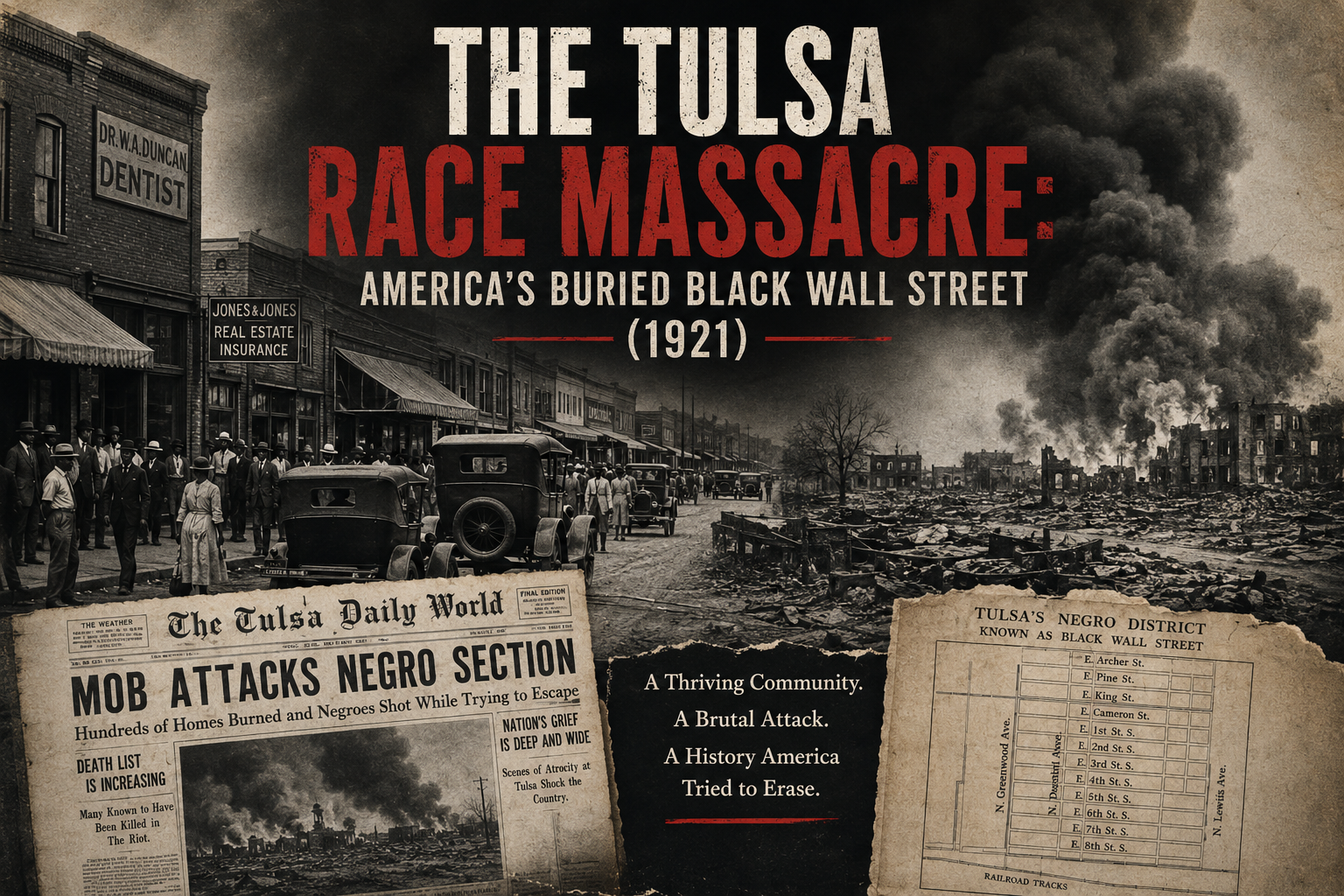
In the early hours of June 1, 1921, white mobs aided by local government officials burned 35 city blocks of Tulsa, Oklahoma to ash. They destroyed 1,256 homes, 191 businesses, a hospital, a school, churches, and a library. They killed an estimated 300 people. They left 10,000 Black Americans homeless overnight. The neighborhood they destroyed was called Greenwood — known across America as “Black Wall Street.” The United States government helped cover it up for 75 years. This is the complete story of the Tulsa Race Massacre.
| Updated: July 2026 | 22 Min Read | 🇺🇸 Tulsa, Oklahoma · May–June 1921 | Disturbing Historical Content |
Greenwood District, Tulsa, Oklahoma — June 1, 1921. 35 blocks of America’s wealthiest Black neighborhood burned to the ground by a white mob aided by Tulsa city officials and Oklahoma National Guard members. Estimated 300 people killed. 10,000 left homeless. The massacre was buried in official records for 75 years. (Oklahoma Historical Society / Public Domain)
There was a neighborhood in Tulsa, Oklahoma, in 1921 that Black Americans had built from nothing into something extraordinary. In the Greenwood District — 35 square blocks in the northern part of the city — Black entrepreneurs, doctors, lawyers, dentists, and business owners had created a self-contained community of remarkable prosperity. They called it “Black Wall Street,” and the name was not hyperbole. Greenwood had two newspapers, two movie theaters, over 300 businesses, its own hospital, its own school system, its own library, and its own hotel. Black families who had been shut out of white-owned businesses had built their own. And what they built was magnificent.
On the night of May 31 and the morning of June 1, 1921, all of it was destroyed. A white mob — eventually numbering in the thousands — descended on Greenwood with guns, torches, and a fury that had been building for years. They burned every building. They shot residents who tried to flee or defend their homes. They looted before burning. Some reports — contested but documented in witness testimony — describe airplanes firing on the neighborhood from above. By the time the fires went out, 35 city blocks were ash, an estimated 300 people were dead, and 10,000 Black Americans were homeless.
What followed the Tulsa Race Massacre was almost as remarkable as the massacre itself: a 75-year cover-up. The event was erased from Oklahoma history textbooks. Official records disappeared. The local newspapers that had helped incite the mob stopped reporting on what they had helped cause. The survivors were left without compensation, without acknowledgment, and without justice. A generation of Black Tulsans grew old and died before their city admitted what had been done to them.
☰ TABLE OF CONTENTS
- What Was Black Wall Street? The Greenwood District Before the Massacre
- Tulsa in 1921: A City Built on Racial Tension
- Dick Rowland and Sarah Page: The Spark That Lit the Fire
- The Night of May 31: How the Tulsa Race Massacre Began
- June 1, 1921: The Morning Greenwood Burned
- Airplanes Over Greenwood: The Most Disputed Evidence
- Government Complicity: Police, National Guard, and City Officials
- The Death Toll: What We Know and What Was Hidden
- The Mass Graves: Where Are the Bodies?
- The Survivors: Lives Destroyed and Never Rebuilt
- The Cover-Up: 75 Years of Official Silence
- How the Tulsa Race Massacre Was Finally Exposed
- The 2001 Commission Report and Its Aftermath
- The Search for Mass Graves: Excavations Since 2020
- Reparations: The Fight That Has Never Ended
- Why the Tulsa Race Massacre Still Matters Today
- Frequently Asked Questions
1. What Was Black Wall Street? The Greenwood District Before the Tulsa Race Massacre
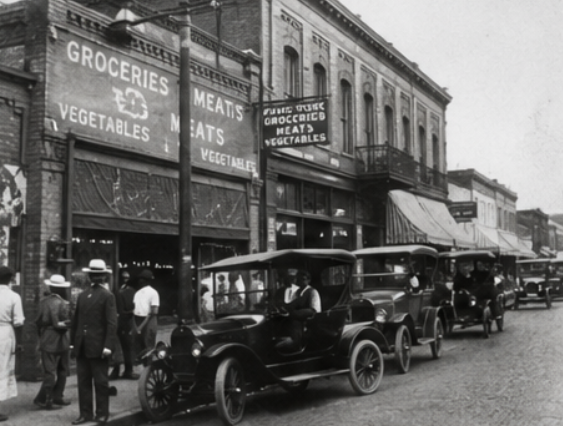
To understand the full weight of what was destroyed in the Tulsa Race Massacre, you need to understand what Greenwood was. It was not simply a Black neighborhood. It was one of the most remarkable examples of community economic development in American history — built against enormous odds, in the teeth of systematic exclusion, into something that proved what was possible when Black Americans were allowed to keep the wealth they created.
Greenwood’s prosperity was rooted in a geographic accident and an economic necessity. Because white-owned Tulsa businesses refused to serve Black customers, Black Tulsans built their own — and because they were forced to shop within their own community, every dollar spent in Greenwood circulated within Greenwood. Money stayed in the community rather than flowing out to white-owned businesses. This enforced economic segregation paradoxically created the conditions for remarkable community wealth accumulation.
By 1921, the Greenwood District contained over 300 Black-owned businesses: grocery stores, clothing stores, law offices, medical practices, dental offices, pharmacies, jewelers, tailors, hotels, restaurants, and nightclubs. It had its own hospital — the Frissell Memorial Hospital — that provided medical care refused by white hospitals. It had the Booker T. Washington High School. It had two newspapers: the Tulsa Star and the Oklahoma Sun. It had the Stradford Hotel, a luxury establishment that was one of the finest hotels in Oklahoma regardless of race. Booker T. Washington himself had visited and called it the most prosperous Black community in America.
| 35 City blocks burned in 16 hours |
300+ Estimated people killed |
10,000 Black residents left homeless |
75yr Buried in official silence |
2. Tulsa in 1921: A City Built on Racial Tension and White Resentment
The Tulsa Race Massacre did not emerge from nothing. It emerged from a specific social and political environment that had been building toward violence for years. Tulsa in 1921 was an oil-boom city experiencing explosive economic growth — and the prosperity of Greenwood was visible, daily evidence that Black Americans could succeed when given the chance to do so. For some white Tulsans, particularly those who struggled economically themselves, this prosperity was not inspiring. It was threatening.
The Ku Klux Klan was experiencing a national revival in 1921, recruiting heavily across Oklahoma. Tulsa’s local newspapers had a consistent pattern of sensationalist, racially inflaming coverage of any incident involving Black residents. The city’s political and law enforcement leadership was either passively complicit in racial violence or actively supportive of it — as the events of May 31 and June 1 would demonstrate beyond any doubt.
This was also the era of the Red Summer of 1919 — a period of widespread anti-Black racial violence across the United States in which white mobs attacked Black communities in more than three dozen cities. Tulsa’s explosion two years later was not an aberration. It was part of a national pattern of organized racial terror directed at Black economic and political progress. The massacre was not caused by Dick Rowland and Sarah Page. They were the excuse. The cause was decades of accumulated white supremacist violence directed at Black success.
“Greenwood was everything they said it was — and that is exactly why they burned it.”
— Dr. Olivia Hooker, survivor of the Tulsa Race Massacre, in interviews given decades later. She was 6 years old when white mobs burned her family’s home.
3. Dick Rowland and Sarah Page: The Spark That Lit the Fire
The Drexel Building elevator in downtown Tulsa — where Dick Rowland, a 19-year-old Black shoe shiner, encountered elevator operator Sarah Page on May 30, 1921. What exactly happened in that elevator has never been definitively established. What is established is that the incident that followed — Rowland’s arrest and a false newspaper headline — provided the trigger for the largest act of racial violence in American history. (Historical record)
The immediate trigger of the Tulsa Race Massacre was an incident that has never been fully explained. On May 30, 1921, Dick Rowland — a 19-year-old Black shoe shiner who worked in downtown Tulsa — entered an elevator in the Drexel Building operated by Sarah Page, a white woman. Something happened. Page screamed. Rowland fled. A clerk in a nearby store called the police.
Rowland was arrested the next morning, May 31. The Tulsa Tribune ran an afternoon headline: “Nab Negro for Attacking Girl in Elevator.” The word “attacking” was a deliberate and incendiary choice. Most historians and the 2001 Tulsa Race Massacre Commission concluded that the most likely explanation for what happened in the elevator was that Rowland stumbled and grabbed Page’s arm for balance, or that they knew each other and the encounter was misunderstood. Sarah Page herself later declined to press charges. Dick Rowland was never tried or convicted of anything.
But the headline was enough. By the evening of May 31, a white crowd had gathered outside the courthouse where Rowland was being held, demanding he be handed over for lynching. What happened next escalated with extraordinary speed from a threatened lynching into the largest act of racial massacre in American history.
4. The Night of May 31: How the Tulsa Race Massacre Actually Began
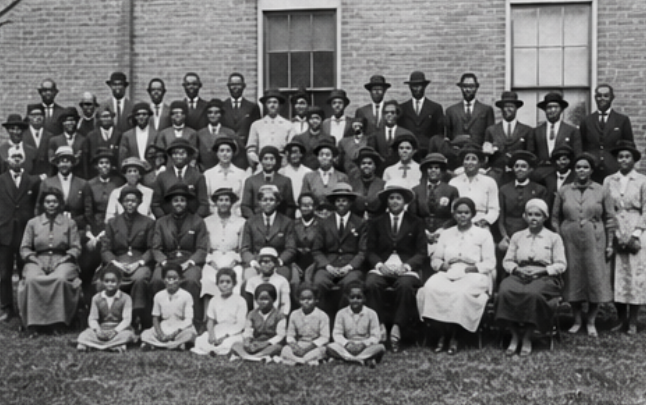
As the white crowd gathered outside the Tulsa courthouse on the evening of May 31, word spread through Greenwood that a Black man was about to be lynched. Groups of armed Black men — many of them World War I veterans who had risked their lives for a country that had never fully acknowledged them — made their way to the courthouse to offer to help defend Rowland. The Tulsa police sheriff reportedly told them that Rowland was safe and they should go home. They began to leave.
As the Black men withdrew, a white man in the crowd approached one of them and tried to disarm him. A shot was fired — who fired it first has never been definitively established. In the chaos that followed, ten white men and two Black men were killed. The armed Black men retreated toward Greenwood. The white crowd, now transformed into a mob, followed.
Through the night of May 31, the white mob grew as men from across Tulsa and from surrounding areas arrived to join it. Tulsa police did not attempt to disperse the mob or protect Black residents. Instead, in a documented decision of extraordinary significance, Tulsa police officers deputized hundreds of white mob members — giving them official authority to “arrest” Black residents. These freshly deputized mob members proceeded to invade Greenwood, assault Black residents, and begin the looting and burning.
5. June 1, 1921: The Morning Greenwood Burned — Hour by Hour
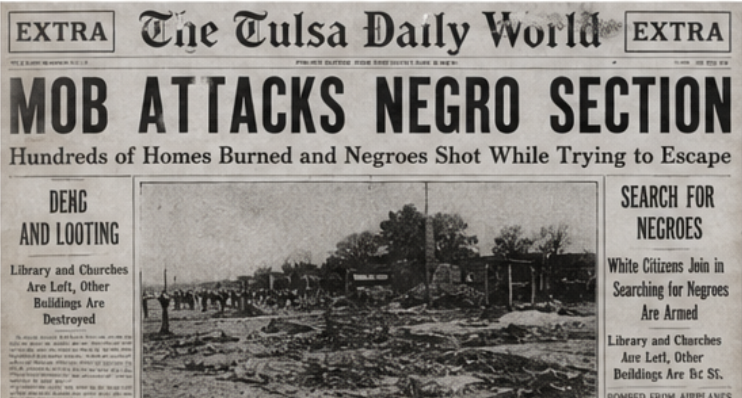
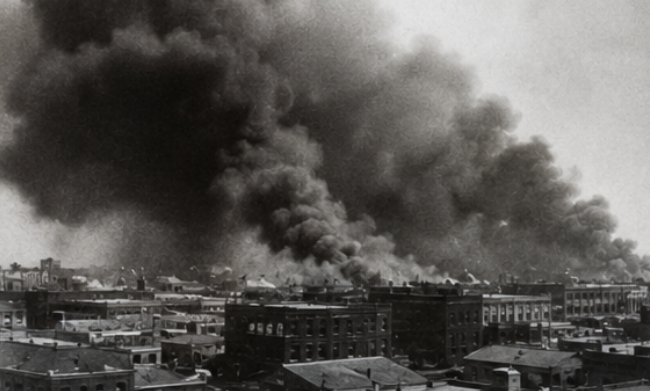
Smoke rising over the Greenwood District, Tulsa, Oklahoma — June 1, 1921. By the time the fires burned out, 35 city blocks of Black Wall Street had been reduced to ash. 1,256 homes were destroyed. 191 businesses were lost. A hospital, a school, churches, a library — everything the Black community of Greenwood had built over two decades was gone in sixteen hours. (Oklahoma Historical Society / Public Domain)
At dawn on June 1, 1921, the systematic destruction of Greenwood escalated dramatically. The white mob — now thousands strong — began a systematic, building-by-building invasion of the Greenwood District. The pattern was consistent and deliberate: they entered homes and businesses, looted everything of value, and then set the buildings on fire. Residents who were still inside were driven out at gunpoint. Those who resisted were killed.
The fires spread with extraordinary speed. Black residents tried to defend their neighborhood — many had weapons and military training from World War I — but they were vastly outnumbered. By mid-morning, it was clear that Greenwood could not be defended. Residents fled with whatever they could carry, heading north and east away from the advancing mob. Elderly residents, children, and the sick were carried by neighbors. Families split in the confusion and chaos. People fled leaving behind everything they had spent lifetimes building.
By 10 AM, the Frissell Hospital — the only hospital in Tulsa that treated Black patients — was burning. The Stradford Hotel was burning. The Greenwood Avenue commercial strip — the heart of Black Wall Street — was burning. Churches were burning. The school was burning. The library was burning. By early afternoon on June 1, 1921, 35 city blocks of the most prosperous Black community in America were ash.
■ WHAT WAS DESTROYED IN THE TULSA RACE MASSACRE — JUNE 1, 1921
► 35 city blocks of Greenwood District completely destroyed
► 1,256 homes burned or destroyed
► 191 businesses looted and burned
► Frissell Memorial Hospital — the only Black hospital in Tulsa — burned
► Booker T. Washington High School damaged
► 21 churches destroyed
► Greenwood Public Library burned
► The Stradford Hotel — one of Oklahoma’s finest hotels — destroyed
► Two Black-owned newspapers — the Tulsa Star and Oklahoma Sun — destroyed
► An estimated $30 million in property destroyed (over $500 million in 2024 value)
► 10,000 people made homeless in a single night
6. Airplanes Over Greenwood: The Most Disputed and Most Disturbing Evidence
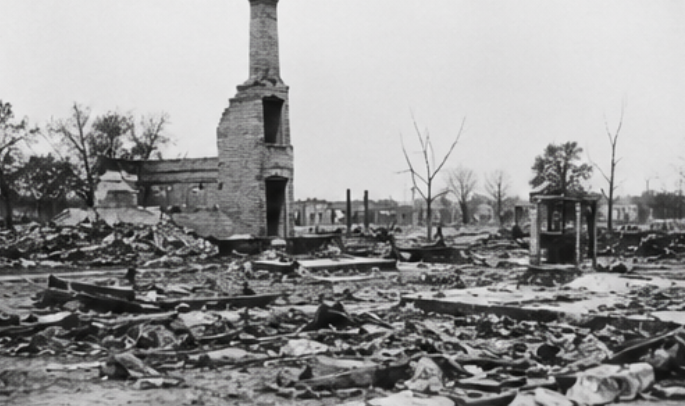
Among the most disturbing and most contested aspects of the Tulsa Race Massacre is the consistent, detailed, multi-source testimony that private airplanes flew over Greenwood during the massacre — and that from these planes, shots were fired and possibly incendiary devices dropped on the neighborhood below.
Multiple survivors described planes flying low over Greenwood during the massacre, with people firing rifles from the planes into the crowds below. The 2001 Oklahoma Commission report acknowledged that planes were definitely present over Greenwood during the massacre — this is confirmed by photographic evidence and multiple independent accounts. The commission concluded that the planes were used for surveillance and potentially to direct the mob on the ground, and that eyewitness accounts of shooting from the planes were credible but that conclusive physical evidence for incendiary devices had not been established.
If aircraft were used to attack Greenwood — even just with rifle fire from above — the Tulsa Race Massacre would represent the first instance of aerial bombardment of an American city in US history. That this is still contested rather than definitively established is itself a testament to the deliberateness of the cover-up that followed.
7. Government Complicity: How Tulsa Police and National Guard Aided the Massacre
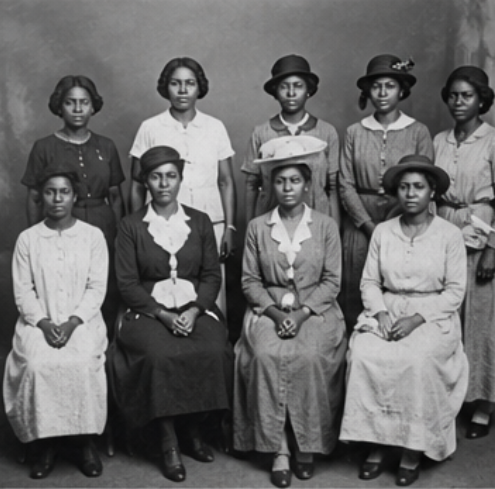
Tulsa police and Oklahoma National Guard members are documented to have participated directly in the Tulsa Race Massacre — arresting and interning Black residents rather than protecting them, deputizing members of the white mob, and in at least some documented cases participating directly in the looting and destruction. An estimated 6,000 Black Tulsans were held in internment facilities including the Tulsa Convention Center, McNulty Park, and the Tulsa Fairgrounds. (Oklahoma Historical Society / Public Domain)
Government complicity in the Tulsa Race Massacre was not passive or incidental. It was active, documented, and went to the highest levels of Tulsa’s civic leadership. The documented actions of Tulsa city government and law enforcement before, during, and after the massacre constitute one of the most thorough examples of institutional racism in American civic history.
Tulsa Police deputized members of the white mob — giving legal authority to people who were actively participating in mass violence. Officers arrested Black residents rather than protecting them, treating victims as criminals. Some officers were documented as participating directly in the looting of Black homes and businesses. Not a single member of the white mob was ever arrested or charged for anything that happened during the massacre.
Oklahoma National Guard members arrived in Tulsa during the massacre — but rather than protecting Black residents, they interned them. An estimated 6,000 Black Tulsans were held in improvised internment facilities at the Tulsa Convention Center, McNulty Park baseball stadium, and the Tulsa Fairgrounds. Black residents were told they could only leave these facilities if vouched for by a white employer — a requirement that made the internment both racist and explicitly designed to restore the pre-massacre social order in which Black labor existed to serve white economic interests.
“They weren’t just allowing it to happen. They were part of it. The men with badges were looting alongside the men without them.”
— A survivor of the Tulsa Race Massacre, testimony collected by the 2001 Oklahoma Commission, describing the behavior of Tulsa police during the massacre
8. The Death Toll: What We Know, What Was Hidden, and the Search for the Truth
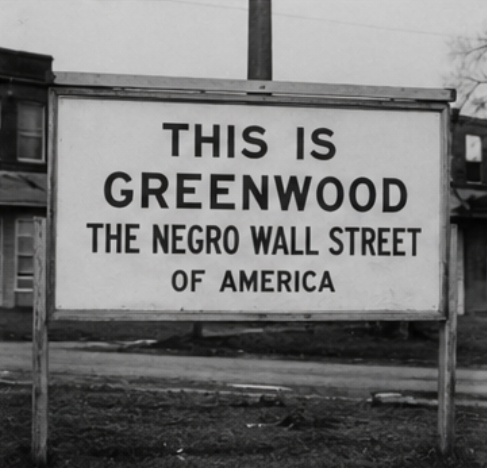
The official death toll recorded by Tulsa authorities in 1921 was 36 people — a number that was immediately and widely disbelieved by survivors and historians. Contemporary accounts from eyewitnesses, journalists, and Red Cross workers described far higher numbers of bodies. The 2001 Oklahoma Commission estimated that between 100 and 300 people were killed. Most historians today use an estimate of approximately 300 deaths.
The dramatic discrepancy between the official toll and the estimated toll is itself evidence of the cover-up that followed the Tulsa Race Massacre. Survivors described bodies being loaded onto trucks and taken to unknown destinations. The rivers near Tulsa were reported to have carried bodies downstream in the days following the massacre. Multiple eyewitnesses described seeing mass burials — in cemeteries, in fields, in unmarked locations — that do not appear in any official record.
Where are the bodies? This question has driven forensic investigation for decades — and since 2020, it has driven actual excavations. The Oaklawn Cemetery in Tulsa has been identified as a probable site of mass burials from the massacre. Forensic work is ongoing. The bodies of the Tulsa Race Massacre victims may still lie in unmarked graves beneath a city that spent 75 years denying their existence.
9. The Survivors: Lives Destroyed and a Community That Was Never Made Whole
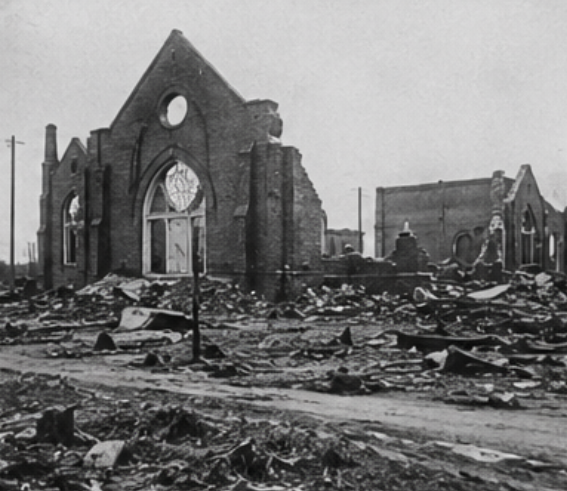
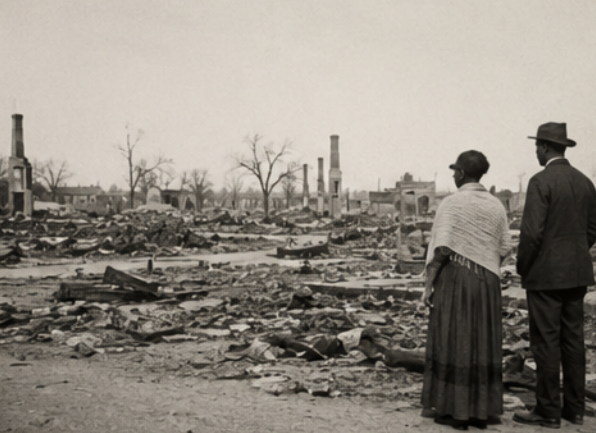
Survivors of the Tulsa Race Massacre emerged from the massacre homeless, often separated from their families, and stripped of everything they had built. The city of Tulsa then moved to prevent them from rebuilding by rezoning Greenwood as a commercial district. No compensation was ever paid. No perpetrator was ever charged. The survivors lived out their lives carrying a history their country refused to acknowledge. (Oklahoma Historical Society / Public Domain)
The survivors of the Tulsa Race Massacre emerged from the experience homeless, often separated from family members, stripped of everything they had built. Tulsa’s response to their situation added institutional cruelty to personal catastrophe. As survivors tried to return to their land to begin rebuilding, the city government moved immediately to prevent it.
The city introduced a new fire ordinance that dramatically raised the building standards required for any new construction in Greenwood — standards specifically designed to be financially impossible for survivors who had just lost everything to meet. Some historians have described this as an attempt by white business interests to permanently take over the Greenwood land for commercial development. The plan ultimately failed because Greenwood’s residents, with extraordinary resilience, rebuilt anyway — constructing a new Greenwood with their own labor and their own resources, without compensation or government assistance.
Not a single person was ever charged or convicted for anything that happened during the Tulsa Race Massacre. The Grand Jury convened to investigate the massacre returned indictments against Black residents for “inciting a riot.” The white mob members who had burned 35 city blocks and killed hundreds of people faced zero legal consequences. The insurance claims filed by Black residents for their destroyed property were denied — on the grounds that riot damage was excluded from standard policies. The survivors were left with nothing, and told they were lucky to have that.
10. The Cover-Up: How the Tulsa Race Massacre Was Hidden for 75 Years
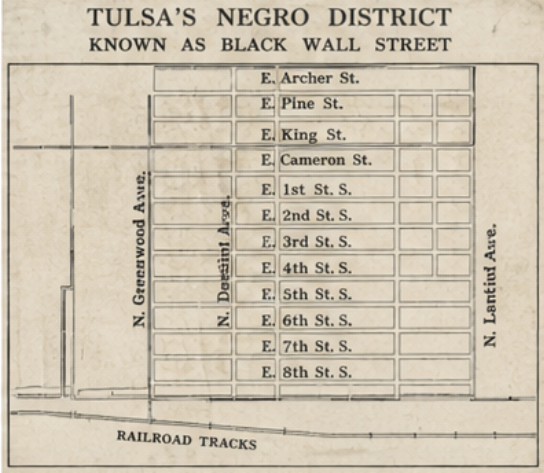
The cover-up of the Tulsa Race Massacre was not informal or accidental. It was systematic, sustained, and involved the active participation of the city government, the legal system, the local press, and the Oklahoma state educational apparatus. The goal was simple: erase the massacre from the historical record so that no accountability, compensation, or acknowledgment would ever be required.
The Tulsa Tribune — the newspaper whose inflammatory headline had helped trigger the massacre — removed the relevant edition from its bound archives. Official police and fire department records were incomplete or missing. The massacre was omitted entirely from Oklahoma history textbooks for decades. The state’s official histories discussed the oil boom, the growth of Tulsa, the progress of Oklahoma — and mentioned nothing about what had happened to Greenwood on June 1, 1921.
For the survivors and their descendants, this erasure compounded the original trauma. They knew what had happened. They had lived through it. But the official record said it had not. Their children and grandchildren grew up in a city that refused to acknowledge that the community their grandparents had built had been deliberately destroyed by that same city. The silence was not merely ignorance. It was a second act of violence against the people who had survived the first.
11. How the Tulsa Race Massacre Was Finally Exposed — Complete Timeline
12. Reparations: The Fight That Has Never Ended and Is Not Finished
The question of reparations for the Tulsa Race Massacre has been active, contentious, and consistently frustrated for over two decades. The 2001 Oklahoma Commission specifically recommended direct reparations payments to survivors and descendants, calling them “an obligation of the city.” The Oklahoma legislature responded by passing a bill that created some educational programs and a scholarship fund — but explicitly excluded the direct payments that survivors had been demanding for eighty years.
The three surviving centenarian witnesses to the massacre — Lessie Benningfield Randle, Viola Fletcher, and Hughes Van Ellis — pursued a legal case for reparations that reached the Oklahoma Supreme Court. In 2024, Oklahoma courts dismissed the case on procedural grounds. All three survivors have since died. The oldest, Lessie Benningfield Randle, was 110 years old. She was 7 years old when white mobs burned her home. She spent over a century waiting for her country to acknowledge what was done to her and to pay her for what was taken. She died still waiting.
“I am 107 years old and I have never seen justice. I have never seen what was taken from us returned. I may not live to see it. But I am still asking.”
— Lessie Benningfield Randle, Tulsa Race Massacre survivor, testifying before the US House of Representatives subcommittee on the Constitution in 2021
13. Why the Tulsa Race Massacre Still Matters More Than 100 Years Later
The Tulsa Race Massacre matters for reasons that go far beyond the specific crimes committed over sixteen hours on May 31 and June 1, 1921. It matters because of what it reveals about the relationship between Black wealth, white violence, and government complicity in American history.
Greenwood was destroyed not despite being successful but because it was successful. The prosperity of Black Wall Street was a direct threat to the racial hierarchy that white supremacist ideology required — the hierarchy that said Black Americans were incapable of success, were meant to occupy the bottom rungs of economic life, and should be grateful for whatever was permitted to them. Greenwood disproved this lie daily. And the lie’s defenders burned it down.
The cover-up matters as much as the massacre. What was buried was not just the history but the possibility of accountability. The survivors and their descendants were denied not only the wealth that was destroyed but the acknowledgment that it had ever existed. They were denied the recognition that they were victims. They were denied justice. This denial — this sustained, systematic erasure — is itself a form of ongoing harm.
The Tulsa Race Massacre is not ancient history. The last survivor died within living memory. The mass graves have not been fully excavated. The reparations have not been paid. This is unfinished history — and unfinished history demands to be told.
14. Frequently Asked Questions About the Tulsa Race Massacre
❓ What was the Tulsa Race Massacre of 1921?
The Tulsa Race Massacre was a violent attack on the Greenwood District of Tulsa, Oklahoma — known as Black Wall Street — that took place on May 31 and June 1, 1921. A white mob, aided by Tulsa police and Oklahoma National Guard members, burned 35 city blocks of America’s most prosperous Black neighborhood. An estimated 300 people were killed and 10,000 Black residents were left homeless. The massacre was triggered by the arrest of a young Black man named Dick Rowland on an unsubstantiated accusation and was the culmination of years of racial tension in a city where Black prosperity had generated intense white resentment. It was buried in official records for 75 years.
❓ Why was Greenwood called Black Wall Street?
The Greenwood District of Tulsa was nicknamed Black Wall Street because of its extraordinary concentration of Black-owned wealth and business activity. By 1921, Greenwood contained over 300 Black-owned businesses including law offices, medical practices, dental offices, hotels, restaurants, movie theaters, pharmacies, grocery stores, and a hospital — all within 35 square blocks. The community had been built by Black entrepreneurs who, excluded from white-owned businesses, had created an entirely self-sufficient economic ecosystem. Booker T. Washington called it the most prosperous Black community in America. The nickname Black Wall Street reflected both its economic vitality and its role as the center of Black financial life in the region.
❓ How many people died in the Tulsa Race Massacre?
The official death toll recorded by Tulsa authorities in 1921 was 36 — a number immediately and widely disputed by survivors. The 2001 Oklahoma Commission estimated between 100 and 300 deaths. Most historians use an estimate of approximately 300 killed. The dramatic discrepancy between the official toll and the estimated toll reflects the deliberate suppression of evidence that followed the massacre, including reports of bodies being removed and buried in unmarked locations. Forensic investigation and excavations at Oaklawn Cemetery since 2020 continue to search for mass graves that may contain the remains of massacre victims.
❓ Were airplanes used in the Tulsa Race Massacre?
Multiple survivor accounts describe planes flying over Greenwood during the massacre and people firing rifles from them. The 2001 Oklahoma Commission confirmed that planes were definitely present over Greenwood during the massacre — supported by photographic evidence and multiple independent witnesses — and concluded they were likely used for surveillance and directing the mob on the ground. Some survivor accounts described being shot at from the air. Whether incendiary devices were also dropped remains contested but not ruled out by historians. If aircraft were used to fire on residents, the Tulsa Race Massacre would represent the first aerial attack on an American city.
❓ Why was the Tulsa Race Massacre hidden for so long?
The Tulsa Race Massacre was systematically suppressed through multiple mechanisms: the local newspaper that helped incite the mob removed relevant editions from its archives; official police and fire records were incomplete or missing; the massacre was omitted entirely from Oklahoma history textbooks for decades; the Grand Jury convened to investigate returned indictments against Black residents rather than white mob members; and the political and civic leadership of Tulsa had strong reasons to avoid acknowledging what had been done with their complicity or active participation. The result was 75 years of official silence that left survivors without acknowledgment and the historical record deliberately incomplete.
❓ Have reparations been paid for the Tulsa Race Massacre?
No direct reparations have been paid to survivors or their descendants for the Tulsa Race Massacre. The 2001 Oklahoma Commission recommended direct reparations but the state legislature excluded direct payments from the resulting bill, instead funding educational programs and a scholarship fund. The three surviving centenarian witnesses — Lessie Benningfield Randle, Viola Fletcher, and Hughes Van Ellis — pursued a legal case for reparations that Oklahoma courts dismissed in 2024. All three have since died. Advocacy organizations representing descendants continue to pursue reparations through legislation and litigation, but as of 2026 no direct payments have been made.
❓ Where can I learn more about the Tulsa Race Massacre?
Scott Ellsworth’s Death in a Promised Land: The Tulsa Race Riot of 1921 (1982) is the original landmark historical account. Ellsworth’s later The Ground Breaking: The Tulsa Race Massacre and an American City’s Search for Its Past (2021) is the most current comprehensive treatment. The 2001 Oklahoma Commission Report is available in full online and is essential primary source reading. The Greenwood Cultural Center in Tulsa maintains archives and educational resources. Tim Madigan’s The Burning: Massacre, Destruction, and the Tulsa Race Riot of 1921 (2001) is an accessible narrative account. The HBO series Watchmen (2019) dramatically portrays the massacre and significantly increased national awareness.
▪ RELATED DARK HISTORY ARTICLES
→ The Tuskegee Syphilis Study: 40 Years of Deliberate Medical Neglect (1932–1972)
→ King Leopold II’s Congo Free State: The Forgotten Genocide
→ Project MKUltra: The CIA’s Secret Mind Control Program (1953–1973)
→ Jonestown Massacre: How Jim Jones Killed 918 People in One Day
→ Unit 731: Japan’s Secret Biological Warfare Program in China
▤ SOURCES & FURTHER READING
▸ Scott Ellsworth — Death in a Promised Land: The Tulsa Race Riot of 1921 (LSU Press, 1982)
▸ Scott Ellsworth — The Ground Breaking: The Tulsa Race Massacre and an American City’s Search for Its Past (Dutton, 2021)
▸ Oklahoma Commission to Study the Tulsa Race Riot of 1921 — Final Report (2001)
▸ Tim Madigan — The Burning: Massacre, Destruction, and the Tulsa Race Riot of 1921 (St. Martin’s, 2001)
▸ Greenwood Cultural Center — Tulsa, Oklahoma — greenwoodculturalcenter.com
▸ Oklahoma Historical Society — ohs.ok.gov — extensive primary source archive