For forty unbroken years, the United States Public Health Service watched 399 Black men in Alabama go blind, lose their minds, and die — while holding a cure in their hands and choosing not to use it. The men were never told they had syphilis. They were never offered penicillin. They were watched, recorded, and used as data. The Tuskegee Syphilis Study is not ancient history. It ended in 1972. And its shadow reaches all the way to today.
| Updated: July 2026 | 22 Min Read | 🇺🇸 Tuskegee, Alabama · 1932–1972 | Disturbing Historical Content |
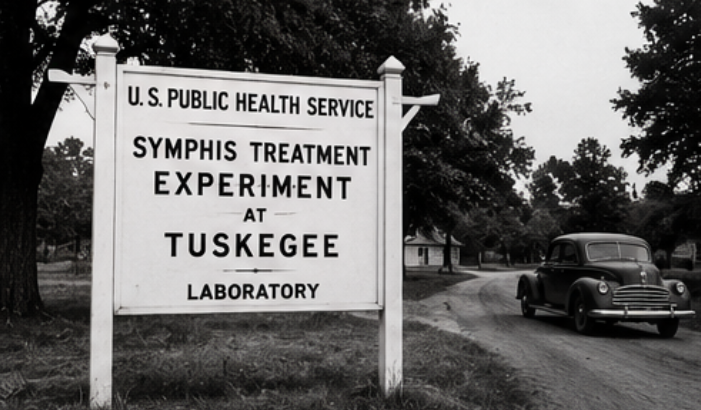
📷 The Tuskegee Syphilis Study ran for forty years in Macon County, Alabama. 399 Black men with syphilis were told they were receiving treatment for “bad blood.” They were not. They received placebos while government doctors watched the disease destroy their bodies. Even after penicillin became a proven cure in the 1940s, the study continued. (US National Archives / Public Domain)
There are crimes that history buries. And there are crimes that history almost buried — that survived only because one person decided they could not stay silent. The Tuskegee Syphilis Study is the second kind. For forty years, from 1932 to 1972, the United States Public Health Service ran a clinical study in Macon County, Alabama, in which 399 Black men with syphilis were deliberately denied treatment so that government researchers could observe how the disease progressed naturally to blindness, madness, and death.
They were not told they had syphilis. They were told they had “bad blood” — a local term that covered everything from fatigue to general illness — and that the government was treating them. The “treatment” was aspirin. It was vitamins. It was the occasional hot meal on examination days and the burial insurance that gave desperately poor families some small reassurance that death would not leave them with nothing. But there was no real medicine. There was no real care. There was observation, documentation, and silence.
When penicillin was established as a safe and effective cure for syphilis in the 1940s — a cure so reliable that the US military was treating soldiers with it as a matter of routine — the Tuskegee Syphilis Study did not end. Its directors made an active decision to continue. They contacted local draft boards to prevent participants from receiving military treatment. They continued for twenty-five more years. The study ended not because anyone in authority decided it was wrong, but because a junior researcher named Peter Buxtun went to a journalist in 1972. That one act of conscience is the only reason we know this story at all.
☰ TABLE OF CONTENTS
- What Was the Tuskegee Syphilis Study?
- The World It Emerged From: Alabama 1932
- How the Study Was Designed — and Who It Targeted
- What the Men Were Told vs. What Was Happening
- The 399 Men: Human Beings, Not Data Points
- Eunice Rivers: The Nurse Who Made It Work
- Penicillin Is Discovered — The Study Continues Anyway
- World War II: Government Blocks Treatment for Drafted Men
- The Health Destruction: What Syphilis Did to These Men
- The Families Nobody Counted: Wives, Widows, and Children
- Peter Buxtun: The Man Who Could Not Stay Silent
- Jean Heller’s Story and the End of the Tuskegee Study
- The Aftermath, the Settlement, and Clinton’s Apology
- The Long Shadow: Tuskegee and Black Healthcare Distrust Today
- The Broader Pattern: America’s History of Medical Exploitation
- Why the Tuskegee Syphilis Study Still Matters
- Frequently Asked Questions
1. What Was the Tuskegee Syphilis Study? The Full Story Explained
The Tuskegee Syphilis Study — formally named the Tuskegee Study of Untreated Syphilis in the Negro Male — was a clinical research program run by the United States Public Health Service (USPHS) from 1932 to 1972. It enrolled 399 Black men who had syphilis and 201 Black men who did not as a control group, all from Macon County, Alabama. None of the men were told the true nature of the study. None gave informed consent. None received treatment.
The stated purpose of the Tuskegee Syphilis Study was to observe the natural progression of untreated syphilis in Black men — based on the medically racist assumption that syphilis might progress differently in Black bodies than in white bodies. This assumption was never scientifically valid. It reflected the systematic medical racism of its era. And it provided the intellectual cover for forty years of deliberate cruelty to hundreds of human beings who had done nothing wrong except to be poor, Black, and living in rural Alabama at a time when the United States government decided their bodies were available for study.
| 399 Black men denied treatment |
40 yrs Duration 1932–1972 |
128 Died directly from syphilis |
$10M Settlement paid in 1974 |
2. The World It Emerged From: Alabama 1932 and the Roots of the Tuskegee Study
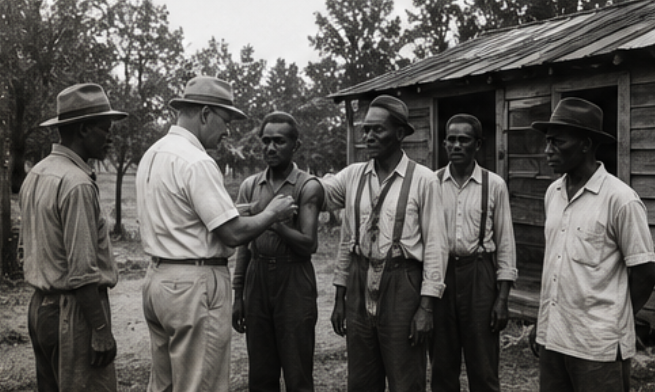
To understand how the Tuskegee Syphilis Study was possible, you have to understand Macon County, Alabama in 1932. It was one of the poorest counties in the United States. The Great Depression had devastated an already desperately poor rural economy built almost entirely on sharecropping — a system in which Black families worked white-owned land for a share of the harvest that rarely amounted to economic independence.
Roughly 82 percent of Macon County’s population was Black. There were no Black doctors in private practice in the county. There was no hospital that would admit Black patients. Access to any kind of medical care was effectively nonexistent for most Black residents. In this context, when uniformed government doctors arrived with vehicles, medical equipment, and genuine authority, offering free examinations and free meals, the men of Macon County had every reason to trust them. They had never had access to healthcare. The government was offering something they had never been given.
Syphilis was widespread throughout the rural South. The disease was poorly understood at the population level, treatments were expensive and partially effective, and most poor Black men who had it had never been diagnosed. The US Public Health Service had been running syphilis treatment programs across several Southern states through the late 1920s — programs that were genuinely helpful. When Great Depression funding cuts threatened to end these programs in 1932, a researcher named Dr. Taliaferro Clark proposed something different: instead of treating patients, why not study what happened when they weren’t treated? A six-month observational study. That became forty years.
“These people have no resources. They are people who have never had medical attention before, and this is probably the last opportunity for them to have it.”
— Dr. Taliaferro Clark, US Public Health Service, internal memo pitching the Tuskegee Syphilis Study in 1932 — framing deliberate denial of care as an opportunity to provide it
3. How the Tuskegee Syphilis Study Was Designed — and Who It Targeted
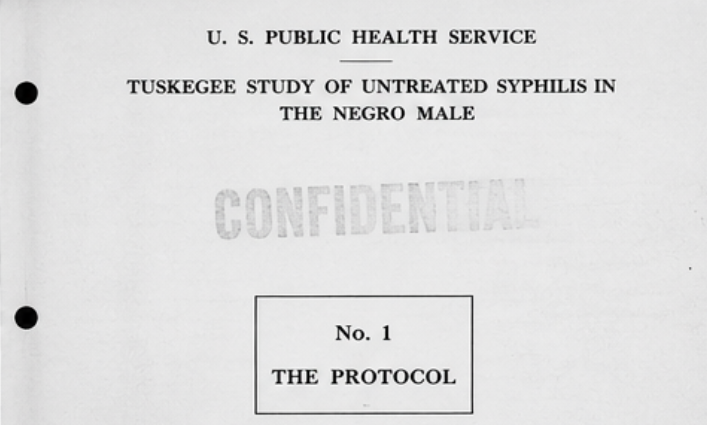
📷 The Tuskegee Syphilis Study was conducted in partnership with the Tuskegee Institute — a historically Black university in Alabama — and run out of its hospital facilities. The association with a respected Black educational institution helped the USPHS build trust with participants who had every reason to be suspicious of government programs. (Historical record / Public Domain)
The design of the Tuskegee Syphilis Study was carefully constructed to maximize participation from a population that had strong historical reasons to distrust government institutions. The USPHS partnered with the Tuskegee Institute — a respected historically Black university founded by Booker T. Washington — and conducted the study through its hospital. This institutional association was not accidental: it provided the credibility necessary to recruit men who would otherwise never have trusted a government program.
Recruitment was built around genuine incentives that were meaningful to desperately poor men during the Great Depression. Participants received free physical examinations. They received free hot meals on study days. They received free transportation to and from the clinic. Most significantly, they received free burial insurance — a benefit with real practical value to men who worried that they would die and leave their families unable to afford a funeral. For men with no income security and no healthcare access, these were not trivial things. These were reasons to show up, year after year.
■ WHAT PARTICIPANTS RECEIVED — AND WHAT THEY WERE NEVER GIVEN
► Free physical examinations — used to monitor disease progression for researchers
► Free hot meals on examination days — the one concrete, genuine benefit
► Free transportation to and from the clinic
► Free burial insurance — the most powerful recruitment tool
► Aspirin and vitamins — presented as treatment; were placebos
► NOT given: any diagnosis of syphilis
► NOT given: any genuine treatment for syphilis
► NOT given: penicillin — even after it became a proven cure in the 1940s
4. What the Men Were Told vs. What Was Actually Happening to Their Bodies
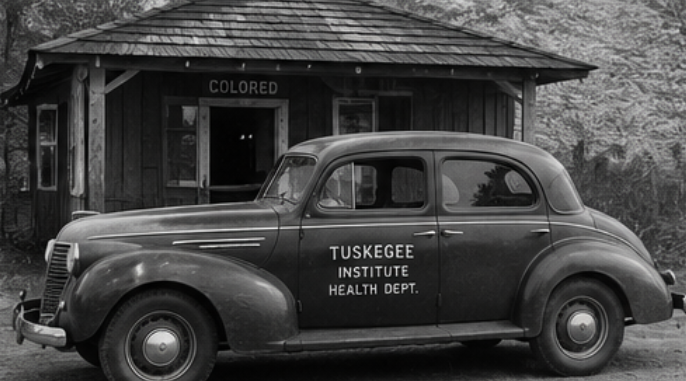
The central deception of the Tuskegee Syphilis Study was not subtle or ambiguous. It was deliberate, sustained, and designed at the highest levels of the program. The men were told they had “bad blood” — a catch-all local term that could refer to syphilis, anemia, fatigue, or general poor health. They were told they were receiving treatment. They were not.
The painful spinal taps that researchers performed — a diagnostic procedure with real medical risks, including headaches, nerve damage, and infection — were described to participants as “special free treatment.” The lumbar punctures were being used to monitor the neurological progression of syphilis. They were not therapeutic. They were painful diagnostic procedures performed on men who had been told they were receiving care. The men bore the pain of these procedures, thanked the doctors, and came back next time.
This systematic deception — maintained consistently across forty years and multiple changes of study leadership — meant that every single interaction between participants and researchers was built on a lie. The trust these men placed in government doctors was weaponized against them. And the researchers who maintained this deception wrote academic papers, attended professional conferences, and built careers on the data produced by it.
5. The 399 Men: Human Beings Who Were Treated as Data Points
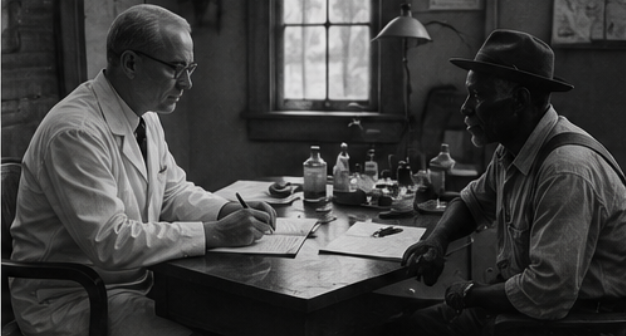
📷 The 399 men enrolled in the Tuskegee Syphilis Study were primarily sharecroppers and farm laborers — some of the poorest and most medically underserved people in America. They were husbands, fathers, grandfathers. They trusted the government doctors who came to examine them. That trust was never honored. (Historical record)
The 399 men enrolled in the Tuskegee Syphilis Study deserve to be remembered as individuals, not statistics. They were primarily sharecroppers and farm laborers from Macon County — men who worked the land for a share of the crop and lived in conditions of genuine poverty in the Jim Crow South. Many were illiterate. Most had never seen a doctor before the study began. When they enrolled, they ranged in age from their twenties to their sixties.
They were fathers who came home in the evenings to children who needed them. They were husbands who slept beside wives who would later be infected with the disease they carried. They were men who went to church on Sundays and watched their neighbors go to funerals that the burial insurance policy — the one genuine benefit the study provided — at least helped their families afford. They were human beings who, in the context of profound social disadvantage, made a rational decision to trust an institution that was supposed to exist to protect public health.
The youngest men were young enough that, with penicillin, they could have lived long, healthy lives. Instead, as the years passed, they went to their examinations, answered their questions, allowed their spinal fluid to be drawn, and went home to families who watched them slowly deteriorate. The Tuskegee Syphilis Study stole decades of healthy life from men who had already been given so little by the country they lived in.
6. Eunice Rivers: The Nurse at the Heart of the Tuskegee Study
No single person was more central to the day-to-day operation of the Tuskegee Syphilis Study than Eunice Rivers Laurie — a trained Black nurse who served as the study’s primary community liaison for its entire forty-year duration. Rivers was the human face of the study. She maintained relationships with participants over decades. She followed up with families. She drove men to their examinations. She ensured continuity through five changes of research leadership and countless shifts in staffing and policy.
Rivers is one of the most morally complex figures in the entire history of the Tuskegee Syphilis Study. She was a skilled, dedicated professional who genuinely cared, in some ways, about the men she worked with. She believed — or told herself she believed — that the study provided benefits participants would not otherwise have had. She operated within an institution she respected, following the directives of researchers and officials with far more authority than she had.
But she also spent forty years building and maintaining the trust that allowed the deception to function. Without Rivers, the retention rate that made the study scientifically valuable would have been impossible. The men trusted her personally — and she used that trust, year after year, in the service of a program that was killing them. She is neither a hero nor a straightforward villain. She is the most uncomfortable kind of figure: an ordinary person who sustained an atrocity by doing her job well.
7. Penicillin Is Discovered — And the Tuskegee Study Continues Anyway
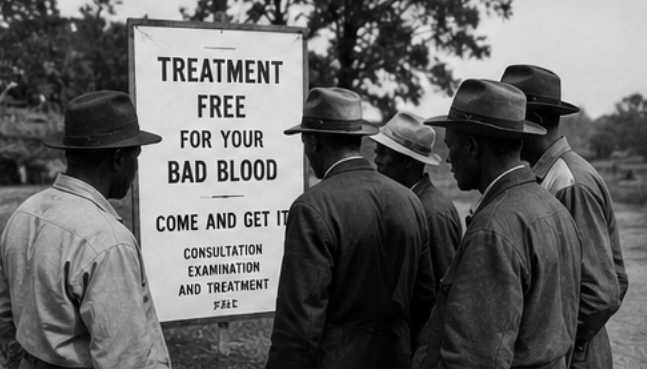
This is the moment that makes the Tuskegee Syphilis Study not merely a moral failure but an active, ongoing crime. By the early 1940s, penicillin had been established as a safe, effective, and widely available cure for syphilis. By 1947, the US Public Health Service was itself running penicillin treatment campaigns across the South. Every sexually transmitted disease clinic in America was offering penicillin to syphilis patients. The cure was not expensive. It was not experimental. It was not difficult to obtain.
Every single one of the 399 men in the Tuskegee Syphilis Study could have been cured. With a few injections of penicillin, the disease that was destroying their cardiovascular systems, attacking their nervous systems, stealing their sight and their minds — it could have been stopped. The researchers knew this. They discussed it. And they decided to continue the study, because treating the participants would have ended its scientific value.
They chose the data over the men’s lives. This was not a bureaucratic oversight. It was not a failure of communication. It was a deliberate decision, made at the highest levels of a US government health agency, to allow hundreds of human beings to continue suffering from a curable disease because their suffering was scientifically useful. That decision was renewed, implicitly, every year for the next twenty-five years.
“For the most part, doctors and civil servants simply did their jobs. Some merely followed orders, others worked for the glory of science.”
— James Jones, historian, Bad Blood: The Tuskegee Syphilis Experiment (1981) — on how ordinary professionals sustained the study for four decades
8. World War II: How the Government Actively Blocked Treatment for Men Called to Serve
If the decision to continue the Tuskegee Syphilis Study after penicillin’s discovery moved it from questionable research into active harm, then what happened during World War II moved it into something that can only be described as a government conspiracy against its own citizens.
US military policy required that all men inducted into the armed forces be tested and treated for sexually transmitted infections before deployment. This created an immediate problem for Tuskegee’s researchers: some of their study participants were receiving draft notifications. If these men were inducted, they would automatically receive penicillin treatment, ending their usefulness as subjects with untreated syphilis.
The Tuskegee researchers compiled a list of 256 study participants who had received draft notices and contacted the Macon County draft board directly, providing names and requesting that these men be excluded from military induction so they could not receive treatment. The United States Public Health Service actively intervened with the United States Army to prevent American citizens from receiving medical care they were legally entitled to as military inductees. This single documented action is perhaps the most unambiguous proof that what was happening in Tuskegee was not passive neglect but active, purposeful harm.
9. The Health Destruction: What Forty Years of Untreated Syphilis Did to These Men
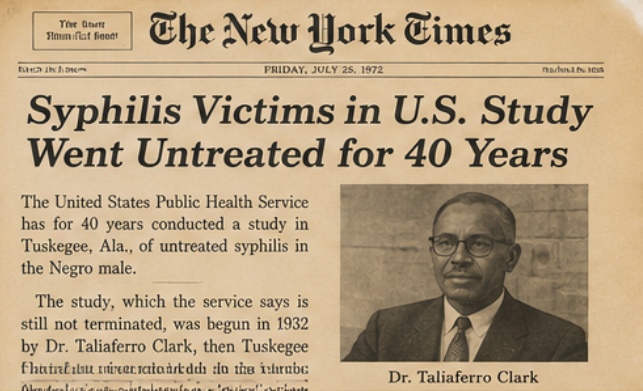
📷 Late-stage syphilis attacks the heart, blood vessels, brain, and nervous system. The consequences of forty years of untreated syphilis in the Tuskegee participants included aortic aneurysms, cardiac failure, blindness, progressive dementia, and the total personality destruction of neurosyphilis. 128 men died directly of the disease or its complications. (Historical record)
Syphilis untreated for decades is not simply fatal. It is systematically destructive — working through the body in stages over years, dismantling one system after another. Understanding what the Tuskegee Syphilis Study actually did requires understanding what late-stage syphilis looks like in a living person.
Cardiovascular syphilis is the most common late complication. It attacks the aorta — the main artery of the body — causing inflammation, aneurysm, and eventual catastrophic failure. Men die of aortic rupture, or live for years with progressive heart disease that leaves them increasingly unable to work, walk, or care for their families.
Neurosyphilis attacks the brain and spinal cord. It causes personality changes, loss of coordination, chronic pain, progressive memory loss, blindness, deafness, and a form of dementia called general paresis — a descent into complete mental disintegration that was well-documented in medical literature and was, therefore, perfectly familiar to the researchers watching it happen to their study participants. By the time the study ended, 128 of the 399 men had died directly of syphilis or its complications.
■ THE DOCUMENTED TOLL OF THE TUSKEGEE SYPHILIS STUDY
► 128 men died directly of syphilis or its complications
► 40 wives were infected with syphilis by their husbands
► 19 children were born with congenital syphilis
► Uncounted men suffered decades of cardiovascular disease and heart failure
► Uncounted men experienced progressive blindness from optic nerve damage
► Uncounted men descended into dementia from neurosyphilis
► All of this was preventable with penicillin from the 1940s onwards
► The study actively prevented participants from accessing treatment elsewhere
10. The Families Nobody Counted: Wives, Widows, and Children of Tuskegee
The official victim count of the Tuskegee Syphilis Study — 399 men — dramatically understates the true scope of harm. The study’s refusal to diagnose or treat its participants meant that infected men continued sexual relations with their wives, who were never warned, never tested, and never offered treatment. Forty wives contracted syphilis as a direct result of the study’s operation.
Nineteen children were born with congenital syphilis — a condition in which the infection crosses from mother to child during pregnancy, causing devastating outcomes including stillbirth, severe neurological damage, bone deformities, hearing loss, blindness, and lifelong chronic illness. These nineteen children were never enrolled in any study. They never signed anything. They were simply born into the consequences of what was done to their fathers and, through them, to their mothers.
The 1974 class action settlement that resolved the legal aftermath of the Tuskegee Syphilis Study recognized this broader harm by including wives, widows, and children of participants as entitled to compensation. It was an implicit acknowledgment that the damage extended far beyond the men who were directly enrolled — rippling outward through families and, in the documented consequences for Black American healthcare trust, through entire communities.
11. Peter Buxtun: The Man Who Could Not Stay Silent and Ended the Tuskegee Study
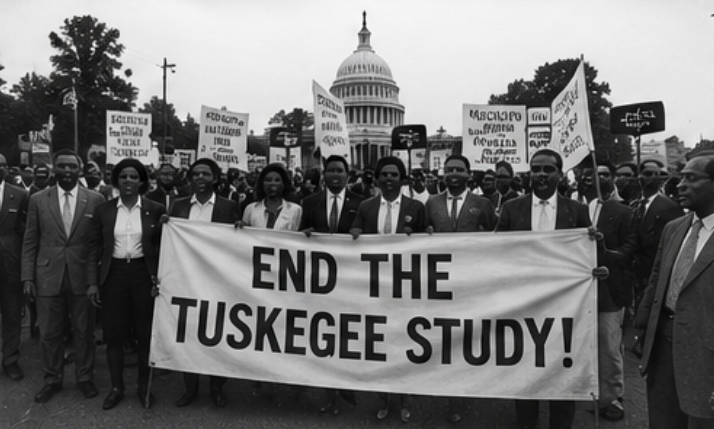
Peter Buxtun was 27 years old when he joined the US Public Health Service in 1966 as a venereal disease investigator. Almost immediately after learning about the Tuskegee Syphilis Study, he became troubled by it. He raised his concerns formally — in writing — to his superiors in 1966. The response was that the study should continue. He raised them again in 1968, more urgently, citing the recently published ethical standards for human research following the Nuremberg trials. The response was a formal review that concluded the study should continue.
For four years, Buxtun waited. He left the USPHS and attended law school. But he did not forget what he had seen. In 1972, he made a decision that would end the study and permanently change American medical ethics. He copied the study’s documents and passed them to Jean Heller — a reporter for the Associated Press. Heller spent months verifying and reporting the story. On July 25, 1972, her article appeared on front pages across the country.
The public response was immediate and furious. Within days, the USPHS terminated the Tuskegee Syphilis Study. At that point, only 74 of the original 399 participants were still alive. All were finally offered treatment — in many cases, decades too late for the treatment to reverse the damage already done. The study had run for forty years, two hundred forty months, across five decades. It ended because one man decided enough.
“I felt the Hippocratic Oath applied to them as much as to any other patient. I could not live with myself if I did nothing.”
— Peter Buxtun, the whistleblower who exposed the Tuskegee Syphilis Study, in interviews given after the story broke in 1972
12. The Aftermath, the Settlement, and Clinton’s Formal Apology
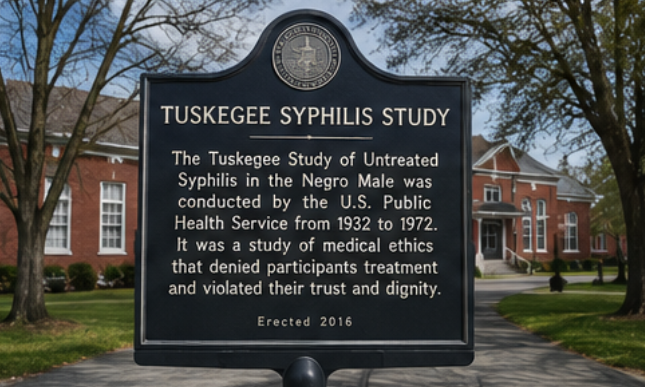
📷 On May 16, 1997, President Bill Clinton issued a formal apology to the five surviving Tuskegee Syphilis Study participants in a White House ceremony. “What was done cannot be undone,” Clinton said. “But we can end the silence.” The apology came 25 years after the study ended and 40 years after penicillin could have cured every single man. (White House / Public Domain)
“The United States government did something that was wrong — deeply, profoundly, morally wrong. It was an outrage to our commitment to integrity and equality for all our citizens.”
— President Bill Clinton, formal apology to Tuskegee Syphilis Study survivors, White House, May 16, 1997
13. The Long Shadow: How the Tuskegee Syphilis Study Shapes Black Healthcare Trust Today
The Tuskegee Syphilis Study did not end in 1972. Its consequences are measurable in public health data today, more than fifty years later. This is not metaphor. It is documented in peer-reviewed medical literature.
A landmark 2016 study published in the Quarterly Journal of Economics found that the public revelation of the Tuskegee study in 1972 was directly associated with a decline in Black men’s engagement with the healthcare system — measured by physician visits, hospital utilization, and preventive care rates — in the counties surrounding Macon County, Alabama. The researchers estimated that this decline in healthcare engagement was associated with an increase in Black male mortality in the affected areas. People did not avoid doctors because they were irrational. They avoided doctors because they had documented, specific historical reasons to believe that the healthcare system might harm them.
During the COVID-19 pandemic, public health researchers consistently noted that medical distrust in Black communities — distrust with specific documented historical roots in the Tuskegee Syphilis Study — contributed to higher rates of vaccine hesitancy and lower rates of early treatment-seeking. Community health workers across the country reported that when they went to Black communities to talk about COVID vaccines, the first question they were often asked was: “Is this going to be another Tuskegee?”
14. The Broader Pattern: The Tuskegee Syphilis Study Was Not Unique
One of the most important and most uncomfortable truths about the Tuskegee Syphilis Study is that it existed within a pattern rather than as an isolated aberration. The same researchers and the same institutional culture that produced Tuskegee also produced the Guatemala Syphilis Experiments — a program conducted between 1946 and 1948 in which US government doctors deliberately infected Guatemalan prisoners, soldiers, and psychiatric patients with syphilis and gonorrhea without their knowledge or consent.
Dr. John Cutler — one of the primary researchers in the Guatemala experiments — later became a lead investigator in the Tuskegee study. The Guatemala program was classified and not publicly revealed until 2010, when researcher Susan Reverby discovered it in archived papers. President Obama called Guatemala to apologize. The lead American researcher had already died. The same man. Different countries. The same crime.
15. Why the Tuskegee Syphilis Study Still Matters More Than Half a Century Later
The Tuskegee Syphilis Study ended in 1972. The last known survivor died in 2004. The formal apology came in 1997. And yet this history refuses to become simply history — because its consequences continue to be measurable, and because the institutional and moral failures it represents have never been fully reckoned with.
The researchers who ran the Tuskegee study were not, by the standards of their time and institution, acting in obviously criminal ways. They were writing papers. They were attending conferences. They were collecting data. They were doing, in the language of their profession, science. The study was not secret in the way that Project MKUltra was secret — it was published in peer-reviewed medical journals. The crime was hiding in plain sight, visible to anyone who looked, because the people doing the looking had decided that the 399 men whose lives they were destroying did not fully count as the kind of human beings whose interests needed to be weighed.
The Tuskegee Syphilis Study produced genuine good in its aftermath: the legal and regulatory framework for human research protection — Institutional Review Boards, informed consent requirements, the Belmont Report — was built directly in response to this study. The ethical principles that protect research subjects today were purchased with the suffering of 399 Black men in Alabama who deserved infinitely better.
The minimum this history demands is to be known. Fully. Clearly. Without looking away. Because that is how we honor the men it destroyed — and because understanding how this happened is the only insurance we have that something like it will not happen again.
16. Frequently Asked Questions About the Tuskegee Syphilis Study
❓ What was the Tuskegee Syphilis Study and when did it happen?
The Tuskegee Syphilis Study was a 40-year clinical research program conducted by the US Public Health Service from 1932 to 1972 in Macon County, Alabama. It enrolled 399 Black men with syphilis and deliberately denied them treatment so researchers could observe the disease’s natural progression. The men were never told they had syphilis. They were given placebos and told they were being treated for “bad blood.” Even after penicillin became a widely available cure in the 1940s, the study continued for another 25 years. It ended only after whistleblower Peter Buxtun leaked the story to journalist Jean Heller of the Associated Press in 1972.
❓ How many people died because of the Tuskegee Syphilis Study?
128 of the 399 men enrolled in the study died directly of syphilis or its complications. 40 wives of participants contracted syphilis as a direct result of the study’s refusal to diagnose or treat their husbands. 19 children were born with congenital syphilis. Beyond these direct deaths, hundreds of men suffered decades of cardiovascular disease, neurological damage, progressive blindness, and dementia that the study’s denial of treatment made inevitable. The full human cost, including indirect health consequences across families and communities, is incalculable.
❓ Why did the Tuskegee Study continue after penicillin was available?
The study’s scientific value depended on observing untreated syphilis progression. Treating participants would have ended that value. Study directors therefore made a deliberate decision to continue withholding treatment even after penicillin became standard care in the 1940s. They went further: during World War II, they contacted local draft boards to prevent participants from being inducted into the military, where they would have automatically received penicillin treatment. This active intervention to block access to a known cure is the clearest proof that what was happening was not passive negligence but deliberate harm.
❓ Who exposed the Tuskegee Syphilis Study?
Peter Buxtun, a venereal disease investigator with the US Public Health Service, exposed the study. After raising concerns internally in 1966 and 1968 and being told both times that the study should continue, Buxtun leaked the study documents to journalist Jean Heller of the Associated Press in 1972. Heller’s story was published July 25, 1972. The USPHS terminated the study within days of publication. Without Buxtun’s decision to go to the press after internal channels failed, the study might have continued for years longer.
❓ How did the Tuskegee Syphilis Study change medical ethics in America?
The Tuskegee Syphilis Study produced the modern framework for protecting human research subjects in the United States. The National Research Act of 1974 required the creation of Institutional Review Boards to oversee all federally funded human research. The Belmont Report of 1979 established the foundational ethical principles of research ethics: respect for persons, beneficence, and justice. The requirement for genuine informed consent in medical research, now a fundamental patient right, was significantly strengthened as a direct response to Tuskegee. These reforms are the positive legacy of a deeply negative history.
❓ Does the Tuskegee Syphilis Study still affect Black Americans today?
Yes, measurably. A landmark 2016 study found that public exposure of the Tuskegee study in 1972 was directly associated with declining healthcare engagement among Black men in affected counties, with measurable effects on mortality. Medical distrust in Black communities remains documented and higher than in white communities, with Tuskegee consistently cited in surveys as a significant reason. During the COVID-19 pandemic, community health workers reported that Tuskegee was frequently raised by Black Americans expressing hesitancy about vaccines and government health programs. The harm done to these 399 men continues to cost lives decades later.
❓ Where can I learn more about the Tuskegee Syphilis Study?
James H. Jones’s Bad Blood: The Tuskegee Syphilis Experiment (Free Press, 1981, revised 1993) is the definitive historical account and required reading. Susan Reverby’s Examining Tuskegee: The Infamous Syphilis Study and Its Legacy (UNC Press, 2009) is the most comprehensive modern scholarship and includes the discovery of the Guatemala experiments. Fred Gray’s The Tuskegee Syphilis Study (1998) was written by the attorney who represented the survivors. The CDC maintains a comprehensive resource at cdc.gov/tuskegee. The Tuskegee University National Center for Bioethics in Research and Health Care continues to document and educate on the study’s legacy.
▪ RELATED DARK HISTORY ARTICLES
→ Project MKUltra: The CIA’s Secret Mind Control Program (1953–1973)
→ King Leopold II’s Congo Free State: The Forgotten Genocide
→ Unit 731: Japan’s Secret Biological Warfare Program in China
→ Jonestown Massacre: How Jim Jones Killed 918 People in One Day
→ The Tulsa Race Massacre: America’s Buried Black Wall Street (1921)
▤ SOURCES & FURTHER READING
▸ James H. Jones — Bad Blood: The Tuskegee Syphilis Experiment (Free Press, revised 1993)
▸ Susan Reverby — Examining Tuskegee: The Infamous Syphilis Study and Its Legacy (UNC Press, 2009)
▸ Fred Gray — The Tuskegee Syphilis Study (New South Books, 1998)
▸ Alsan & Wanamaker — Tuskegee and the Health of Black Men, Quarterly Journal of Economics (2018)
▸ Final Report of the Tuskegee Syphilis Study Ad Hoc Advisory Panel (1973)
▸ President Clinton’s Formal Apology — White House, May 16, 1997
▸ Centers for Disease Control and Prevention — cdc.gov/tuskegee