Introduction
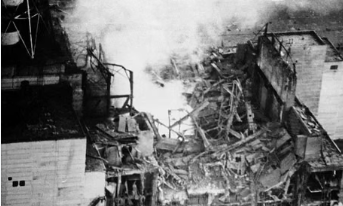
The Chernobyl disaster is often remembered as one of the worst man-made disasters in history. But the explosion itself is only part of the story.
What followed was just as damaging. Delayed warnings, controlled information, and political pressure shaped how the crisis unfolded. For many people, the real tragedy was not just radiation, but silence.
This article breaks down what actually happened, what was hidden, and why it still matters today.
Where and How It Happened
The disaster took place at the Chernobyl Nuclear Power Plant, located near the city of Pripyat.
In the early hours of April 26, 1986, engineers were running a safety test on Reactor No. 4. The goal was to check whether the turbine could provide power during a shutdown.
Instead, a combination of design flaws in the RBMK reactor and operator mistakes caused the reactor to become unstable.
Within seconds:
- Power surged uncontrollably
- Fuel rods overheated
- Pressure built up inside the reactor
The result was a massive steam explosion, followed by a fire that released radioactive material into the atmosphere for days.
How Much Radiation Was Released?
Chernobyl released a large amount of radioactive material, including iodine-131 and cesium-137.
These particles spread across Ukraine, Belarus, Russia, and into Europe.
You may have heard comparisons like “hundreds of Hiroshima bombs.” These are often used to show scale, but they are not technically accurate.
A nuclear weapon and a reactor accident behave very differently. What matters is that Chernobyl caused widespread contamination over a large geographic area.
The First Hours: Confusion and Denial
Immediately after the explosion, plant workers and firefighters rushed in, many without fully understanding the danger.
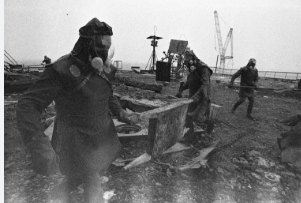
Some thought it was a regular fire.
At the same time, officials in the Soviet Union were slow to release information to the public.
Inside the system, reports were being made. Outside, there was silence.
Life in Pripyat Before Evacuation
For residents of Pripyat, life continued as normal for more than a day.
- Children went to school
- Families walked outside
- People watched the fire from a distance
No official warning was given about radiation.
The evacuation finally began around 36 hours later. By that point, exposure had already occurred.
People were told to pack lightly. Most believed they would return in a few days.
They never did.
The Evacuation: Too Late and Too Limited
Around 49,000 people were evacuated from Pripyat.
Later, a wider exclusion zone was created, and more than 300,000 people were eventually relocated.
Entire villages were abandoned.
Homes, schools, and personal belongings were left behind. Many of these places remain frozen in time today.
The Liquidators: Fighting an Invisible Threat
To contain the disaster, the Soviet government sent hundreds of thousands of workers, soldiers, and volunteers.
These people became known as liquidators.
Their tasks included:
- Putting out fires
- Clearing radioactive debris
- Building the concrete “sarcophagus” over the reactor
Many early responders received extremely high doses of radiation.
Some died within weeks. Others developed long-term health issues.
Even today, the full impact on this group is still being studied.
When the World Found Out
The Soviet Union did not immediately inform the international community.
The turning point came when radiation sensors in Sweden detected unusually high levels.
This forced officials to admit that something serious had happened.
Even then, the information released was limited.
Information Control and Public Messaging
The Soviet system placed strong emphasis on control of information.
After the disaster:
- Early reports minimized the scale
- Public statements reassured citizens
- Detailed data was restricted
Events like May Day celebrations in cities such as Kyiv continued, despite growing awareness of contamination risks.
This approach was partly about avoiding panic, but also about maintaining the image of stability.
Health Effects: What We Know Today
Radiation exposure affected different groups in different ways.
Short-Term Effects
- Workers and firefighters exposed to high doses suffered acute radiation sickness
- Several deaths occurred within weeks
Long-Term Effects
- Increased rates of thyroid cancer, especially in children
- Ongoing studies into other cancers and health conditions
Organizations like the World Health Organization and United Nations Scientific Committee on the Effects of Atomic Radiation have confirmed a rise in certain cancers, though total death estimates remain debated.
Environmental Impact
The environment around Chernobyl changed dramatically.
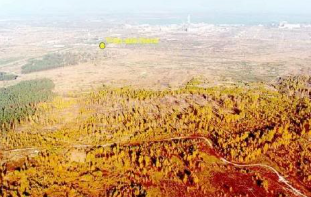
One of the most well-known areas is the Red Forest, where trees turned reddish-brown and died after absorbing radiation.
Wildlife patterns shifted. Some species declined, while others adapted in unexpected ways.
Large parts of the exclusion zone remain unsafe for long-term human settlement.
Political Consequences
Chernobyl had effects beyond health and environment.
It exposed weaknesses in the Soviet system, especially around transparency and crisis management.
The disaster became one of the factors that pushed reforms under Mikhail Gorbachev.
It also contributed to growing public distrust, which played a role in the eventual collapse of the Soviet Union.
Lessons from Chernobyl
Chernobyl is not just about nuclear energy. It’s about decision-making under pressure.
Key lessons include:
- Delays in communication can increase harm
- Accurate information helps people protect themselves
- Safety systems must be taken seriously
- Transparency matters during crises
Conclusion
The Chernobyl disaster began with an explosion, but its impact was shaped by human choices.
Some of those choices made the situation worse.
Today, Chernobyl stands as a reminder of what can happen when risk, pressure, and silence come together.
It is not just a story from the past. It is a warning that still applies.
References
- World Health Organization. Health Effects of the Chernobyl Accident and Special Health Care Programmes.
- United Nations Scientific Committee on the Effects of Atomic Radiation. Sources and Effects of Ionizing Radiation (UNSCEAR Reports).
- International Atomic Energy Agency. Chernobyl Accident 1986: Safety Review and Findings.
- European Commission. Chernobyl: 20 Years On – Impact and Lessons.
- U.S. Nuclear Regulatory Commission. Backgrounder on the Chernobyl Nuclear Power Plant Accident.
- National Geographic Society. Chernobyl Disaster Explained.