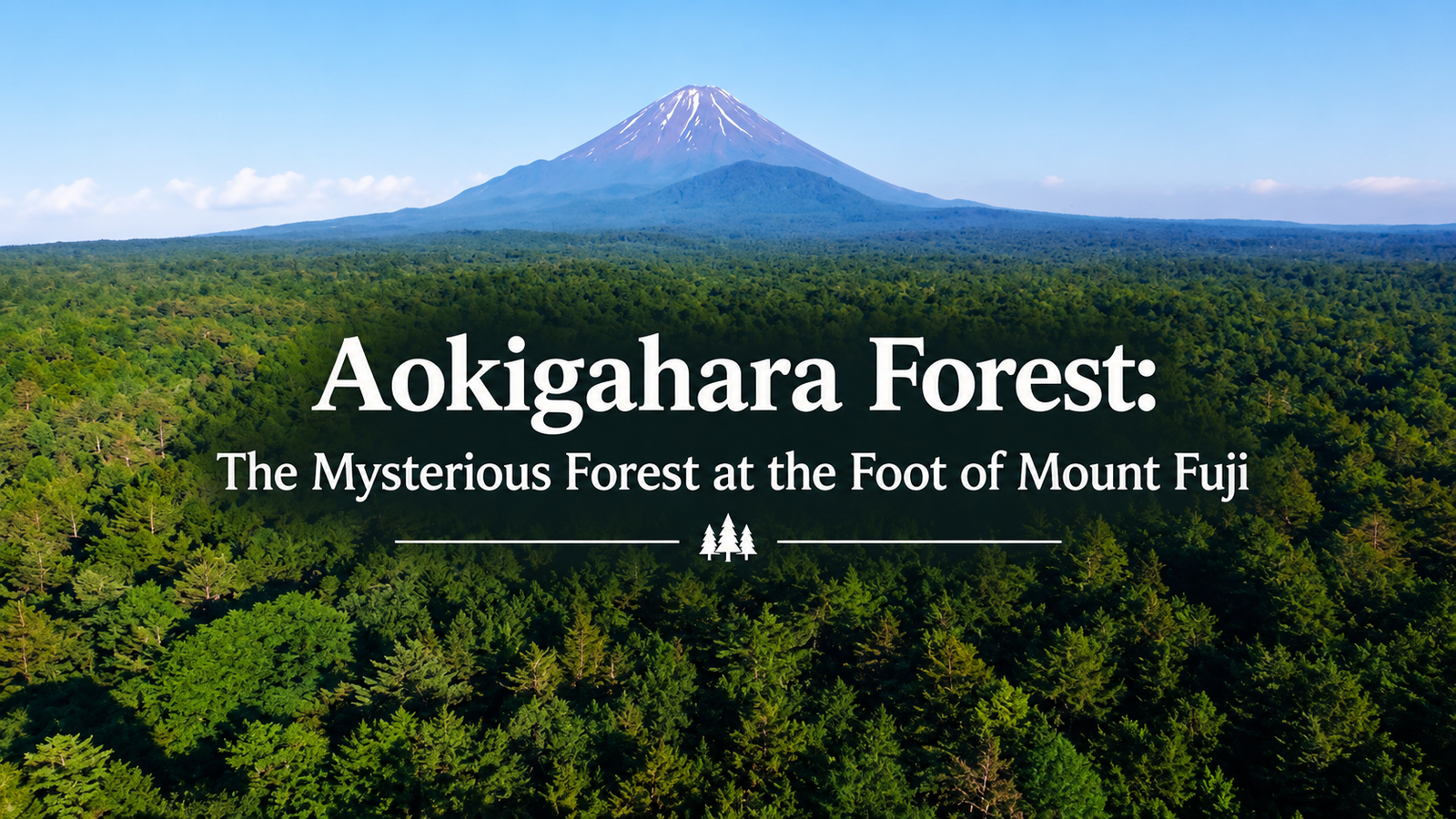
Aokigahara Forest sits on 30 square kilometers of hardened lava at the northwestern base of Mount Fuji — a dense, silent woodland that grew, tree by tree, out of solid volcanic rock over more than a thousand years. The Japanese call it Jukai, the “Sea of Trees,” for the way its unbroken canopy ripples out toward the mountain like water. Aokigahara Forest is one of the most geologically unusual places in Japan, layered with centuries of folklore, literature, and genuine natural science — and also one of the most misunderstood, thanks to decades of exaggerated claims online. This guide separates what’s actually documented about Aokigahara Forest from what’s myth, and treats the more sensitive parts of its reputation with the care they deserve.
| Updated: September 2026 | 18 Min Read | Yamanashi Prefecture, Japan | FACT-CHECKED GUIDE |
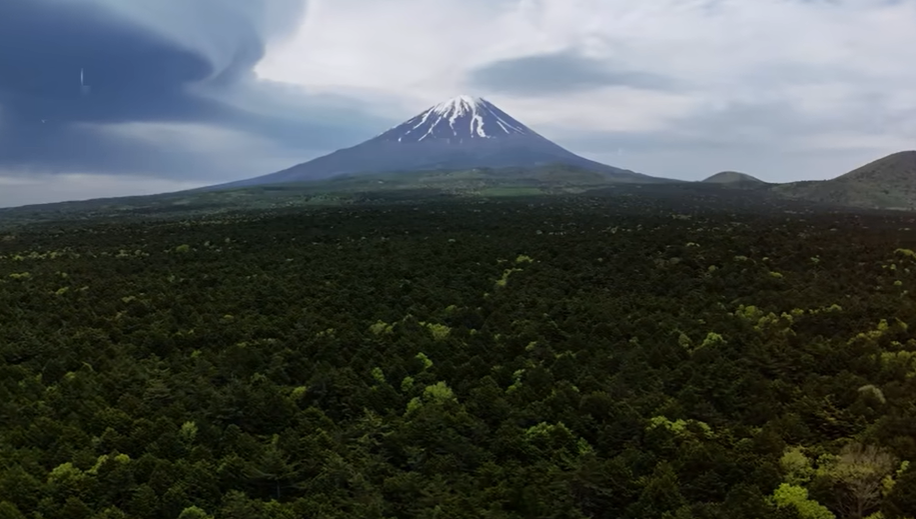
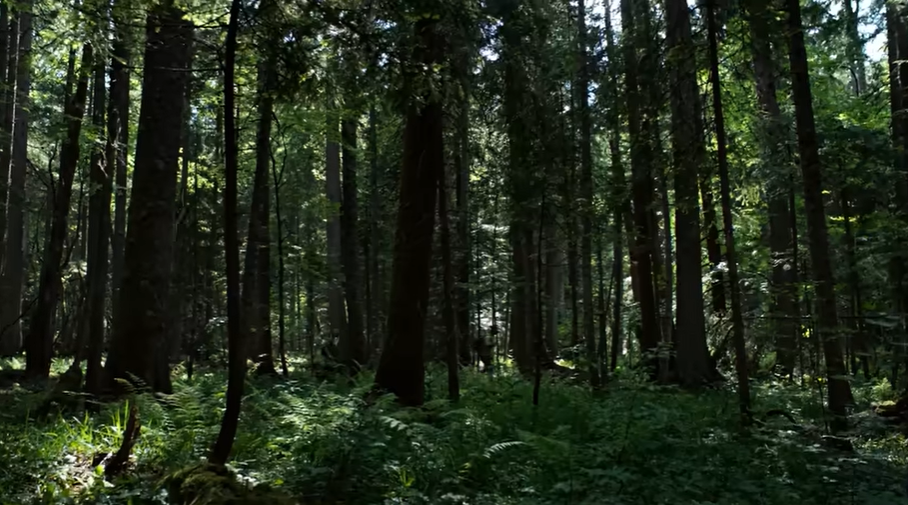
Aokigahara Forest, seen from within its dense canopy. The forest grew directly on top of hardened lava from Mount Fuji’s 864 CE eruption, giving it a terrain and atmosphere unlike almost any other forest in Japan.
Aokigahara Forest is, first and foremost, a geological event you can walk through. In 864 CE, Mount Fuji erupted in what is now called the Jogan eruption, sending a massive flow of lava down its northwestern flank. That lava buried an older forest and a large ancient lake called Senoumi, cooling into a vast, uneven plateau of bare volcanic rock. Over the following centuries, seeds took root in the cracks of that rock, and Aokigahara Forest slowly grew into the dense woodland that exists today — one of the youngest and strangest forests in Japan, built on stone rather than soil.
The name most visitors know, Jukai — “Sea of Trees” — comes from how Aokigahara Forest looks from above: an unbroken, gently rolling canopy stretching toward Mount Fuji like open water. On the ground, the effect is different but just as striking. The porous lava rock absorbs sound, the tree cover blocks most direct sunlight, and the density of the trees makes it genuinely easy to lose your bearings within a few steps of the marked trail. These are real, documented properties of Aokigahara Forest — not exaggeration.
Aokigahara Forest also carries a reputation, built up over decades of international media coverage, that has little to do with its geology, ecology, or the centuries of Japanese culture actually attached to it. This guide focuses on what’s actually documented about Aokigahara Forest — its formation, its folklore, its wildlife, and the parts of its story that deserve more care than they usually get online.
☰ TABLE OF CONTENTS
- How Aokigahara Forest Was Born: The 864 CE Eruption of Mount Fuji
- Inside Aokigahara Forest: The Geology That Shapes Everything
- The Compass Myth: What’s True and What’s Exaggerated
- Aokigahara Forest in Japanese Folklore: Yūrei and Ubasute
- The Wildlife and Ecology of Aokigahara Forest
- Ice Caves and Lava Tubes: The Hidden Underground of Aokigahara Forest
- How Literature and Film Shaped Aokigahara Forest’s Modern Reputation
- A Note on Aokigahara Forest’s Association With Suicide
- Visiting Aokigahara Forest Safely and Respectfully
- Frequently Asked Questions
1. How Aokigahara Forest Was Born: The 864 CE Eruption of Mount Fuji
Aokigahara Forest exists because of a single, well-documented volcanic event. In 864 CE, Mount Fuji produced what geologists call the Jogan eruption — one of the largest eruptions in the mountain’s recorded history. Massive flows of basaltic lava poured down Fuji’s northwestern slope, spreading across roughly 30 square kilometers before cooling into a thick, uneven layer of volcanic rock.
That lava reshaped the entire surrounding landscape. It buried an earlier forest that had stood in the area, and it flowed into Senoumi, a large ancient lake, splitting it into what are today known as Lake Sai and Lake Sho, two of the Fuji Five Lakes. What Aokigahara Forest sits on today is, essentially, the hardened remnant of that single catastrophic afternoon — a plateau of solid rock rather than ordinary earth.
It took centuries for Aokigahara Forest to become the woodland it is now. Seeds carried in by wind and birds gradually took root in cracks and crevices in the rock, and as those first trees grew and decayed, they built up the first thin layers of soil — in most places still only a few centimeters deep, compared to the much thicker soil found in Japan’s older, untouched forests nearby. Aokigahara Forest is, geologically speaking, still a young forest — younger than many of the temples and shrines that stand elsewhere in Japan — grown almost entirely on bare stone.
| 864 CE Year of the Jogan eruption that created Aokigahara Forest’s lava base |
~30 km² Total area covered by Aokigahara Forest |
~1,000m Average elevation of Aokigahara Forest above sea level |
~10cm Typical soil depth over the lava rock in Aokigahara Forest |
1936 Year Aokigahara Forest was protected within Fuji-Hakone-Izu National Park |
2. Inside Aokigahara Forest: The Geology That Shapes Everything
Nearly everything distinctive about Aokigahara Forest traces back to the volcanic rock underneath it. Because the ground is solid, porous lava rather than ordinary soil, Aokigahara Forest behaves differently from almost any other woodland in Japan — in its sound, its light, and its root systems.
The porous basalt across Aokigahara Forest absorbs sound unusually well, which is why visitors and researchers alike consistently describe the forest as extraordinarily quiet — a genuine acoustic property of the volcanic rock, not an invented detail. Combined with a thick, largely unbroken tree canopy that blocks most direct sunlight, Aokigahara Forest keeps a dim, green half-light even around midday, with sparse undergrowth of moss and fern rather than the flowering plants you’d expect in a soil-based forest.
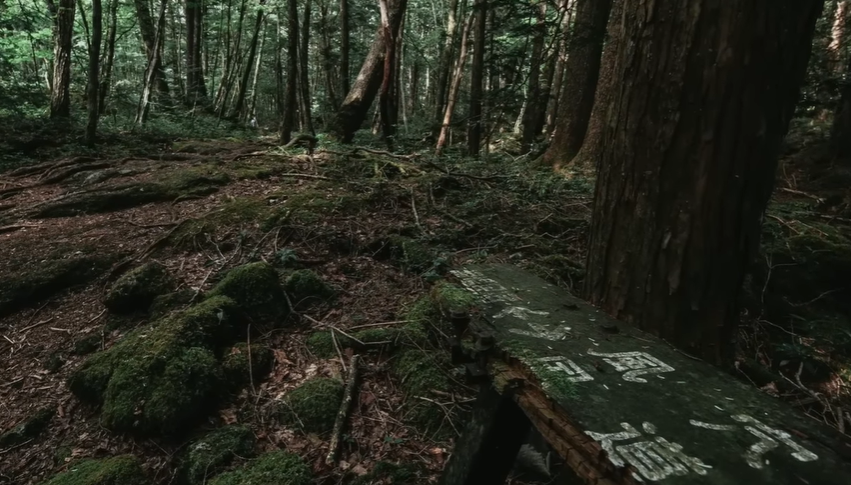
The thin soil also forces trees in Aokigahara Forest to grow in a distinctive way: rather than sending roots straight down, they spread laterally across the rock surface, gripping outcrops and wrapping around stone, which produces the tangled, above-ground root systems that make photographs of the forest look so unusual. None of this requires supernatural explanation — the atmosphere of Aokigahara Forest is a direct, well-documented consequence of growing a forest on top of a lava field rather than ordinary earth.
3. The Compass Myth: What’s True and What’s Exaggerated About Aokigahara Forest
Exposed lava rock and surface roots in Aokigahara Forest. The rock is genuinely rich in magnetite, but the popular claim that compasses stop working across the whole forest is an exaggeration of a much smaller, localized effect.
One of the most repeated claims about Aokigahara Forest is that compasses and GPS devices simply stop working inside it. The real explanation is more modest than the myth suggests. The volcanic rock beneath Aokigahara Forest does contain magnetite, an iron-rich mineral capable of affecting a compass needle — but only at close range. Multiple guides, geologists, and even reported tests by Japan’s Self-Defense Force indicate that a compass held at a normal handheld height functions correctly throughout Aokigahara Forest; it’s only when a compass is placed directly on the exposed lava rock that the needle can noticeably deflect.
Modern GPS devices, which rely on satellite signals rather than magnetic fields, are not meaningfully affected by the rock in Aokigahara Forest at all. The real navigation hazard in Aokigahara Forest isn’t magnetism — it’s the visual uniformity of the trees themselves. Step a short distance off a marked trail, and every direction can look identical, with no clearings, landmarks, or gradient of light to orient by. That disorientation is real and well documented; the idea that it’s caused by malfunctioning compasses is not.
This is a useful example of how Aokigahara Forest’s reputation has grown: a genuine, minor geological quirk — localized magnetite affecting a compass placed directly on rock — gets repeated online until it becomes “compasses don’t work here,” a much bigger and less accurate claim. The safest way to think about Aokigahara Forest’s disorientation risk is practical rather than mystical: stay on the marked trail, because the forest genuinely can make it hard to find your way back once you leave it.
4. Aokigahara Forest in Japanese Folklore: Yūrei and Ubasute
Aokigahara Forest’s association with the spirit world predates its modern international reputation by centuries and comes directly from Japanese folk tradition. In Shinto and broader Japanese folk belief, yūrei are spirits of the dead who, because of an unresolved, sudden, or anguished death, remain tied to the physical world rather than passing on peacefully. The natural characteristics of Aokigahara Forest — its silence, its dim light, its disorienting sameness — made it a fitting setting in local legend for stories about restless spirits.
One of the oldest legends tied to the region around Aokigahara Forest is ubasute, a semi-mythological practice in which, during times of extreme famine, elderly or infirm family members were said to have been carried deep into remote mountains or forests and left behind. Historians actively debate how widespread ubasute really was as a historical practice, with many treating it as more folklore and cautionary tale than documented custom — but the story attached itself to isolated, difficult terrain like Aokigahara Forest, and it fed centuries of association between the forest and sorrowful, restless spirits.
It’s worth being precise about what this folklore actually represents: centuries-old Japanese storytelling about grief, mortality, and difficult terrain, not a documented historical record. Understanding this folkloric layer of Aokigahara Forest — separate from both the geology and the more recent, more sensitive parts of its story — is part of understanding the forest as Japanese culture actually sees it, rather than as a flattened horror setting.
5. The Wildlife and Ecology of Aokigahara Forest
Beyond the folklore, Aokigahara Forest is, first and foremost, a functioning and unusual ecosystem. Because large portions have never been logged, Aokigahara Forest supports plant and animal life that has become rare elsewhere in the more developed parts of Japan.
The tree cover in Aokigahara Forest is a mix of evergreen conifers, including Japanese cypress and hemlock, alongside broadleaf species like Mongolian oak, Fuji cherry, and maple, which turn the forest into a striking display of autumn color in October and November. The thin, mineral-poor soil of Aokigahara Forest favors moss and fern over flowering undergrowth, giving the forest floor its distinctive green, cushioned texture.
Aokigahara Forest is also home to a range of wildlife, including small mammals, birds, and insects adapted to its unusual volcanic terrain, and its network of lava caves shelters several species of bats. Japan’s own conservation framework treats Aokigahara Forest first as a rare, protected ecosystem — part of Fuji-Hakone-Izu National Park and registered as a natural monument — which is a very different emphasis from how the forest is usually framed in international coverage.
6. Ice Caves and Lava Tubes: The Hidden Underground of Aokigahara Forest
One of the lava tube caves beneath Aokigahara Forest, where cold air trapped in the rock keeps ice formations intact through the summer months.
The same 864 CE eruption that created Aokigahara Forest also carved out a network of lava tubes beneath it — tunnels formed when the outer surface of a lava flow cooled and hardened while molten rock continued moving underneath, eventually draining away and leaving hollow passages behind. Several of these caves, on the western edge of Aokigahara Forest, are open to the public and rank among its most visited features.
The largest is the Fugaku Wind Cave, a long lava tube where cold air naturally sinks and pools, keeping the interior chilled even in summer. Nearby, the Narusawa Ice Cave maintains near-freezing temperatures year-round because of its unique airflow and rock structure, historically used to store ice before refrigeration existed. Both caves are regular stops for tourists and school field trips exploring Aokigahara Forest, and they showcase the volcanic origins of the forest more directly than almost anything else in the area.
These caves are one of the clearest, most tourist-friendly demonstrations of what makes Aokigahara Forest geologically unique — a woodland with an entire hidden volcanic landscape running underneath it.
7. How Literature and Film Shaped Aokigahara Forest’s Modern Reputation
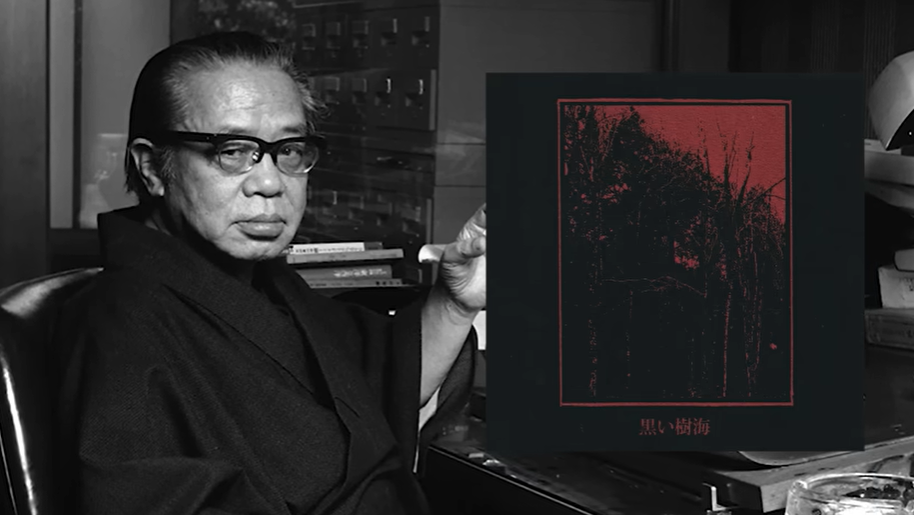
Aokigahara Forest’s shift from a place of regional folklore to a nationally recognized symbol is closely tied to 20th-century literature. In the 1960s, the acclaimed Japanese novelist Seicho Matsumoto published Kuroi Jukai (“Black Sea of Trees”), a novel that used Aokigahara Forest as its setting and concluded with a character walking into the forest at the story’s tragic close. The novel’s popularity is widely credited by historians and cultural commentators with cementing Aokigahara Forest’s association with grief and mortality in the Japanese public imagination for the first time on a national scale.
That literary reputation was later picked up and dramatically amplified by international media, documentaries, and horror films — most of which stripped away the forest’s actual geological and cultural context in favor of a much simpler, more sensational “haunted forest” narrative. Many Japanese commentators and travel writers have pushed back on this framing, arguing it flattens a genuinely complex place — with its own geology, ecology, spiritual tradition, and literary history — into a single grim caricature.
Understanding this layered history — folklore, then literature, then international media amplification — helps explain why the version of Aokigahara Forest that circulates online so often differs from how the forest is actually discussed and managed in Japan.
8. A Note on Aokigahara Forest’s Association With Suicide
Any accurate account of Aokigahara Forest has to acknowledge, honestly and without sensationalism, that the forest has become associated internationally with suicide — a reputation that grew from the literary history described above and was then amplified, often irresponsibly, by international media, films, and online content in the years since.
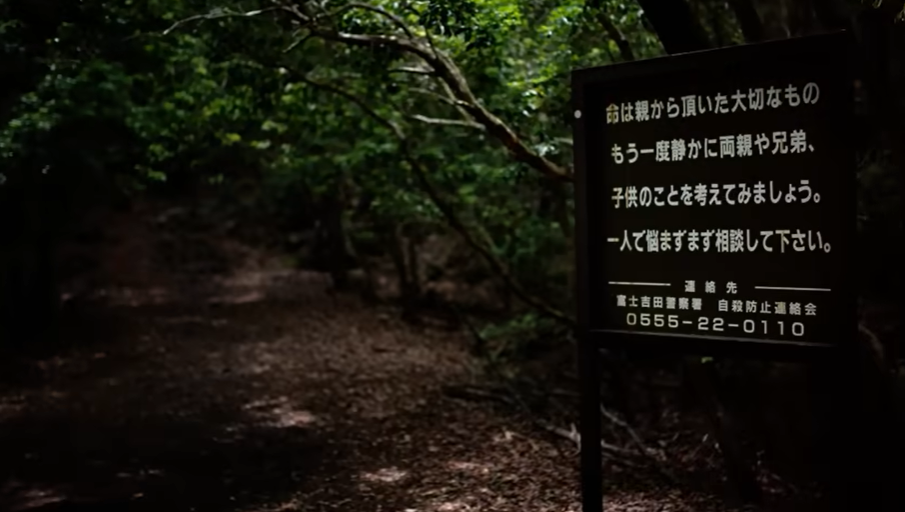
Japanese authorities and local volunteer groups have spent decades responding to this association with a consistently compassionate, prevention-focused approach — including signs posted at trailheads into Aokigahara Forest that gently encourage anyone in distress to reconsider and to contact a helpline, along with regular volunteer and official patrols of the area. This is a very different tone from the sensationalized “body count” framing that much international coverage has used, and it reflects how seriously the issue is taken by the people who actually care for the forest and its surrounding community.
This article intentionally does not include specific statistics, locations, or details connected to this aspect of Aokigahara Forest’s history, out of respect for the people affected and their families, and in line with responsible reporting guidelines around this sensitive subject. Aokigahara Forest deserves to be understood as the layered, living place it actually is — its geology, its ecosystem, its folklore, and its literature — rather than reduced to a single grim statistic.
9. Visiting Aokigahara Forest Safely and Respectfully
Most visitors to Aokigahara Forest come for the parts of it that are open, marked, and genuinely worth seeing: the well-maintained Nature Trail near the western edge, the Fugaku Wind Cave and Narusawa Ice Cave, and the Koyo-dai viewpoint, which offers one of the clearest panoramic views of Mount Fuji from the forest’s edge.
Aokigahara Forest is reachable from Tokyo in roughly two to two and a half hours, typically by train to Kawaguchiko Station via the Chuo and Fuji Kyuko rail lines, followed by a short bus or taxi ride to the trailheads. Spring, with its fresh greenery, and autumn, with its foliage and clear Fuji views, are widely considered the most rewarding seasons to visit.
The one safety rule that matters more than any other in Aokigahara Forest is simple: stay on the marked trail. The forest’s genuine visual uniformity — not any magnetic anomaly — is what makes it easy to lose your bearings once you step off the path, and the well-maintained trails exist precisely so visitors can experience Aokigahara Forest’s real natural beauty without that risk. Visited this way, Aokigahara Forest is a striking, safe, and genuinely rewarding natural site — one far removed from its exaggerated online reputation.
A note on sensitive content: this article discusses Aokigahara Forest’s historical association with suicide in a factual, informational context, without detail, in order to give accurate historical and cultural context. If you or someone you know is struggling, please reach out — in the US, you can call or text 988 (the Suicide & Crisis Lifeline); in Japan, TELL Japan’s Lifeline is reachable at 03-5774-0992; other countries have similar services, and a trusted doctor, counselor, or local helpline can also help.
10. Frequently Asked Questions About Aokigahara Forest
❓ What is Aokigahara Forest and where is it located?
Aokigahara Forest is a roughly 30-square-kilometer forest at the northwestern base of Mount Fuji in Yamanashi Prefecture, Japan. It grew on top of hardened lava left by Mount Fuji’s 864 CE Jogan eruption, giving it unusually rocky, mineral-rich terrain, dense sound-absorbing tree cover, and a network of underground lava tubes and caves. It is part of Fuji-Hakone-Izu National Park and is known in Japanese as Jukai, or “Sea of Trees,” for its dense, unbroken canopy.
❓ Do compasses really not work in Aokigahara Forest?
This is mostly a myth. The volcanic rock underneath Aokigahara Forest does contain magnetite, which can deflect a compass needle if the compass is placed directly on the rock, but at a normal handheld height, compasses function correctly throughout the forest, and GPS devices, which use satellites rather than magnetic fields, are unaffected. The real disorientation risk in Aokigahara Forest comes from the dense, visually uniform trees, which make it easy to lose your bearings if you leave the marked trail.
❓ Why is Aokigahara Forest connected to Japanese folklore about spirits?
Aokigahara Forest’s association with yūrei, or restless spirits, comes from Japanese folk tradition, in which souls that die in anguish or without resolution are believed to remain tied to the physical world. The forest’s natural silence, dim light, and disorienting sameness made it a fitting setting for these stories. Aokigahara Forest is also linked in legend to ubasute, a semi-mythological practice of abandoning elderly relatives in remote areas during famine — though historians actively debate how common this practice actually was, treating much of it as folklore rather than documented history.
❓ Is it safe to visit Aokigahara Forest?
Yes, when visitors stick to the marked trails. Aokigahara Forest has a well-maintained Nature Trail, publicly accessible lava caves like the Fugaku Wind Cave and Narusawa Ice Cave, and the Koyo-dai viewpoint for panoramic Mount Fuji views. The main risk in Aokigahara Forest is disorientation for visitors who leave the marked paths, given how visually uniform the dense tree cover is — not any supernatural or magnetic hazard.
❓ Why does Aokigahara Forest have such a dark reputation internationally?
Aokigahara Forest’s reputation traces back to Japanese folklore about spirits, and was later reinforced nationally in the 1960s by Seicho Matsumoto’s novel Kuroi Jukai, which used the forest as the setting for its tragic ending. International media, documentaries, and horror films later picked up and significantly amplified this reputation, often stripping away the forest’s genuine geological, ecological, and cultural context in favor of a simplified “haunted forest” narrative. Japanese authorities and volunteer groups have responded to the forest’s association with tragedy with compassionate, prevention-focused measures rather than the sensationalized framing common in much international coverage.
A Forest, Not Just a Legend
Aokigahara Forest is a genuinely remarkable place: a woodland grown almost entirely on hardened lava, home to rare wildlife, laced with caves that hold ice through the summer, and layered with centuries of Japanese folklore and literature. Its geology alone — a forest that shouldn’t exist by ordinary rules, standing on solid volcanic rock — would be enough to make Aokigahara Forest worth understanding on its own terms.
The most accurate way to see Aokigahara Forest is also the most respectful one: as a real, protected natural site with a complicated history, cared for by the people of Yamanashi Prefecture — not as a flattened horror-story backdrop.
▤ SOURCES & FURTHER READING
▸ Japan National Tourism Organization — official Aokigahara Forest visitor information
▸ Wikipedia — Aokigahara and Fugaku Wind Cave entries
▸ Japan Ministry of Land, Infrastructure, Transport and Tourism — “Forests of Mt. Fuji” regional guide
▸ LIVE JAPAN — Aokigahara Forest and Fuji-Hakone-Izu National Park guide
▸ Yokai Database — Aokigahara folklore and legends research
▸ Historical and literary accounts of Seicho Matsumoto’s Kuroi Jukai (1960)