
On December 24, 1971, a passenger plane broke apart in a thunderstorm over the Peruvian Amazon. Ninety-one people on board died. One did not: 17-year-old Juliane Koepcke, still strapped to her row of seats, fell roughly three kilometers into the rainforest canopy below — and survived. This is the fact-checked story of the girl who survived a plane crash and walked out of the Amazon jungle, alone, eleven days later.
| Updated: September 2026 | 19 Min Read | Peruvian Amazon · December 1971 | TRUE SURVIVAL STORY |
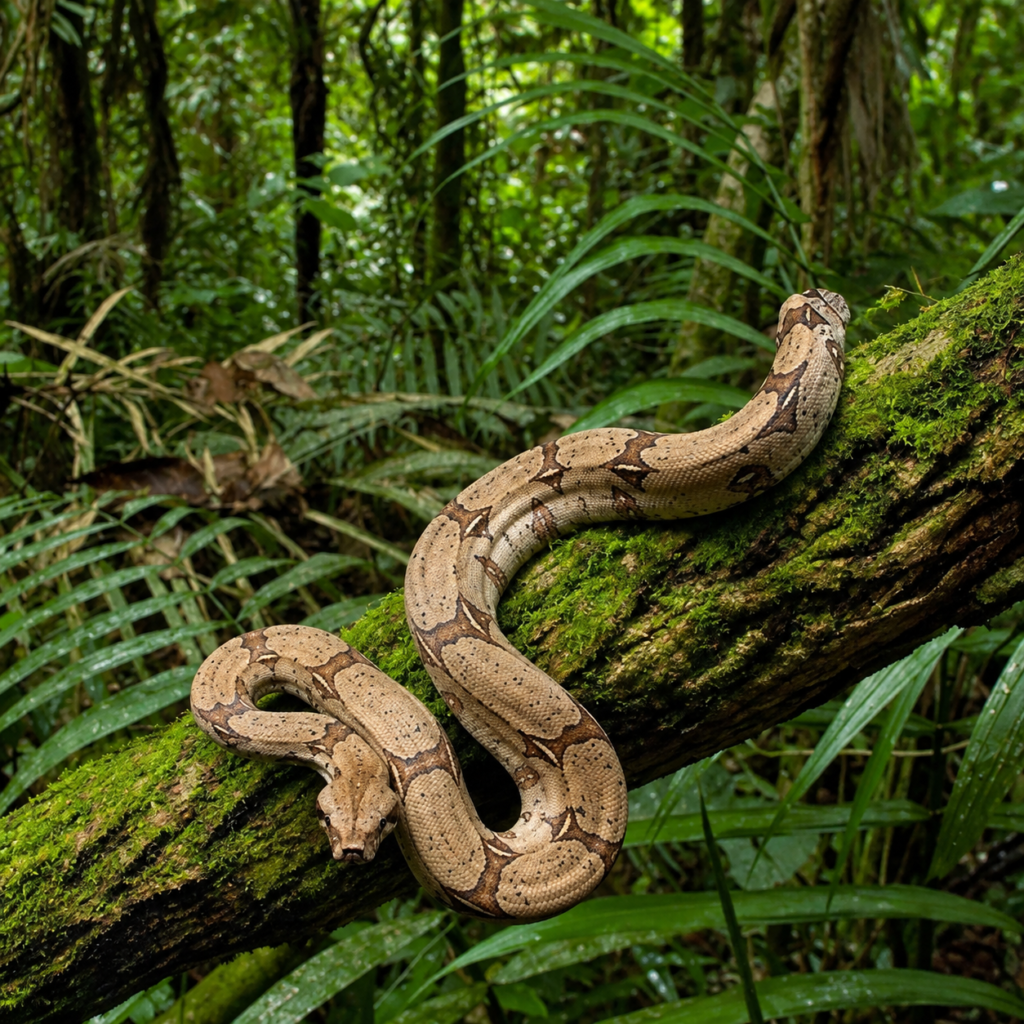
The Peruvian Amazon rainforest canopy, similar to the terrain Juliane Koepcke fell into and later walked through alone for eleven days after the crash of LANSA Flight 508 on December 24, 1971.
Juliane Koepcke did not set out to become the girl who survived a plane crash and walked out of the Amazon jungle. She was a 17-year-old student, one day out of high school, flying home to spend Christmas with her father. What happened to her over the following eleven days is one of the most thoroughly documented survival stories in modern aviation history — not because it was dramatic, but because it actually happened, and because Koepcke herself has spent the decades since carefully and calmly recounting exactly what did.
This account draws on Koepcke’s own memoir, her interviews with the BBC, CNN, and other outlets, the official record of LANSA Flight 508, and Werner Herzog’s 1998 documentary Wings of Hope, in which she retraced her route through the jungle decades later. It sticks to what is actually documented, rather than the exaggerated versions of the story that have circulated online for years.
This is the story of how the girl who survived a plane crash and walked out of the Amazon jungle actually did it — the flight, the fall, the eleven days that followed, and what she has said, in her own words, about why she believes she lived when almost no one else did.
☰ TABLE OF CONTENTS
- Who Was Juliane Koepcke Before the Crash?
- LANSA Flight 508: The Flight That Should Never Have Taken Off
- The Fall: Three Kilometers, Still Strapped to Her Seat
- Alone in the Amazon: The Injuries She Woke Up With
- Eleven Days in the Jungle: How She Actually Found Her Way Out
- The Rescue: How the Girl Who Survived the Amazon Was Finally Found
- Why She Survived When 91 Others Didn’t
- What Happened to Juliane Koepcke After the Crash
- Frequently Asked Questions
1. Who Was Juliane Koepcke Before the Crash?

Long before she became known internationally as the girl who survived a plane crash and walked out of the Amazon jungle, Juliane Koepcke was already, in a very specific sense, prepared for it. She was born in Lima, Peru, on October 10, 1954, the only child of two German zoologists, Maria and Hans-Wilhelm Koepcke, who had moved to Peru to study its wildlife.
When Juliane was around 14, her parents established Panguana, a biological research station deep in the Peruvian Amazon, and she lived there with them for roughly a year and a half before the crash. During that time she absorbed practical knowledge of the rainforest that most 17-year-olds would never have — how to move through dense terrain, what the jungle’s sounds meant, and, critically, her father’s basic rule of rainforest survival: if you’re lost, find flowing water and follow it downstream, because rivers eventually lead to people.
By December 1971, Juliane had just graduated from high school in Lima and was planning to study zoology, following in her parents’ footsteps. She and her mother, Maria, booked a flight to rejoin her father at Panguana for Christmas. Nothing about that decision seemed unusual at the time — but the ordinary, practical knowledge Juliane had picked up living in the Amazon would turn out to matter more than anyone could have guessed.
2. LANSA Flight 508: The Flight That Should Never Have Taken Off
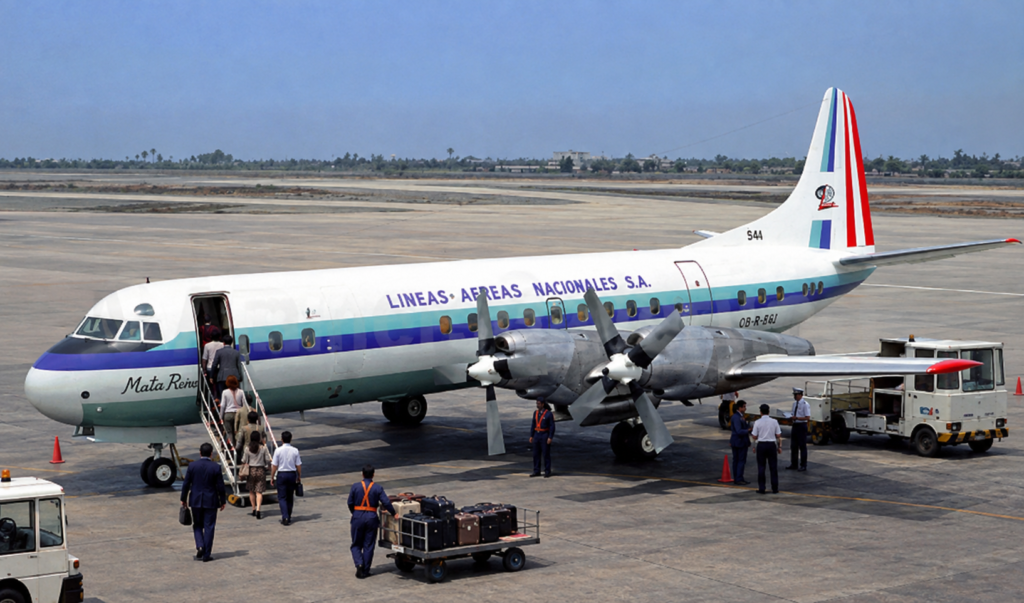
Juliane and Maria Koepcke booked seats on LANSA Flight 508, a Lockheed L-188 Electra turboprop scheduled to fly from Lima to Iquitos, with a stop in Pucallpa, on December 24, 1971. Juliane’s father had specifically urged his wife not to book with LANSA, whose Electra aircraft had a poor safety record — of the 170 L-188 Electras ever built, dozens were eventually written off after crashes or serious mid-air malfunctions. With Christmas travel booked solid and few alternatives available, Juliane and her mother flew anyway.
The flight departed Lima’s Jorge Chávez International Airport shortly before noon. Around 25 minutes in, the aircraft flew into a severe thunderstorm over the Amazon at roughly 21,000 feet. Turbulence grew violent, and lightning struck the plane. Juliane later recalled seeing a bright flash of light on the outer left engine, and her mother saying, with unusual calm, “That is the end, it’s all over” — the last words Juliane ever heard her speak.
Moments later, the aircraft broke apart in mid-air. Of the 92 people aboard LANSA Flight 508, 91 died in the disaster — making it, by some counts, the deadliest lightning-related aviation accident on record. Juliane Koepcke, still strapped into her row of seats, was thrown clear of the disintegrating fuselage and began to fall.
| 17 Juliane’s age at the time of the crash |
92 People aboard LANSA Flight 508 |
1 Survivor: Juliane Koepcke |
~3km Approximate distance of her fall to the canopy |
11 Days she survived alone in the rainforest |
3. The Fall: Three Kilometers, Still Strapped to Her Seat
A thunderstorm over dense rainforest, similar to the one LANSA Flight 508 flew into on December 24, 1971, moments before it broke apart in mid-air.
What makes Juliane Koepcke’s fall unusual, even among survival stories, is that she remembers part of it. “I was in a freefall, strapped to my seat bench and hanging head-over-heels,” she later told the BBC. “The whispering of the wind was the only noise I could hear.” She lost consciousness at some point during the descent and does not remember the impact itself.
Investigators and researchers who have studied the crash generally agree that several factors likely combined to make her survival possible, though the exact mechanics can’t be reconstructed with certainty. Juliane was still attached to a row of three seats, which may have helped stabilize and slow her fall compared to falling freely. The dense, layered rainforest canopy below — and the fact that the storm had likely created strong updrafts — may have further slowed her descent before she broke through the branches and vines toward the ground.
When Juliane regained consciousness, she was lying on the forest floor, still partially attached to her seat, alone. She had fallen roughly three kilometers — nearly two miles — from the disintegrating aircraft, and she was, though she didn’t yet know it, the only survivor of LANSA Flight 508.
“I was in a freefall, strapped to my seat bench and hanging head-over-heels. The whispering of the wind was the only noise I could hear.”
— Juliane Koepcke, describing her fall from LANSA Flight 508, in an interview with the BBC
4. Alone in the Amazon: The Injuries She Woke Up With
The girl who survived a plane crash and walked out of the Amazon jungle did not walk away unhurt. When Juliane regained consciousness, she had a broken collarbone, a torn cruciate ligament in her left knee, a deep laceration on her right arm, an eye injury that left one eye swollen shut, and a concussion. She was dressed for a short domestic flight — a torn sleeveless mini-dress, and, after losing one shoe in the fall, only a single sandal.
Despite the concussion and her injuries, Juliane’s first instinct was to search the immediate area for her mother and other passengers, calling out into the forest without a response. Finding no one, she fell back on what she had learned growing up at Panguana: rather than wander randomly through dense, disorienting jungle, she needed to find moving water and follow it, because in the Amazon, waterways eventually lead to settlements and people.
She located a small stream near where she’d landed and began to follow it downhill, reasoning that it would eventually join a larger river. It was a calm, deliberate decision, made by an injured, concussed, and grieving 17-year-old — and it turned out to be the single most important choice she made in the entire eleven days that followed.
5. Eleven Days in the Jungle: How She Actually Found Her Way Out
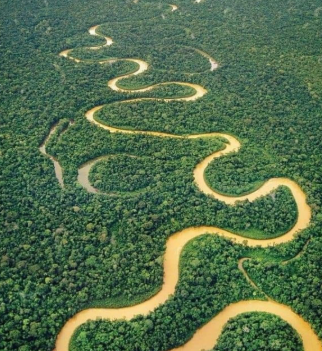
The eleven days Juliane Koepcke spent alone in the Amazon are the part of the story most often exaggerated online, so it’s worth sticking closely to what she has actually described. She followed the stream she found on foot and, later, by wading and swimming as it widened, moving mostly during daylight and resting when she could. She had no food beyond a small bag of hard candy salvaged near the crash site, and she avoided drinking directly from stagnant pools, generally sticking to moving water.
Her injuries worsened as the days passed. Her deep arm wound became infested with maggots, and her body was covered in insect bites and small cuts from the terrain. She has described being extremely cautious around wildlife — deliberately wading through parts of the water where she suspected stingrays or caimans might be present, rather than assuming the jungle posed no danger, and moving carefully to avoid provoking animals rather than confronting them.
On roughly her ninth or tenth day, the stream Juliane had been following joined a larger river, and she came across a small hut used by rubber tappers or loggers, with a motorboat and a can of gasoline nearby but no people present. At that point, exhausted and severely weakened, she made the decision to stay near the hut rather than continue on alone — reasoning, correctly, that whoever used it would eventually return. This is also when she treated the wound on her arm with gasoline from the boat’s fuel can to help clear out the maggots — a detail she has recounted in interviews, though it reflects the desperate circumstances of her specific situation rather than a recommended first-aid method.
6. The Rescue: How the Girl Who Survived the Amazon Was Finally Found
Search and rescue teams had been looking for the wreckage of LANSA Flight 508 since the crash, but after roughly ten days without locating it in the dense, mountainous jungle terrain, the search was called off — a detail that makes the timing of what happened next especially significant. Juliane Koepcke emerged from the forest on her own, on day eleven, arriving at the hut she had found the day before it was actually staffed.
A group of local lumber workers arrived at the hut and found her there, severely injured, exhausted, and dehydrated, but alive and able to explain who she was and what had happened. They provided basic first aid, gave her food, and transported her by boat further downriver, eventually connecting her with a pilot who flew her to a hospital in Pucallpa — the same town LANSA Flight 508 had originally been scheduled to stop in.
Juliane’s father, Hans-Wilhelm, who had been waiting for her and her mother at Panguana, was reunited with her at the hospital. Her mother’s body was later found and recovered from the crash site, along with the remains of most of the other passengers; a small number of others were reported to have survived the initial impact of the crash but were too badly injured to move and did not survive long enough to be found. Juliane Koepcke was the only person from LANSA Flight 508 who was able to walk out of the jungle under her own power.
7. Why She Survived When 91 Others Didn’t
Juliane Koepcke herself has been notably careful, in interviews across five decades, not to claim a simple or complete explanation for why she alone survived the crash and the jungle afterward. She has consistently pointed to a combination of factors rather than any single cause.
The physical mechanics of the fall — being attached to a row of seats that may have acted like a rudimentary parachute or wing, combined with the storm’s updrafts and the cushioning effect of dense canopy — likely explain how she survived the initial impact at all, though researchers stop short of claiming certainty about the exact physics involved. Beyond the fall itself, her practical knowledge of the rainforest, gained from living at Panguana, gave her a genuine advantage that most passengers, urban residents unfamiliar with jungle survival, would not have had.
Timing and circumstance also mattered: it was the rainy season, meaning streams were flowing rather than dry, which made her father’s “follow the water” strategy actually viable. And she has been candid that a considerable amount of luck was involved — in where exactly she landed, in which injuries she did and didn’t sustain, and in finding a functioning, if unoccupied, hut at the point when she was most depleted. Koepcke’s own account resists turning her story into a simple lesson, treating it instead as what it was: an extraordinary combination of preparation, decision-making under extreme stress, and chance.
8. What Happened to Juliane Koepcke After the Crash
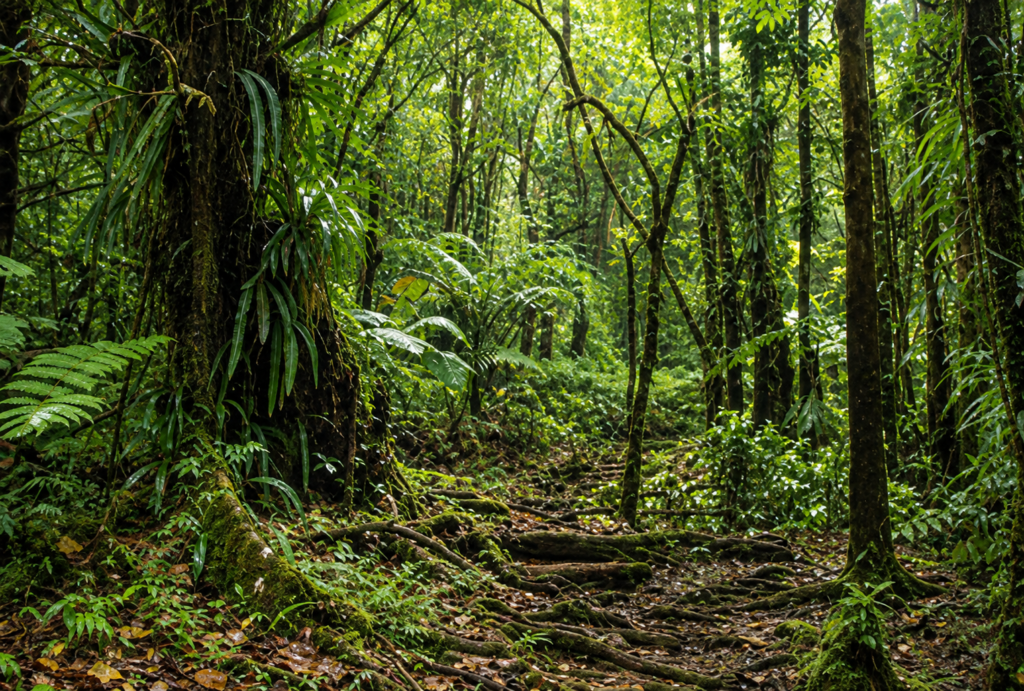
Juliane Koepcke went on to follow her parents into biology, eventually taking over the Panguana research station her family founded in the Peruvian Amazon.
The story of the girl who survived a plane crash and walked out of the Amazon jungle did not end with her rescue. Juliane Koepcke went on to study biology, earning a doctorate and becoming a mammalogist specializing in bats, following directly in her parents’ footsteps. She later married and is also known by her married name, Juliane Diller.
In 1998, German filmmaker Werner Herzog — who, by coincidence, had been scouting film locations in Peru and had narrowly avoided booking a seat on LANSA Flight 508 himself — made a documentary with Koepcke called Wings of Hope, in which she returned to the crash site and retraced parts of her route through the jungle for the first time since 1971. In 2011, on the 40th anniversary of the crash, she published a memoir, When I Fell From the Sky, detailing the crash, her survival, and its long aftermath in her own words.
Koepcke also took over stewardship of Panguana, the research station her parents founded, continuing their work of studying and protecting the same Amazon rainforest that both nearly killed her and, through the knowledge it gave her, arguably saved her life. More than fifty years later, Juliane Koepcke’s account of what happened remains remarkably consistent, carefully told, and free of the embellishment that so often gets added to her story by others.
9. Frequently Asked Questions About the Girl Who Survived the Amazon Plane Crash
❓ Who is the girl who survived a plane crash and walked out of the Amazon jungle?
Her name is Juliane Koepcke, a German-Peruvian student who, at age 17, was the sole survivor of LANSA Flight 508 on December 24, 1971. After the plane broke apart mid-air over the Peruvian Amazon during a thunderstorm, Koepcke fell roughly three kilometers to the ground while still strapped to her row of seats, survived the fall, and then walked and waded through the rainforest for eleven days before being found by local lumber workers. She later became a mammalogist and continues to be known for this well-documented survival story.
❓ How did Juliane Koepcke survive a three-kilometer fall from a plane?
The exact mechanics can’t be fully reconstructed, but researchers generally point to several likely contributing factors: Koepcke remained attached to a row of three seats after the plane broke apart, which may have helped stabilize her fall and slowed her descent compared to falling freely; the thunderstorm’s strong updrafts may have further reduced her speed; and the dense, layered rainforest canopy likely cushioned her impact with the ground. She survived with a broken collarbone, a torn knee ligament, a deep arm laceration, an eye injury, and a concussion — serious injuries, but survivable ones.
❓ How did she survive eleven days alone in the Amazon rainforest?
Juliane Koepcke had lived for about a year and a half at her parents’ Amazon research station, Panguana, before the crash, and had learned a basic rule of jungle survival from her father: find moving water and follow it downstream, since rivers eventually lead to human settlements. She located a stream near the crash site and followed it as it widened into a river, surviving on minimal food, avoiding stagnant water, and moving carefully to avoid dangerous wildlife, until she reached a hut used by rubber tappers or loggers, where she waited and was found.
❓ Why did LANSA Flight 508 crash?
LANSA Flight 508, a Lockheed L-188 Electra turboprop, flew into a severe thunderstorm over the Peruvian Amazon roughly 25 minutes after departing Lima on December 24, 1971. The aircraft was struck by lightning while flying through violent turbulence at around 21,000 feet and broke apart in mid-air. Of the 92 people aboard, 91 died; Juliane Koepcke, thrown clear while still strapped to her seats, was the sole survivor. The disaster is often cited as one of the deadliest lightning-related aviation accidents on record.
❓ What happened to Juliane Koepcke after she was rescued?
After her rescue and recovery, Juliane Koepcke returned to Germany, later earning a doctorate in biology and becoming a mammalogist specializing in bats, following her parents’ path as zoologists. In 1998, she worked with filmmaker Werner Herzog on the documentary Wings of Hope, retracing her route through the jungle. In 2011, she published a memoir, When I Fell From the Sky. She also took over her family’s Panguana research station in the Amazon, continuing its conservation and scientific work.
A Story Told Carefully, By the Person Who Lived It
What sets Juliane Koepcke’s story apart from many survival accounts is how consistently and carefully she herself has told it, across five decades of interviews, a documentary, and a memoir — without turning it into a simple parable about grit or destiny. She has always been clear that the fall itself is not something she can fully explain, and that luck played as large a role as her own decisions.
The girl who survived a plane crash and walked out of the Amazon jungle grew up to spend her career studying and protecting the same rainforest that took her mother’s life and, through what it had taught her, arguably saved her own.
▤ SOURCES & FURTHER READING
▸ BBC News — “Juliane Koepcke: How I survived a plane crash”
▸ Wikipedia — Juliane Koepcke and LANSA Flight 508 entries
▸ ABC News (Australia) — “How teenager Juliane Koepcke survived a plane crash and solo 11-day trek out of the Amazon”
▸ Juliane Koepcke — When I Fell From the Sky (memoir, 2011)
▸ Werner Herzog — Wings of Hope (documentary, 1998)
▸ Contemporary reporting via CNN, The Telegraph, and The New York Times