Introduction
The Cold War wasn’t fought with bullets or bombs — it was a battle of ideologies, intelligence, and influence.
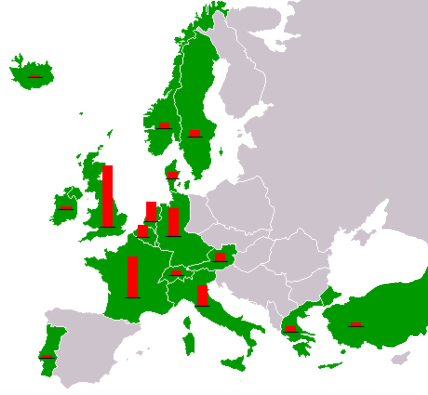
Between 1947 and 1991, two superpowers — the United States and the Soviet Union — waged a silent war that reshaped the world.
While history remembers the nuclear arms race, Berlin Wall, and Cuban Missile Crisis, few know about the hidden missions, secret experiments, and double agents that operated behind the scenes.
These are the untold secrets of the Cold War — the shadowy side of a conflict that was never declared but changed humanity forever.
The Birth of a Silent War
After World War II, the world was divided not by borders but by beliefs.
The United States promoted capitalism and democracy, while the Soviet Union pushed for communism and state control.
The end of one war gave rise to another — a war of minds and machines, fought through propaganda, espionage, and scientific dominance.
Every move, invention, and discovery became a race for global control.
The Spy Networks That Ruled the World
The Cold War’s greatest weapons were not missiles — they were spies.
Intelligence agencies like the CIA (USA) and KGB (Soviet Union) operated across the globe, recruiting agents, decoding secrets, and sabotaging rivals.
One of the most famous double agents was Oleg Gordievsky, a high-ranking KGB officer who secretly worked for Britain’s MI6.
His information helped prevent several potential conflicts during the 1980s.
In contrast, Aldrich Ames and Robert Hanssen, both Americans, sold U.S. secrets to the Soviets — resulting in the deaths of several American informants.
It was a world built on lies, loyalty, and betrayal — where a single piece of information could decide the fate of millions.
The Secret Weapons Race
Beyond nuclear bombs, both sides invested heavily in psychological warfare, space technology, and mind control experiments.
1. Operation MK-Ultra
The CIA secretly launched a project in the 1950s to test mind control techniques using drugs like LSD on unsuspecting citizens.
The goal was to manipulate human behavior — a real-life example of science fiction turned dark reality.
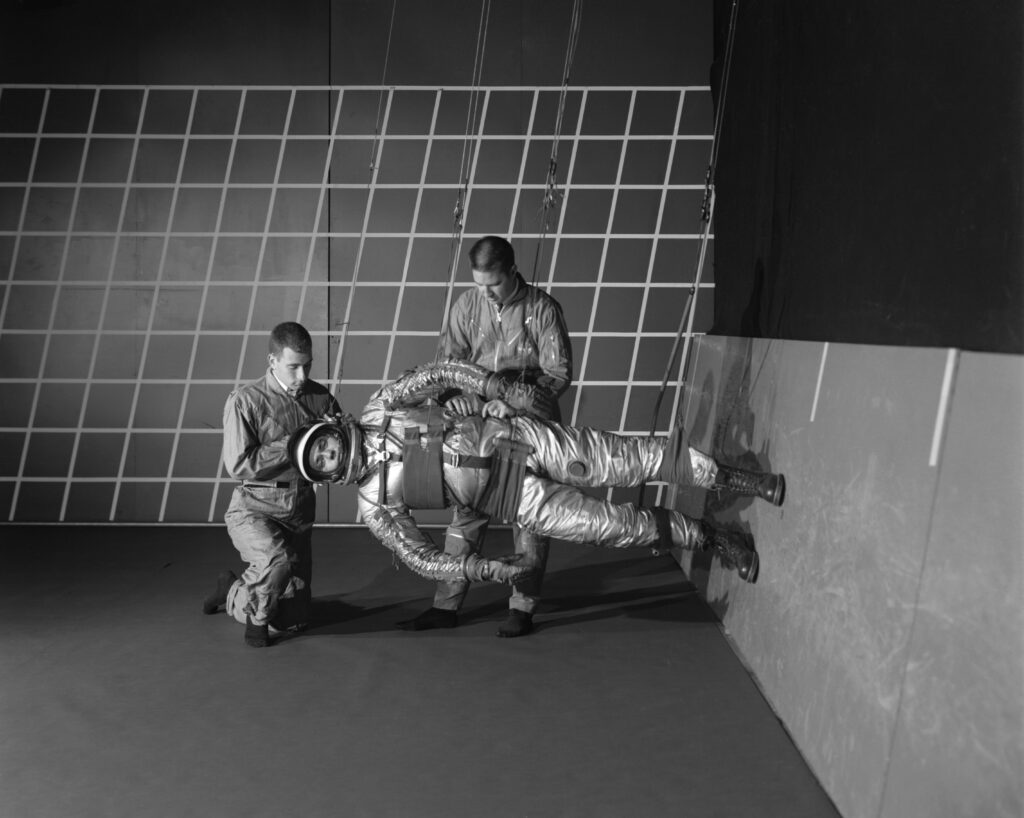
2. The Space Race
The launch of Sputnik in 1957 by the Soviet Union triggered panic in the West.
This event led to NASA’s creation and the eventual Moon landing in 1969, which became America’s greatest symbolic victory.
3. The Arms Race
Both nations produced enough nuclear weapons to destroy the planet multiple times.
It was a strategy known as MAD (Mutually Assured Destruction) — a grim balance that ironically kept peace through fear.
The Hidden Frontlines: Proxy Wars
Although the superpowers avoided direct conflict, they fought through proxy wars — battles in other countries where each side supported opposing factions.
Korea (1950–1953):
The first major clash of the Cold War, dividing the Korean Peninsula into North (Communist) and South (Democratic) — a division that still exists today.
Vietnam (1955–1975):
The U.S. intervened to stop the spread of communism but faced fierce resistance, leading to one of the longest and most controversial wars in modern history.
Afghanistan (1979–1989):
The Soviet invasion met with U.S.-backed resistance fighters, known as the Mujahideen.
This war drained the Soviet economy and contributed to its eventual collapse.
Each of these wars left behind scars, not only on nations but also on the minds of those who fought.
The Berlin Wall: A Symbol of Division
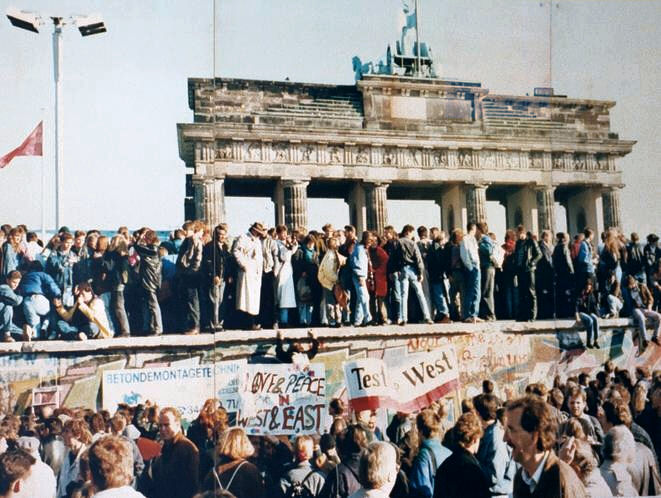
Nothing represented the Cold War more than the Berlin Wall.
Built in 1961, it separated East and West Berlin — dividing families, friends, and ideologies.
It stood for 28 years, a concrete reminder of humanity’s division.
When it finally fell in 1989, it marked not just the end of the wall, but the beginning of a new world order.
The Collapse of the Soviet Union
By the late 1980s, the Soviet economy was in decline, its people demanding change.
Under Mikhail Gorbachev, reforms like glasnost (openness) and perestroika (restructuring) began — but it was too late.
In 1991, the Soviet Union officially dissolved, ending nearly half a century of Cold War tension.
The world celebrated — but the ghosts of the Cold War still echo in modern politics, espionage, and global power struggles.
Untold Secrets Revealed
Even decades later, classified documents continue to surface, revealing shocking details:
- Secret nuclear testing in Siberia and Nevada.
- Hidden CIA assassination plots against foreign leaders.
- Psychological operations using propaganda and misinformation.
- Underground bunkers built to survive nuclear apocalypse.
These revelations prove that the Cold War was not just a political battle — it was a war for control over truth itself.
Lessons from the Cold War
The Cold War teaches us that power without peace leads to fear, and competition without compassion leads to chaos.
It’s a reminder that humanity’s greatest battles are not always fought on the battlefield — but within the human heart.
Internal Link (Hidden Truths Blog)
Read more historical mysteries like this one:
👉 The Hidden Truth of Hiroshima and Nagasaki
External Link (Reference)
For deeper historical insights, visit:
🌐 History.com – The Cold War Overview
Conclusion
The Cold War may have ended decades ago, but its shadows still linger in international relations, intelligence work, and global policies.
It showed that wars aren’t always fought with weapons — sometimes, they’re fought with words, whispers, and ideas.
And perhaps the greatest untold secret of all is this —
The Cold War never truly ended; it just changed its form.
Image Credit: Wikimedia Commons (CC BY-SA 4.0)
Good
😱
🤩🥳
Good