
Unearthing the Impossible
In the quiet town of Visoko, Bosnia and Herzegovina, lies a structure that has ignited one of the most fascinating archaeological debates of the 21st century — a pyramid that, according to some researchers, should not exist. Known as the Bosnian Pyramid of the Sun, this colossal formation has been described as the world’s largest and oldest man-made pyramid, potentially predating the Egyptian pyramids by thousands of years.
What began as a local curiosity soon turned into a global mystery, challenging the very foundations of what we know about ancient civilizations and human history.
The Discovery That Shocked the World
In 2005, Bosnian-American archaeologist Dr. Semir Osmanagić announced his discovery of what he called the Bosnian Pyramid Complex in the hills surrounding Visoko. From above, one of the hills appeared to have symmetrical sides, sharp angles, and a near-perfect orientation to the cardinal points — much like the Great Pyramid of Giza.
Osmanagić claimed that the formation was not a natural hill but a colossal ancient structure covered over centuries by soil and vegetation. His theory suggested that Visoko Valley once held an advanced prehistoric civilization that possessed architectural and astronomical knowledge far beyond what history had recorded.
The claim was met with skepticism by mainstream scientists — yet the site’s geometry, alignment, and mysterious underground tunnels have kept researchers, explorers, and spiritual seekers coming for nearly two decades.
The Structure and Its Geometry
The largest of the complex, the Pyramid of the Sun, stands at an astonishing 220 meters (722 feet) — even taller than Egypt’s Great Pyramid of Giza, which measures 147 meters. The pyramid’s sides align almost perfectly with true north, south, east, and west, a level of precision difficult to dismiss as coincidence.
Close to the main pyramid are four other notable structures:
- The Pyramid of the Moon
- The Pyramid of the Dragon
- The Pyramid of Love
- The Temple of Mother Earth
Together, they form a network of geometrically connected mounds that seem to follow a deliberate design pattern — one that some researchers believe encoded astronomical and energetic knowledge.
The Underground Labyrinth: Ravne Tunnels
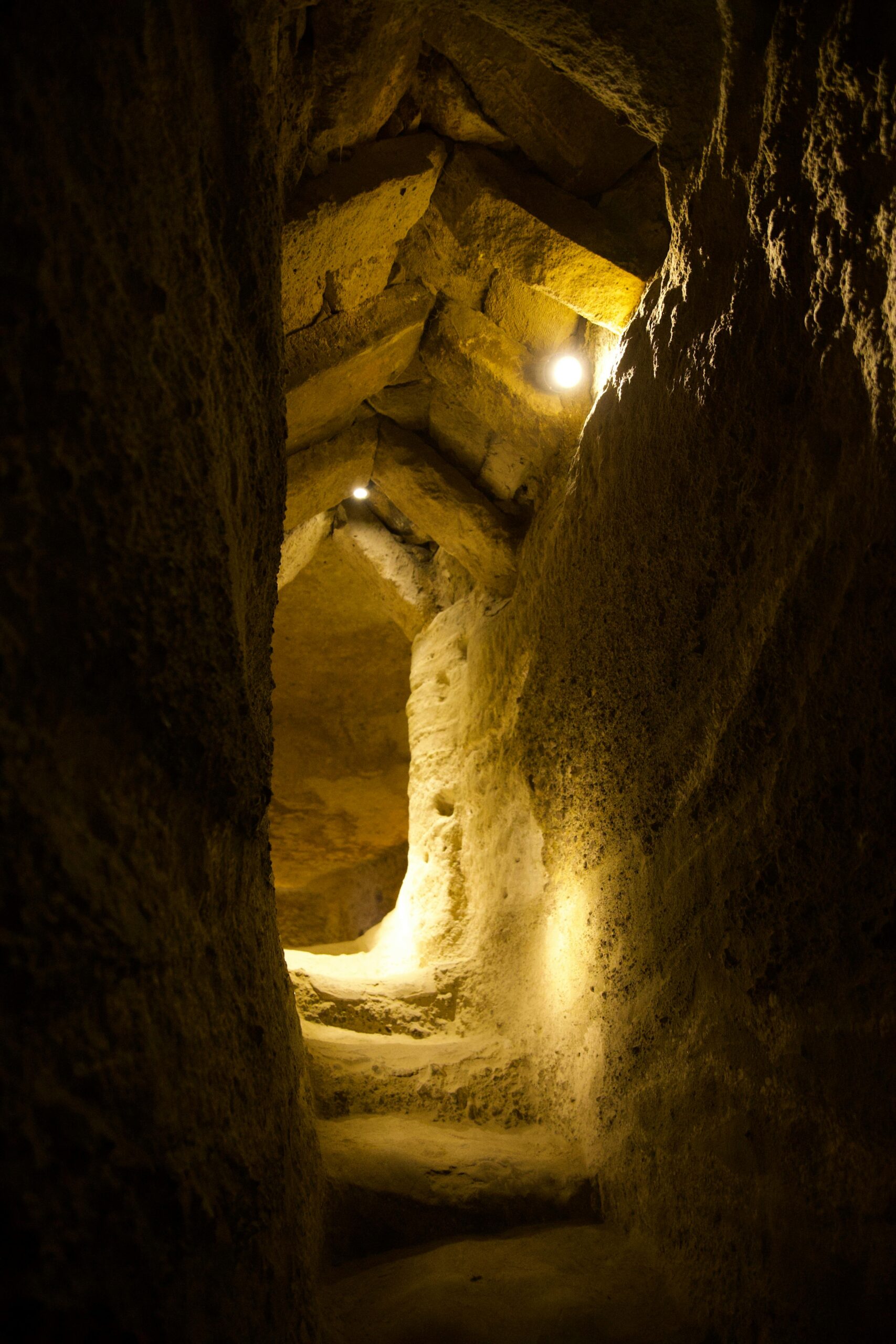
One of the most intriguing aspects of the Bosnian Pyramid mystery lies beneath the surface. Near the base of the Pyramid of the Sun lies an extensive network of underground tunnels known as the Ravne Labyrinth.
Explorers have uncovered miles of passageways containing dry-stacked stone walls, megalithic blocks, and artifacts that appear deliberately placed. Some stones contain engraved symbols, while others emit measurable electromagnetic and ultrasonic energy.
Visitors to the tunnels have reported a sense of peace, enhanced energy, and improved breathing, which researchers attribute to the high negative ion concentration in the air — far greater than typical urban environments.
This underground world adds a mystical and scientific layer to the mystery — was this a spiritual sanctuary, a power center, or an ancient city buried beneath time?
Scientific Studies and Controversies
From the moment Osmanagić’s discovery went public, the archaeological community became divided. The European Association of Archaeologists (EAA) dismissed the Bosnian Pyramids as natural geological formations — the result of sedimentary layering and erosion over millions of years.
Yet, independent researchers from various countries have conducted geological, geophysical, and energy-based studies, claiming evidence of human modification:
- Geologist Dr. Robert Schoch (Boston University) acknowledged that while many formations were natural, some showed signs of artificial shaping.
- Italian geophysicist Dr. Paolo Debertolis found structured stone slabs and “anomalous” energy readings.
- Ground-penetrating radar (GPR) scans have revealed straight walls and internal cavities suggestive of constructed chambers.
The debate continues. While mainstream academia remains skeptical, a growing body of alternative researchers insists the evidence demands open-minded scientific inquiry rather than dismissal.
Energy Phenomena and Sacred Geometry
Beyond archaeology, the Bosnian Pyramid has gained attention for its unusual energy fields.
Sensitive instruments have detected an electromagnetic beam — a continuous 28 kHz frequency — emanating from the top of the Pyramid of the Sun. The energy seems to increase in intensity as it moves upward, a phenomenon that defies conventional physics.
Some researchers describe the site as an “energy amplifier”, designed to harness Earth’s natural frequencies. Others link its layout to the Flower of Life and sacred geometry, suggesting ancient builders might have understood how to channel cosmic and terrestrial energies — a knowledge long lost to modern science.
Cultural and Spiritual Revival in Visoko
Regardless of academic disputes, Visoko has transformed. What was once a quiet Balkan town is now a hub of tourism, spirituality, and alternative science. Volunteers from around the world come to excavate, meditate, and explore. Annual festivals celebrate unity, energy healing, and ancient wisdom.
The site has become not just an archaeological curiosity but a symbol of rediscovery — a reminder that history may be far older and deeper than we dare to imagine.
The Broader Implication: Rethinking Human History
The mystery of the Bosnian Pyramids raises a larger question — how much do we really know about our past?
If even a fraction of Osmanagić’s claims hold truth, then human civilization may have roots stretching back tens of thousands of years, to an age when humans mastered geometry, astronomy, and energy engineering.
The Bosnian Pyramid invites us to question the linear narrative of progress — perhaps ancient civilizations weren’t primitive, but advanced in ways we no longer understand.