Introduction: The Plane That Vanished Into Thin Air
On March 8, 2014, Malaysia Airlines Flight MH370 took off from Kuala Lumpur International Airport bound for Beijing, China.
The flight carried 239 people — passengers and crew from 15 different countries.
Less than 40 minutes into the journey, something unimaginable happened:
The plane vanished from radar screens.
There was no distress call.
No warning.
No trace.
What followed became one of the greatest aviation mysteries in history — a disappearance that puzzled experts, devastated families, and inspired countless investigations and theories.
The Basic Facts: What We Know
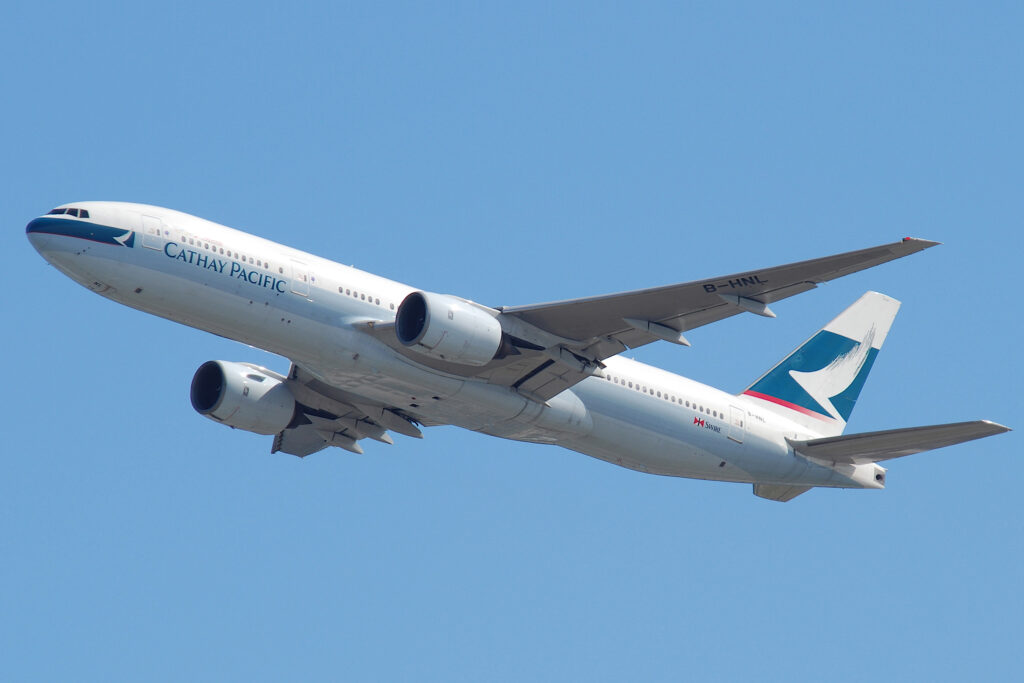
Flight MH370 was a Boeing 777-200ER, one of the most reliable aircraft in the world.
It departed at 12:41 a.m. local time, expected to land in Beijing at 6:30 a.m.
The last voice transmission came at 1:19 a.m., when the co-pilot calmly said:
“Good night, Malaysian Three Seven Zero.”
Moments later, the plane disappeared from air traffic control radar.
Military radar later showed the plane turning sharply west, back across the Malay Peninsula — a move completely off course.
The Search Begins
The disappearance triggered one of the largest search operations in aviation history.
At first, the search area focused in the South China Sea, where the plane was last tracked.
But as more data came in, the focus shifted southward, into the vast and deep Indian Ocean.
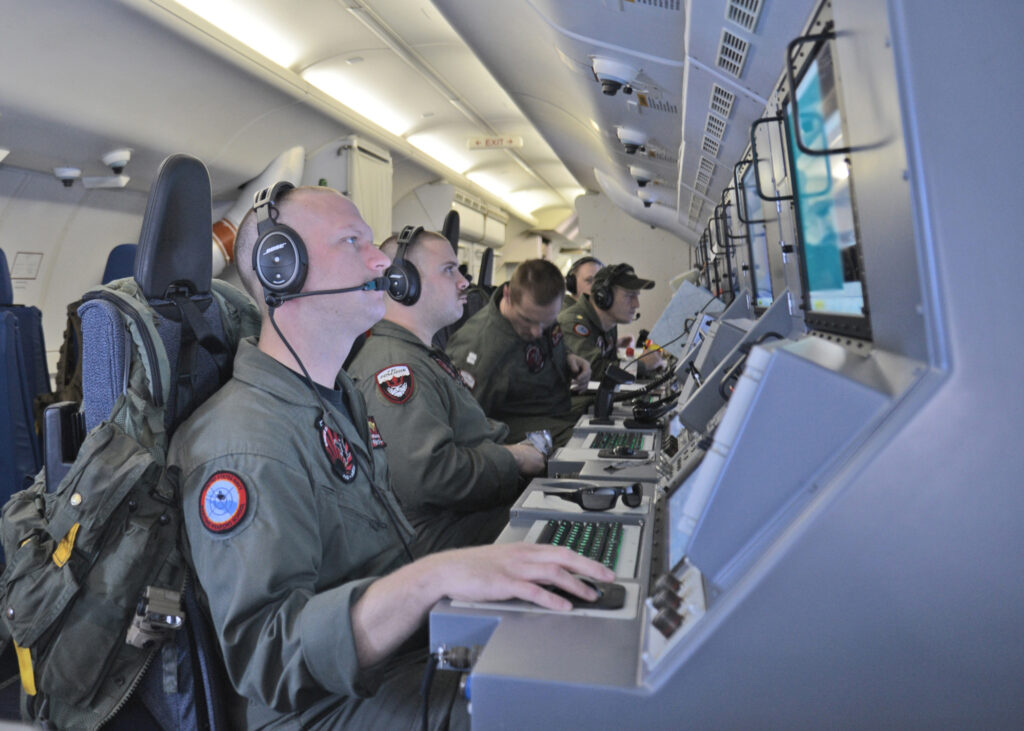
More than 26 countries joined the search — using satellites, submarines, sonar scanners, and even underwater drones.
Yet, no wreckage was found for over a year.
It was as if the ocean had swallowed the plane whole.
Timeline of Events: The Last Known Hours
Let’s break down the final known moments of Flight MH370:
- 12:41 a.m. — Flight MH370 departs Kuala Lumpur.
- 1:07 a.m. — Last routine data transmission sent from the plane’s communication system (ACARS).
- 1:19 a.m. — Co-pilot says “Good night, Malaysian Three Seven Zero.”
- 1:21 a.m. — The plane’s transponder (which sends its position) stops working.
- 1:30 a.m. – 2:22 a.m. — Malaysian military radar detects the plane turning west, then northwest, flying over Penang Island and into the Andaman Sea.
- 2:40 a.m. — Civilian radar loses contact.
- 8:11 a.m. — A satellite receives the final “handshake” from the plane, suggesting it was still airborne.
That final signal became the key clue to understanding the mystery.
The Mysterious Satellite Data
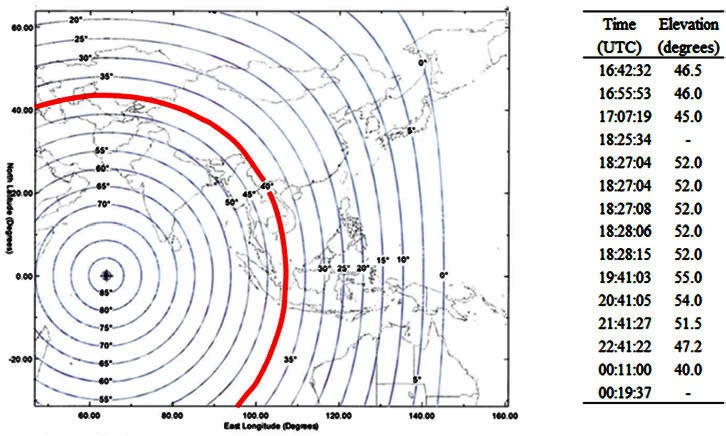
Even after the transponder was turned off, the aircraft’s satellite communication system sent occasional “pings” to a satellite owned by Inmarsat, a British company.
By analyzing these signals, investigators estimated two possible flight paths after the plane turned west:
- Northern Route: Over Central Asia — Pakistan, India, and possibly Kazakhstan.
- Southern Route: Deep into the southern Indian Ocean, southwest of Australia.
Almost all experts agree that the southern path was the real one — and that MH370 likely ended its flight in the southern Indian Ocean, far from any land.
The Search in the Indian Ocean
The search area covered more than 120,000 square kilometers of some of the deepest ocean on Earth.
The operation used advanced sonar equipment and underwater drones capable of scanning depths up to 6,000 meters.
After years of searching, the official operation was called off in 2017, with no main wreckage found.
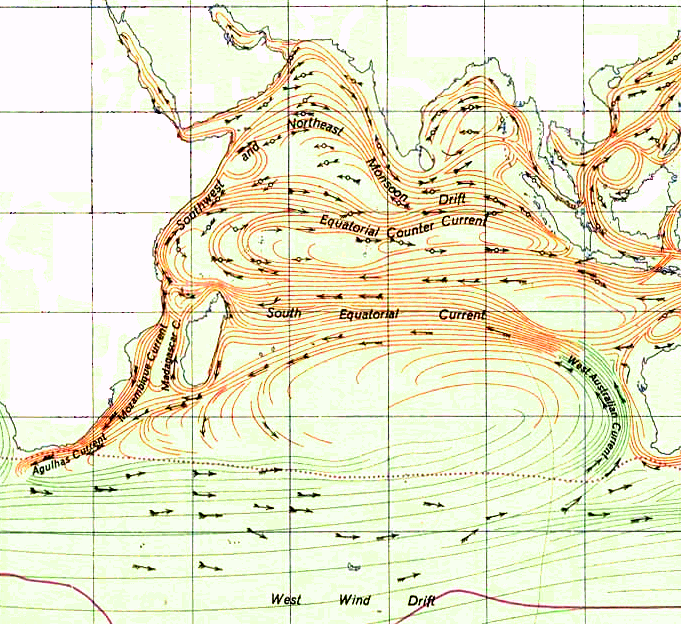
However, some debris eventually washed ashore in several locations:
- Reunion Island (east of Madagascar)
- Mozambique
- Mauritius
- Tanzania
Experts confirmed that at least three pieces were definitely from MH370.
Still, the main fuselage, cockpit, and flight recorders remain missing.
The Theories: What Might Have Happened to MH370?
With no wreckage and no black box, investigators and theorists have offered many possible explanations.
Here are the most discussed theories — from the logical to the controversial.
1. Pilot Suicide (Captain Zaharie Ahmad Shah)
One of the most debated theories involves Captain Zaharie Ahmad Shah, a 53-year-old veteran pilot with 18,000 flight hours.
Investigators found that Zaharie had used a flight simulator at home — and one of his saved routes matched the southern Indian Ocean path similar to MH370’s final signal.
Some experts believe he may have deliberately diverted the plane and kept it flying until fuel ran out.
However, no suicide note or clear motive was ever found.
Friends and colleagues described Zaharie as “calm, kind, and passionate about flying.”
So while this theory fits the technical data, it leaves emotional questions unanswered.
2. Sudden Mechanical Failure or Fire
Another possibility is a catastrophic mechanical failure, such as:
- An onboard fire,
- Cabin depressurization, or
- A loss of electrical systems.
A fire could have disabled communications and killed everyone onboard due to oxygen loss, while the autopilot kept the plane flying until it ran out of fuel.
This theory explains the silence but doesn’t match the deliberate flight path changes seen on radar.
3. Hijacking
At first, many suspected terrorism or hijacking.
But no group ever claimed responsibility, and no ransom demands were made.
Still, some theorize that the plane could have been taken over — possibly to steal sensitive cargo or passengers.
Yet, without radar or satellite proof of a landing, this remains speculation.
4. Cyber Hijack or Remote Control
A modern theory suggests MH370 may have been hacked remotely through its communication systems.
Some researchers believe that cyber interference or autopilot override could have redirected the plane.
While intriguing, aviation experts largely dismiss this as technologically unlikely in 2014.
5. Military Accident or Cover-Up
This theory gained attention when some claimed MH370 might have accidentally been shot down — similar to incidents like Korean Air 007 (1983) or Iran Air 655 (1988).
Some even allege that military radar systems in nearby regions (like the U.S. base at Diego Garcia) might have seen the plane but kept information secret.
However, no concrete evidence supports this theory.
6. Alternate or Unofficial Theories
A few fringe ideas also exist — including claims of:
- Alien abduction 👽
- Secret government experiment
- Disappearance into a “Bermuda Triangle–like” anomaly
These are mostly fictional or internet myths, but they show how powerful the mystery of MH370 has become in public imagination.
The Official Conclusion
In July 2018, the Malaysian government released its final investigation report.
It concluded that:
“The team is unable to determine the real cause of the disappearance of MH370.”
The report stated that the aircraft was deliberately turned off course, but no one could confirm why or by whom.
In short — the mystery remains unsolved.
The Human Side: Families Still Waiting
For the families of the 239 souls aboard, the disappearance is not just a mystery — it’s a wound that never healed.
For years, they’ve demanded truth, closure, and continued searches.
Memorials have been built in:
- Kuala Lumpur, Malaysia
- Beijing, China
- Perth, Australia
Their message is clear:
“We will never forget. We will never stop searching.”
The New Hope: Technology and Future Searches
In 2018, a private company named Ocean Infinity resumed the search using advanced underwater scanning technology.
Although no wreckage was found, the data they collected has helped scientists better understand the Indian Ocean floor.
Many believe that as satellite and ocean mapping technologies improve, MH370 will one day be found.
Why MH370 Still Matters
The disappearance of MH370 changed aviation forever.
It exposed weaknesses in global flight tracking and communication systems.
After 2014, the International Civil Aviation Organization (ICAO) introduced new rules requiring real-time flight tracking every 15 minutes.
It also taught the world a painful truth:
Even in the age of satellites and GPS, a plane — and 239 lives — can simply vanish.
Conclusion: The Ocean Keeps Its Secrets
More than a decade later, the mystery of Flight MH370 still haunts us.
It is a story of human vulnerability — of families left in endless waiting, of oceans that hide their answers, and of the haunting possibility that some truths are never meant to be found.
Until the day wreckage is discovered, MH370 will remain the ghost flight of the 21st century — a reminder that even in a world of technology, mystery still reigns the skies.
“Not all disappearances are accidents. Some are stories the sea keeps to itself.”