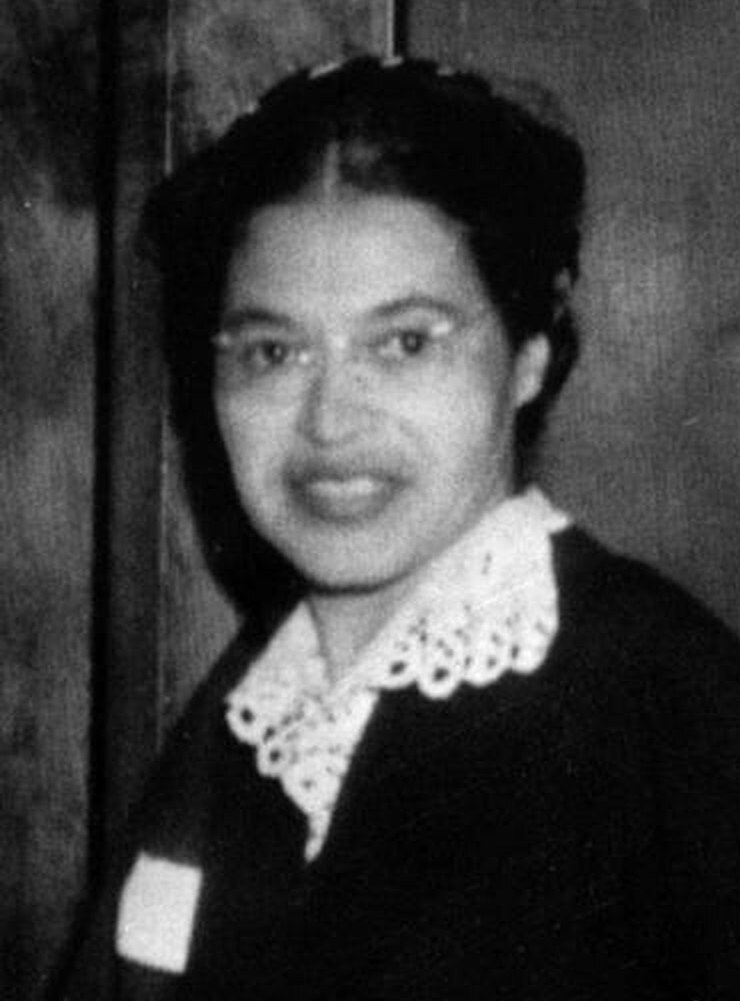
The Day That Changed America
On December 1, 1955, in the bustling city of Montgomery, Alabama, an ordinary bus ride turned into an extraordinary act of courage. A quiet, soft-spoken African American woman named Rosa Parks took her usual seat on a city bus after a long day of work. But when a white passenger boarded and the driver ordered her to give up her seat, she calmly refused.
That moment of defiance—simple yet revolutionary—sparked a movement that transformed the course of American history.
Rosa Parks wasn’t just tired that day. She was tired of giving in, tired of being treated as less than human, and tired of the cruel system of segregation that devalued Black lives.
Her refusal became the spark that ignited the Civil Rights Movement, inspiring millions to stand up—by sitting down.
Life Before the Bus: The Making of a Courageous Woman
Rosa Louise McCauley was born on February 4, 1913, in Tuskegee, Alabama, to a carpenter father and a schoolteacher mother. From a young age, she experienced the harsh realities of racism in the Deep South.
She attended segregated schools, where resources were scarce and conditions unequal, yet she excelled academically. Her mother and grandparents taught her dignity and self-respect despite oppression—a foundation that would later guide her actions.
In 1932, Rosa married Raymond Parks, a barber and active member of the NAACP (National Association for the Advancement of Colored People). Together, they worked to promote Black rights and fight against racial injustices in Alabama.
Long before that fateful bus ride, Rosa Parks was already involved in activism. She served as the secretary of the Montgomery NAACP, investigating cases of racial violence, including sexual assaults against Black women by white men. Her courage was not spontaneous—it was cultivated through years of quiet resistance.
Segregation in the South: The System of Injustice
To understand the power of Rosa Parks’s act, one must first understand the segregation laws that governed the South during the 1950s. Known as the Jim Crow laws, these regulations enforced racial separation in every aspect of daily life—schools, restaurants, water fountains, and, of course, public transportation.
In Montgomery, buses were divided by race. The front seats were reserved for white passengers, and the back seats for Black passengers. If the white section filled up, Black passengers were expected to stand or give up their seats—regardless of how long they’d been riding.
Bus drivers had absolute authority. They could eject Black passengers at will and often did so with aggression and humiliation. Rosa Parks knew this all too well—she had encountered the very same bus driver, James F. Blake, before and had once been forced off the bus for refusing to use the back door.
The Arrest That Sparked a Movement
When Rosa Parks refused to stand on December 1, 1955, her quiet defiance shook the foundations of the segregated South. The driver, Blake, demanded, “Are you going to stand up?”
She replied calmly, “No.”
“Then I’ll have you arrested,” he said.
“You may do that,” she answered.
Police arrived shortly after and took Rosa Parks into custody. Her crime? Violating Montgomery’s segregation ordinance.
The news of her arrest spread quickly through the Black community. E.D. Nixon, the NAACP leader, and a young Martin Luther King Jr., then a 26-year-old pastor, recognized the potential of this moment to challenge segregation itself.
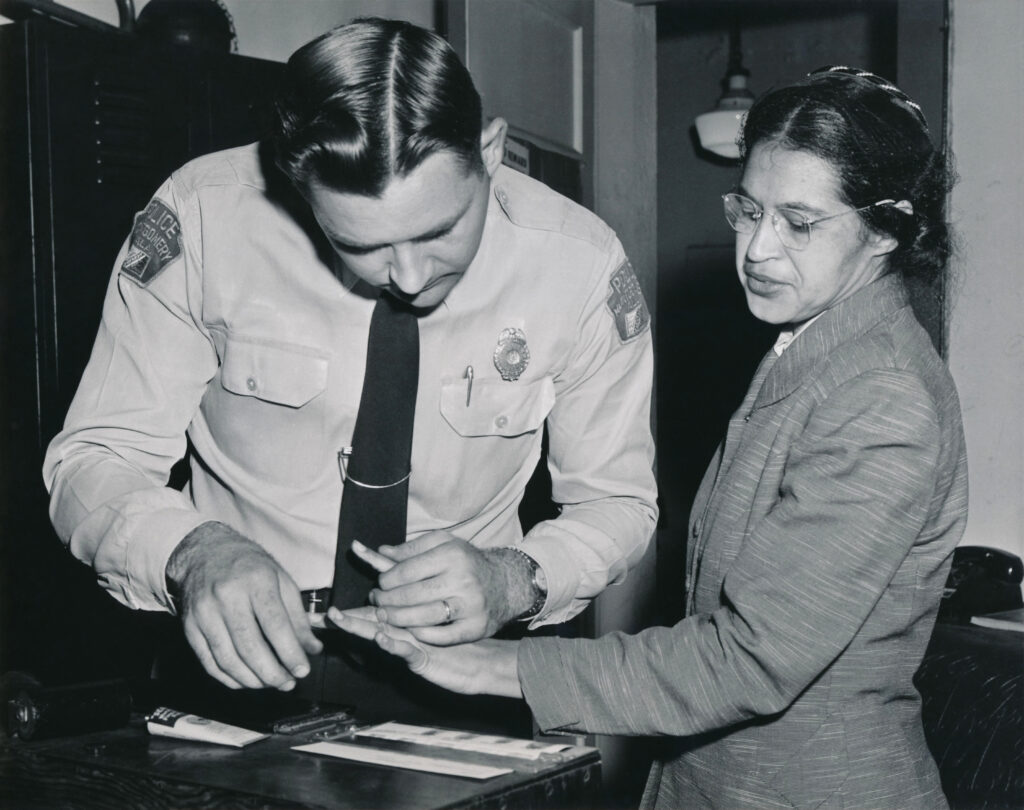
The Montgomery Bus Boycott
Within days, the Montgomery Improvement Association (MIA) was formed to organize a massive bus boycott. On December 5, 1955—the day of Parks’s trial—African Americans across Montgomery refused to ride city buses.
The boycott lasted 381 days. For more than a year, the city’s Black residents walked, carpooled, and shared rides, despite harassment, arrests, and violence. The loss of revenue crippled the bus system, and the protest drew national and international attention.
On November 13, 1956, the U.S. Supreme Court ruled that bus segregation was unconstitutional. Rosa Parks’s act of defiance had changed the law—and awakened the conscience of a nation.
Life After the Boycott: Struggles and Recognition
While history remembers Rosa Parks as a hero, her personal life after the boycott was far from easy. She and her husband lost their jobs, faced death threats, and were forced to move to Detroit, Michigan, in search of safety and stability.
Yet Rosa Parks continued her work for civil rights. She worked for Congressman John Conyers for over two decades, advocating for justice and equality. In the later years of her life, she founded the Rosa and Raymond Parks Institute for Self Development, mentoring young African Americans and inspiring new generations to fight injustice peacefully.
Her lifelong commitment to equality earned her the title “Mother of the Civil Rights Movement.”
Global Impact and Legacy
Rosa Parks’s simple act of defiance echoed far beyond the borders of Alabama. It inspired civil rights movements worldwide, from South Africa’s anti-apartheid struggle to India’s fight for Dalit rights.
Her courage taught the world that nonviolent resistance can dismantle even the most entrenched systems of oppression. Parks’s name became synonymous with dignity, courage, and quiet power.
In 1996, she received the Presidential Medal of Freedom, the highest civilian honor in the United States, and later the Congressional Gold Medal in 1999. When she passed away on October 24, 2005, the U.S. Capitol honored her with the rare tribute of lying in state—a recognition usually reserved for presidents and national heroes.
Lessons from Rosa Parks: The Power of One Voice
Rosa Parks’s legacy endures not because she shouted the loudest, but because she stood firm in silence. Her story reminds us that change doesn’t always begin with power or position—it begins with courage and conviction.
In today’s world, where injustice still exists in many forms, Rosa’s story is a call to conscience. It reminds us that ordinary people can achieve extraordinary change when they refuse to accept what’s wrong.