Introduction
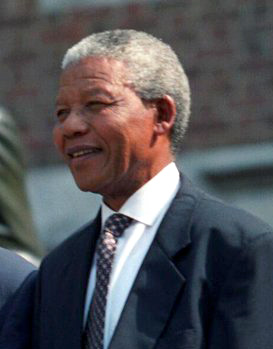
Few names in history stand as tall as Nelson Mandela’s.
A man who endured twenty-seven years of imprisonment, faced cruelty and humiliation, and yet emerged not with bitterness, but with a spirit of forgiveness that changed a nation.
His life is a powerful reminder that true leadership is not about power, but about humanity, unity, and peace.
This is the story of Nelson Mandela: The Man Who Forgave His Enemies — a man whose courage and compassion turned hate into hope.
Early Life and the Seeds of Leadership
Nelson Rolihlahla Mandela was born on July 18, 1918, in the small village of Mvezo, South Africa. He belonged to the Thembu royal family and was raised with traditional values of respect, leadership, and justice.
From his early education at Fort Hare University to his legal studies at the University of Witwatersrand, Mandela was deeply aware of the growing racial discrimination in his country.
The experience of witnessing racial inequality planted in him a strong determination to challenge the system that kept his people oppressed.
The Rise of a Revolutionary
Mandela joined the African National Congress (ANC) in the early 1940s. He quickly became one of its most active members, co-founding the ANC Youth League to fight against apartheid — a policy that legalized racial segregation in South Africa.
At first, he believed in peaceful resistance, inspired by Mahatma Gandhi’s philosophy.
But as government violence escalated, Mandela and his colleagues decided to form an armed resistance group called Umkhonto we Sizwe (“Spear of the Nation”). Their goal was to sabotage government property without harming innocent people.
Mandela’s leadership made him a symbol of resistance. However, in 1962, he was arrested and charged with conspiracy against the state.
Life Behind Bars: 27 Years of Sacrifice
Nelson Mandela spent 27 years in prison, most of them on Robben Island, where conditions were harsh and dehumanizing.
He lived in a small cell with no bed, worked long hours breaking stones, and was allowed minimal contact with the outside world.
Yet, instead of allowing bitterness to consume him, Mandela chose to rise above hatred. He educated fellow prisoners, built unity among them, and kept his mind strong.
His calm dignity and inner strength made even his jailers respect him.
He once said,
“I learned that courage was not the absence of fear, but the triumph over it.”
From behind prison walls, he became the symbol of freedom and justice for millions worldwide.

Freedom and the Power of Forgiveness
In 1990, after global campaigns and growing pressure, Nelson Mandela was released from prison.
The world watched as he walked out — not with anger, but with grace. Many expected revenge. Instead, he chose reconciliation.
He invited his former prison guards to his inauguration ceremony when he became President in 1994. He wore the Springbok rugby jersey, once a symbol of white dominance, to unite black and white citizens under one flag.
Mandela’s leadership taught South Africa and the world that forgiveness is stronger than vengeance.
He said,
“Forgiveness liberates the soul. It removes fear. That’s why it is such a powerful weapon.”
The President Who United a Nation
Nelson Mandela became South Africa’s first black president in 1994, leading a divided nation toward healing.
He established the Truth and Reconciliation Commission, allowing victims and perpetrators of apartheid crimes to tell their stories openly.
Rather than seeking punishment, Mandela sought understanding and closure.
He focused on rebuilding education, creating jobs, and promoting peace among communities that had once been torn apart by hate.
Mandela’s presidency proved that moral leadership can change not only a government, but also the heart of a nation.
A Global Legacy
Even after leaving office in 1999, Mandela continued to dedicate his life to humanitarian causes through the Nelson Mandela Foundation.
He became a global ambassador for peace, equality, and human rights.
Leaders across the world — from Barack Obama to Malala Yousafzai — have called him an inspiration.
His name became synonymous with integrity, justice, and hope.
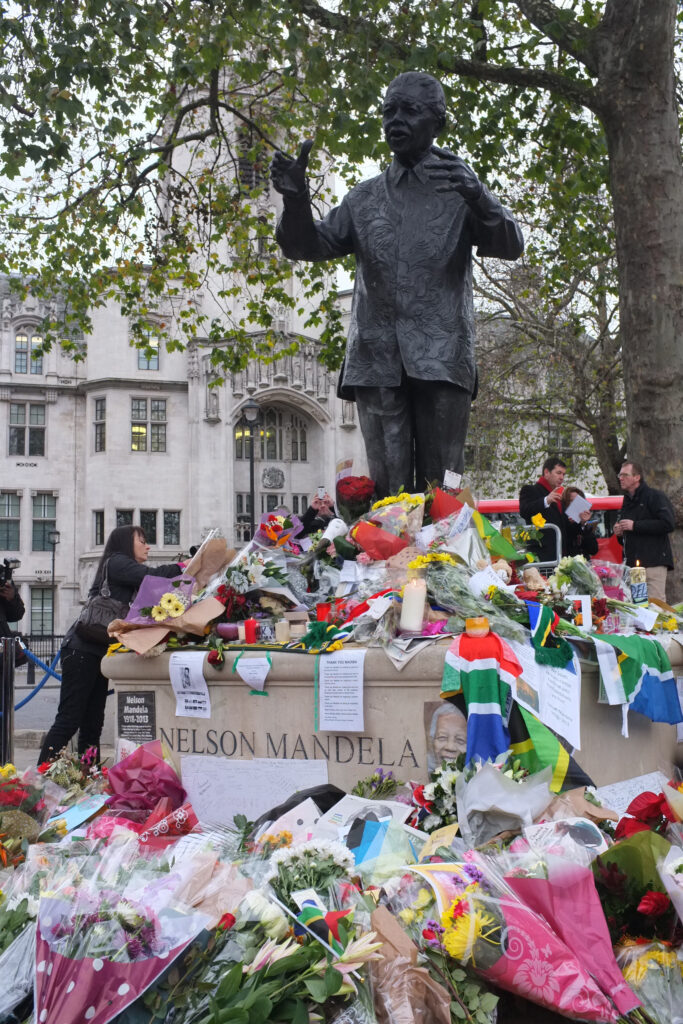
When Nelson Mandela passed away on December 5, 2013, the world mourned not just a leader, but a symbol of humanity’s highest values.
Internal Link (Hidden Truths Blog)
If you are interested in reading about other real heroes who shaped history, visit:
Quaid-e-Azam: The Founder of Pakistan’s Dream — a story of vision, struggle, and the birth of a nation.
External Link (Official Reference)
For authentic historical information and resources, explore the official Nelson Mandela Foundation website:
Nelson Mandela Foundation — preserving his vision of freedom, equality, and dignity for all.
Conclusion
Nelson Mandela’s life is proof that forgiveness is not weakness—it is the ultimate form of strength.
He turned years of suffering into a mission of peace, transformed his enemies into partners, and led his nation out of darkness.
In a divided world, Mandela’s message remains timeless:
“Courage and compassion can heal even the deepest wounds.”
His story reminds us that true greatness lies not in power, but in the ability to forgive.
Image Credit: Wikimedia Commons (CC BY-SA 4.0)
♥️