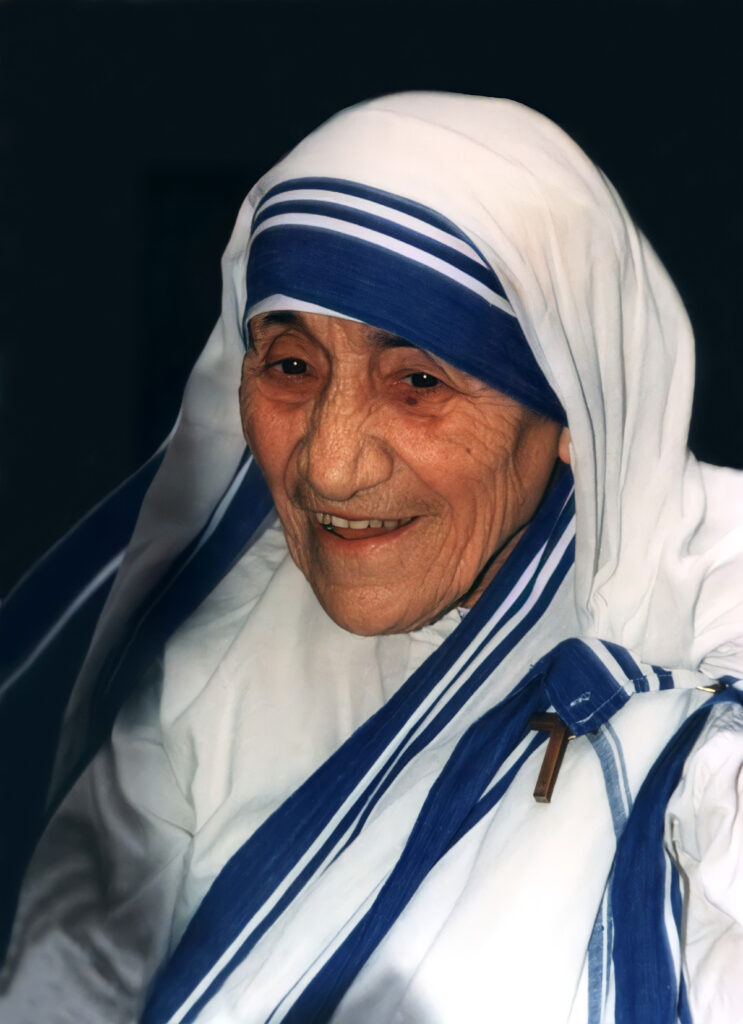
When we think of mercy, love, and compassion in the modern world, one name rises above all others: Mother Teresa of Calcutta. She dedicated her life to serving the poorest of the poor, the sick, the hungry, and the dying. Known as the “Saint of the Gutters,” she transformed alleys of suffering into homes of hope.
But who was this extraordinary woman? How did she go from a simple girl in Europe to a global symbol of love and sacrifice?
Early Life of Mother Teresa
Birth and Family
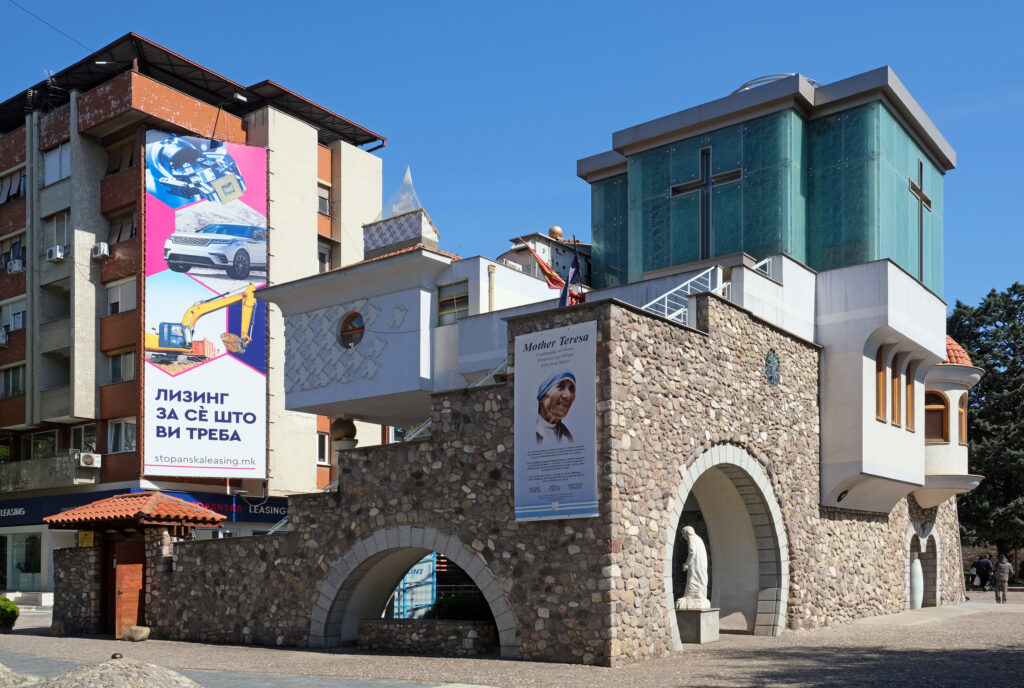
Mother Teresa was born as Agnes Gonxha Bojaxhiu on 26 August 1910 in Skopje, which was then part of the Ottoman Empire (now North Macedonia). Her parents, Nikola and Dranafile, were deeply religious Catholics who raised their children with values of faith and charity.
Agnes lost her father when she was very young, and her mother played a key role in shaping her compassion. Dranafile often invited the poor into their home, saying:
“My child, never eat a single mouthful unless you are sharing it with others.”
This early example of service planted the first seeds of mercy in young Agnes’ heart.
A Young Girl with a Big Dream
At the age of 12, Agnes felt the call of God to become a missionary. By 18, she left her home and family to join the Sisters of Loreto in Ireland. She soon traveled to India, where she would begin her teaching career in Kolkata (then Calcutta).
The Call Within a Call
The Defining Moment
In 1946, while traveling by train to Darjeeling, Agnes—now known as Sister Teresa—experienced a spiritual vision. She described it as the “call within a call.”
She felt that God was asking her to leave the convent and live among the poor, to serve them directly, not from behind school walls.
Leaving the Convent
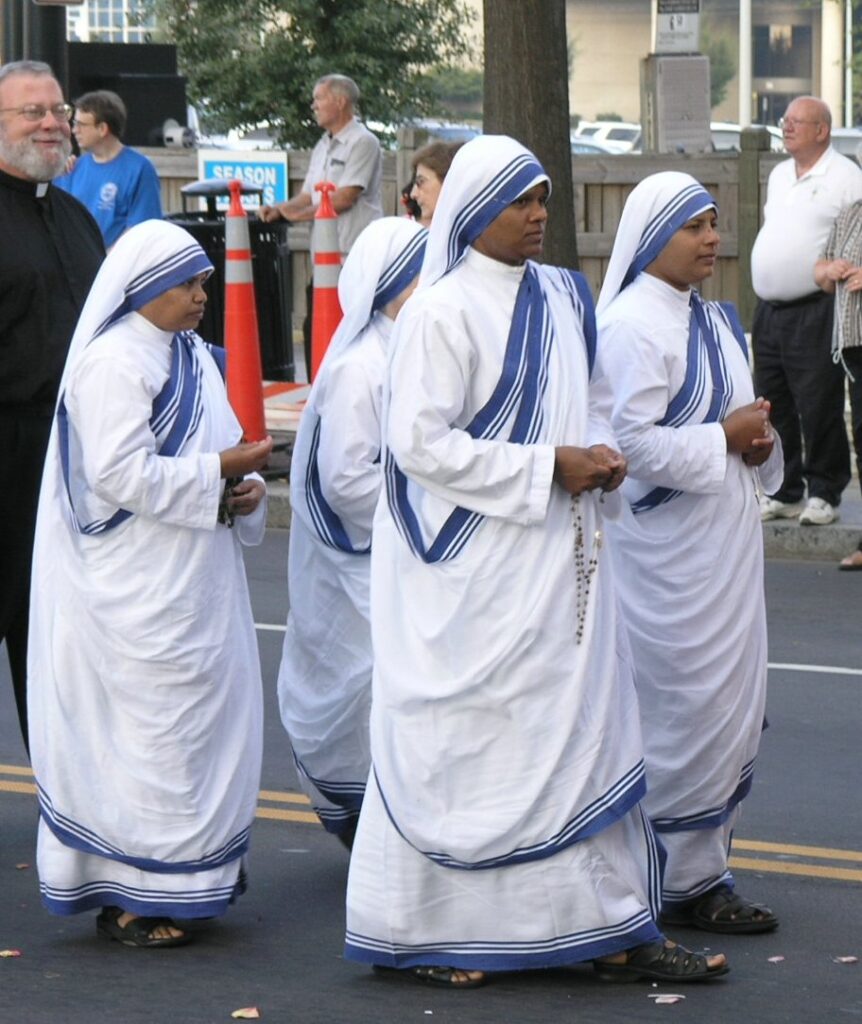
With special permission, she left the Loreto convent in 1948 and stepped into the streets of Kolkata. Wearing a simple white sari with a blue border (which would later become her iconic habit), she began her mission with nothing—no money, no support—just faith.
Founding the Missionaries of Charity
A Humble Beginning
In 1950, she founded the Missionaries of Charity with only a small group of devoted sisters. Their purpose was simple yet powerful: to give “wholehearted and free service to the poorest of the poor.”
Growth and Global Reach
From a small home in Kolkata, the Missionaries expanded worldwide. By the end of the 20th century, thousands of sisters were serving in more than 130 countries. They managed:
- Orphanages for abandoned children.
- Hospices for the sick and dying.
- Schools for the poor.
- Homes for lepers, the disabled, and the homeless.
Her Endless Mercy and Work
Serving the Forgotten
Mother Teresa picked up the dying from the streets, bathed them, fed them, and gave them love until their last breath. She gave dignity to lives that society had abandoned.
Compassion in Action
For her, every act of kindness was an act of love for God. She often said:
“Each one of them is Jesus in disguise.”
Small Things with Great Love
Her most famous words summarize her philosophy:
“Not all of us can do great things. But we can do small things with great love.”
Recognition and Awards
Her selfless work brought her global recognition, though she never sought fame. Some of her major awards include:
- Nobel Peace Prize (1979) – awarded for her tireless efforts to bring peace through service to the poor.
- Bharat Ratna (1980) – India’s highest civilian award.
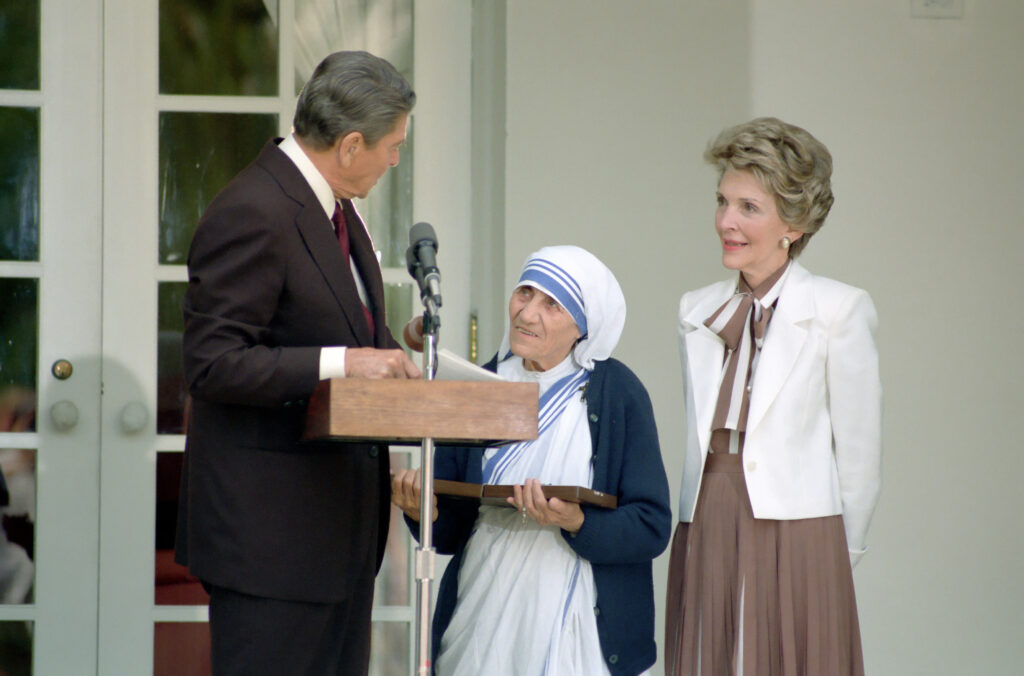
- Presidential Medal of Freedom (1985) – the highest civilian award in the United States.
- Order of the Smile (1979) – a unique award given by children.
Despite these honors, she lived a life of extreme simplicity. She never owned more than two saris and sandals.
Criticism and Challenges
Facing Doubts
Not everyone agreed with her methods. Some critics accused her of not providing advanced medical care in her hospices. Others challenged her views on abortion and contraception, which she firmly opposed.
Her Response
To her, serving the poor was not about politics or technology—it was about love. She focused on giving dignity and comfort, not on debate.
Mother Teresa’s Final Years
By the 1990s, her health began to decline. She suffered from heart problems and other illnesses but continued working until her final days.
She passed away on 5 September 1997, at the age of 87. Millions of people across the world mourned her death. Her funeral in Kolkata was attended by world leaders, but more importantly, by the poor whom she served all her life.
Canonization: Becoming a Saint
Beatification
In 2003, Pope John Paul II beatified her, declaring her “Blessed Teresa of Calcutta.”
Canonization
In 2016, Pope Francis officially canonized her as Saint Teresa of Calcutta, recognizing her as a saint of the Catholic Church.
Legacy of Love
Today, the Missionaries of Charity continue her mission in over 130 countries. Thousands of sisters, brothers, and volunteers carry on her message: to serve the poor with love and mercy.
Her life remains a shining example that greatness comes not from power or wealth but from humility, compassion, and service.
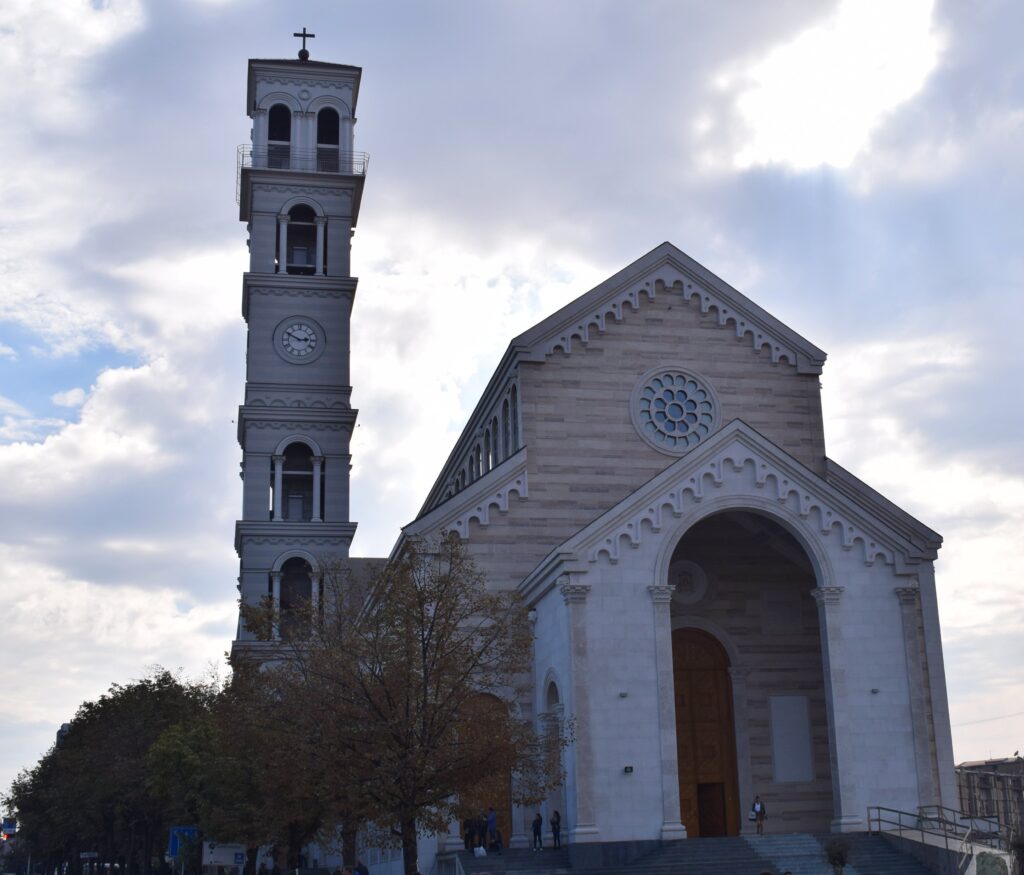
Conclusion: A Saint for Humanity
Mother Teresa was more than a humanitarian—she was a spiritual guide, a symbol of mercy, and a voice for the voiceless. She proved that one person’s love can change the world.
Her endless mercy lives on not just in her congregation, but in the hearts of people inspired by her words and actions. She truly was, and will always be, the Woman of Endless Mercy.
Image Credit: CC BY-SA 3.0
Thank you for reading!