
Introduction: Books as the Spine of Civilization
Civilizations are not remembered by how loudly they ruled, but by how carefully they recorded.
Islamic civilization understood this early.
From the first century of Islam, Muslims showed an unusual commitment to documentation, verification, and intellectual honesty. Islamic history books were not written to glorify rulers blindly or entertain readers. They were written to preserve truth, even when that truth was uncomfortable.
This article explores Islamic history books as a civilizational project — how they were written, why they were revised, and why they remain essential sources for understanding not only Muslim history, but world history.
1. Islamic Historiography: History as Moral Responsibility
Islamic historiography did not emerge as a neutral academic exercise. It was shaped by a deeper belief:
History would be questioned before God.
Muslim historians believed false reporting was a moral failure. This belief produced a historical tradition with:
- Source transparency
- Named narrators
- Clear separation between fact and opinion
- Willingness to record contradictions
Unlike myth-based histories, Islamic books openly admitted uncertainty rather than hiding it.
2. The Transition from Memory to Manuscript
Early Islamic history was preserved through:
- Oral transmission
- Genealogical records
- Poetry and tribal memory
As Islam expanded rapidly, scholars realized oral memory alone was insufficient. This realization led to the systematic writing of history.
The introduction of paper allowed historians to:
- Record long chronological narratives
- Preserve multiple reports of the same event
- Compile multi-volume works
This shift created the foundation for Islamic history books as we know them today.
3. Chronology, Isnad, and Structure
Islamic history books developed a unique internal structure.
Key features included:
- Chronological ordering (year-by-year records)
- Isnad systems (chains of narrators)
- Distinction between eyewitness reports and later accounts
This structure made Islamic historical writing auditable, something rare in pre-modern history.
4. Tarikh al-Tabari: The Architecture of Islamic History
No Islamic history book equals the scale and influence of Tarikh al-Tabari.
Why Al-Tabari’s Work Is Foundational:
- Begins with creation and prophetic history
- Covers Islamic political and social development
- Preserves multiple versions of events
Al-Tabari rarely judged. He documented.
His honesty allowed later scholars to critique, analyze, and improve historical understanding.
This approach reflects a core Islamic scholarly ethic:
Preserve first. Analyze later.
5. Rewriting History: Intellectual Integrity in Action
One of the strongest signs of Islamic scholarly maturity is the rewriting of history books.
Muslim scholars rewrote works because:
- New manuscripts were discovered
- Narrations were reclassified
- Errors were acknowledged
This practice contradicts the modern idea that rewriting history is manipulation. In Islamic civilization, it was self-correction.
6. Ibn Athir and the Globalization of History
With Ibn Athir, Islamic history expanded beyond the Islamic world.
His work:
- Connected Muslim history to global events
- Recorded Crusades with strategic awareness
- Analyzed political consequences
Ibn Athir’s perspective shows Muslim historians were not isolated; they were globally aware intellectuals.
7. Ibn Kathir: History Through Revelation
Ibn Kathir’s Al-Bidaya wa al-Nihaya represents a different historical approach.
He framed history within:
- Qur’anic worldview
- Hadith authentication
- Ethical lessons
He openly criticized unreliable reports and rejected legendary exaggerations. His work demonstrates how Islamic history books balanced faith and critical reasoning.
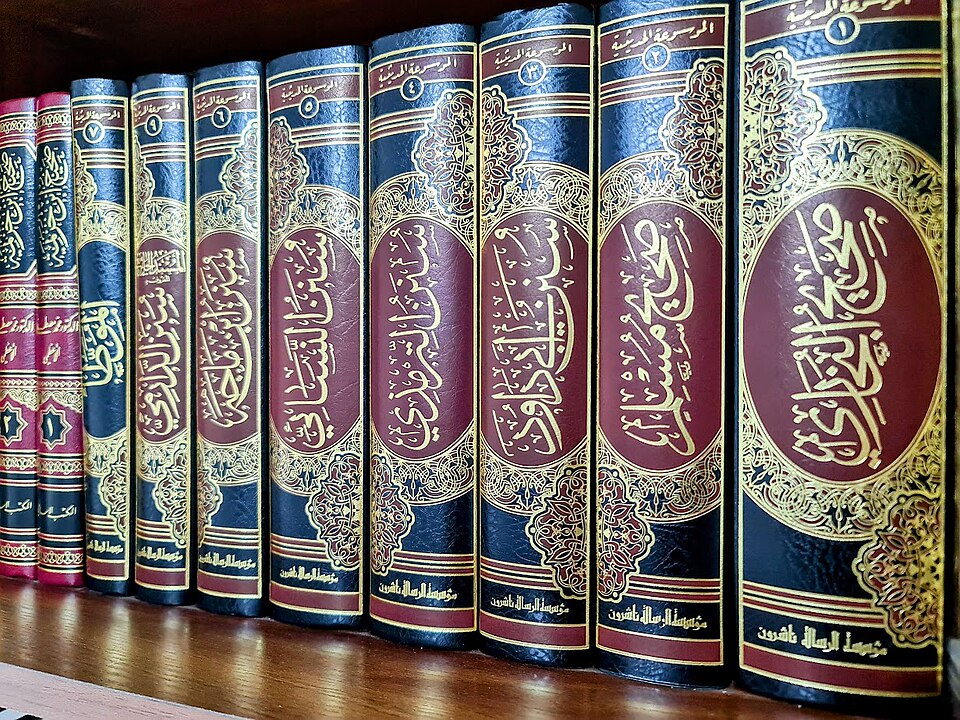
8. Ibn Khaldun: When History Became Science
Ibn Khaldun stands apart from all other historians.
In Muqaddimah, he asked:
- Why do civilizations rise?
- Why do they decay?
- How does power corrupt societies?
He criticized historians who:
- Trusted impossible numbers
- Ignored social realities
- Repeated myths
His work transformed Islamic historiography into analytical science, centuries ahead of its time.
9. Abbasid Libraries: Ecosystems of Books
Islamic history books did not survive by accident. They survived because of institutions.
Under the Abbasids:
- Libraries were publicly accessible
- Scholars were paid to write
- Copyists reproduced manuscripts
Books became a collective investment. Baghdad functioned as a global archive of human knowledge.

10. The Physical Reality of Islamic Books
Islamic books were:
- Handwritten
- Copied line by line
- Corrected by scholars
Margins were used for:
- Commentary
- Corrections
- Disagreements
This made books living documents, not frozen texts.
11. Loss, Destruction, and Fragmentation
The destruction of libraries, especially during the Sack of Baghdad, caused irreversible damage.
Many Islamic history books:
- Survive only in later quotations
- Exist in incomplete manuscripts
- Were never recopied
What modern readers possess is a surviving fragment of a much larger intellectual universe.

12. Transmission to Europe
Islamic history books indirectly shaped European understanding of:
- Antiquity
- Philosophy
- Science
Arabic manuscripts entered Europe through:
- Spain
- Sicily
- Crusader contacts
Europe did not rediscover classical history alone — it inherited it through Islamic books.
13. Why Islamic History Books Are Still Relevant
Islamic history books remain vital because they:
- Preserve original Muslim perspectives
- Offer documented, source-based history
- Teach analytical thinking
- Explain civilizational patterns
Modern historians still rely on these texts for medieval world history.
Conclusion: Books as Civilization’s Memory
Islamic civilization placed its memory in books — not statues.
Through discipline, humility, and revision, Muslim scholars preserved centuries of human experience. To study Islamic history without its books is to study a shadow without substance.
History survives where books are read.
References & Sources
- Al-Tabari, Tarikh al-Rusul wa al-Muluk
- Ibn Athir, Al-Kamil fi al-Tarikh
- Ibn Kathir, Al-Bidaya wa al-Nihaya
- Ibn Khaldun, Muqaddimah
- Franz Rosenthal, A History of Muslim Historiography
- Marshall Hodgson, The Venture of Islam
- Chase Robinson, Islamic Historiography
- Jonathan Bloom, Paper Before Print