Introduction: America Faces Another Shutdown
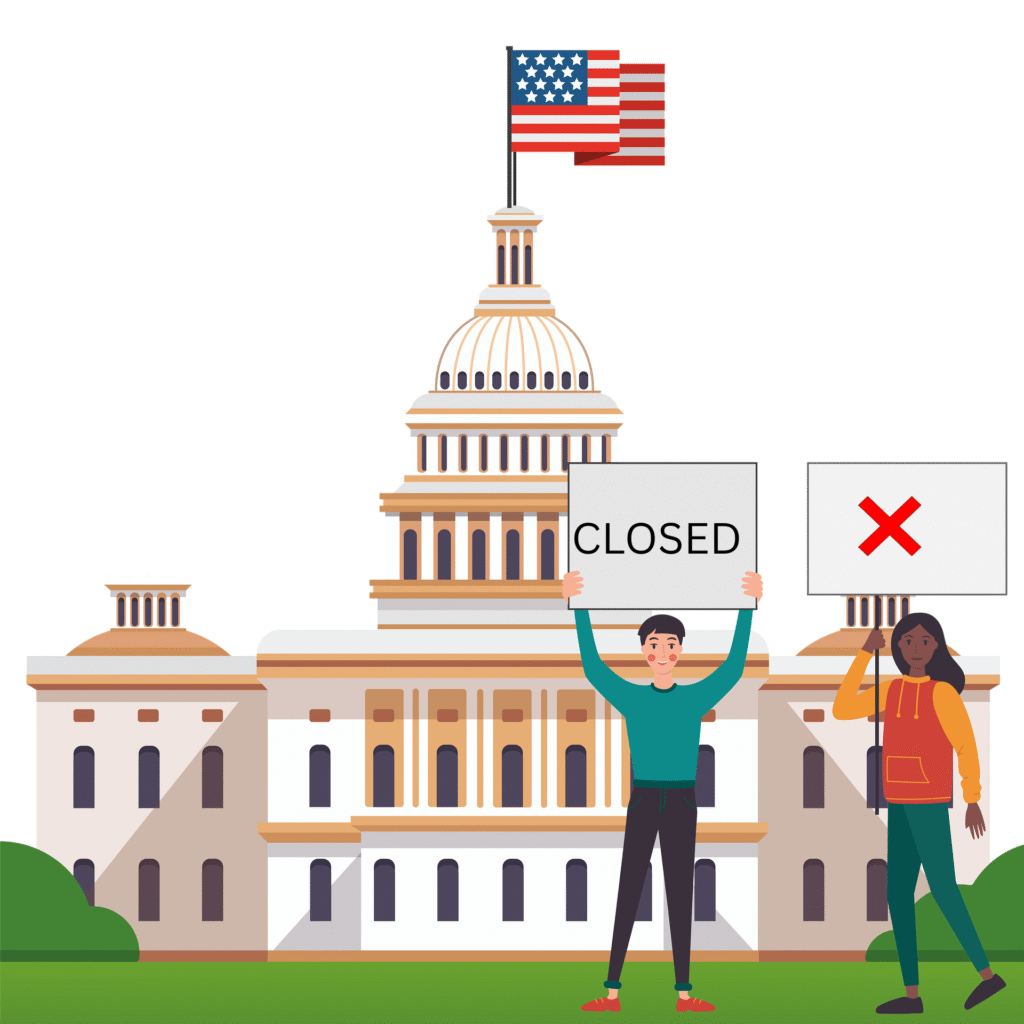
October 2025 — the United States is once again in the middle of a government shutdown that has left millions anxious about the future.
Federal offices have closed, thousands of employees are without pay, and vital sectors like air travel and finance are feeling the impact.
This isn’t the first shutdown in U.S. history, but experts say it may be the most damaging one yet. From grounded flights to a shaken Wall Street, the effects are spreading fast.
Economist Dr. Linda Perez warns,
“A government shutdown doesn’t just stop paychecks. It slows down trust, investment, and progress — the three pillars of a strong economy.”
Air Travel in Chaos: Flights Delayed, Travelers Stranded
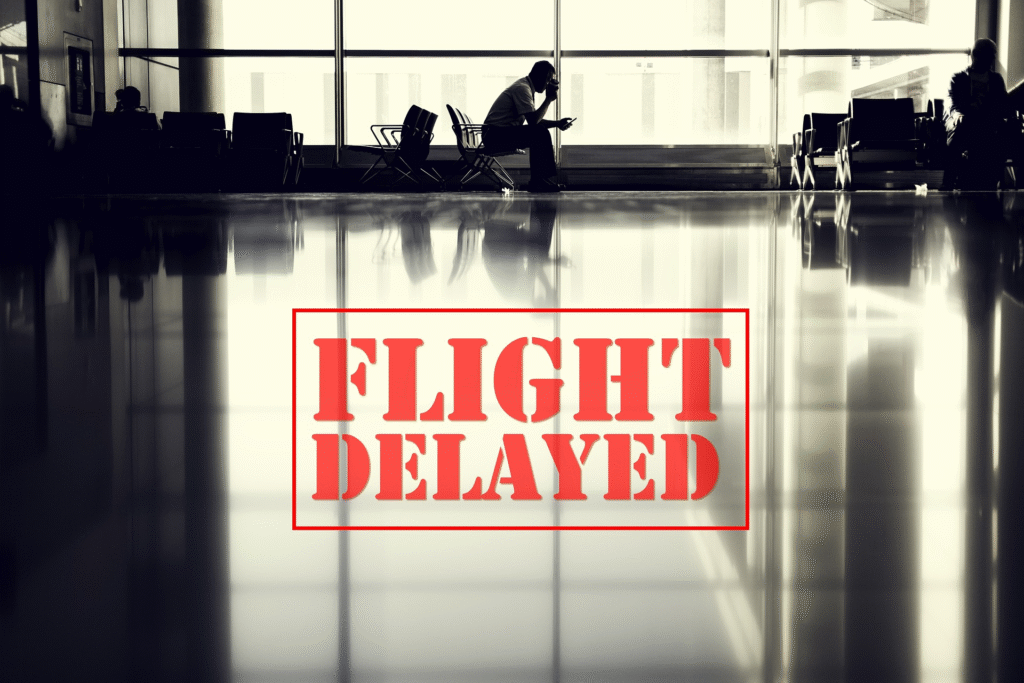
Airports across the country are facing major disruptions. With thousands of air traffic controllers and TSA agents furloughed or working without pay, delays and cancellations have become the new normal.
According to the Federal Aviation Administration (FAA), air traffic management has been reduced by nearly 30%.
At New York’s JFK Airport, flight delays have doubled since the shutdown began.
Aviation analyst Dr. Henry Carlson explained,
“The longer this continues, the greater the risk to flight safety and airline reliability. Even a short shutdown can cause months of scheduling and maintenance delays.”
For travelers, this means missed flights, uncertain connections, and rising ticket prices as airlines struggle to manage capacity.
Wall Street Reacts: Fear, Fall, and Fragility
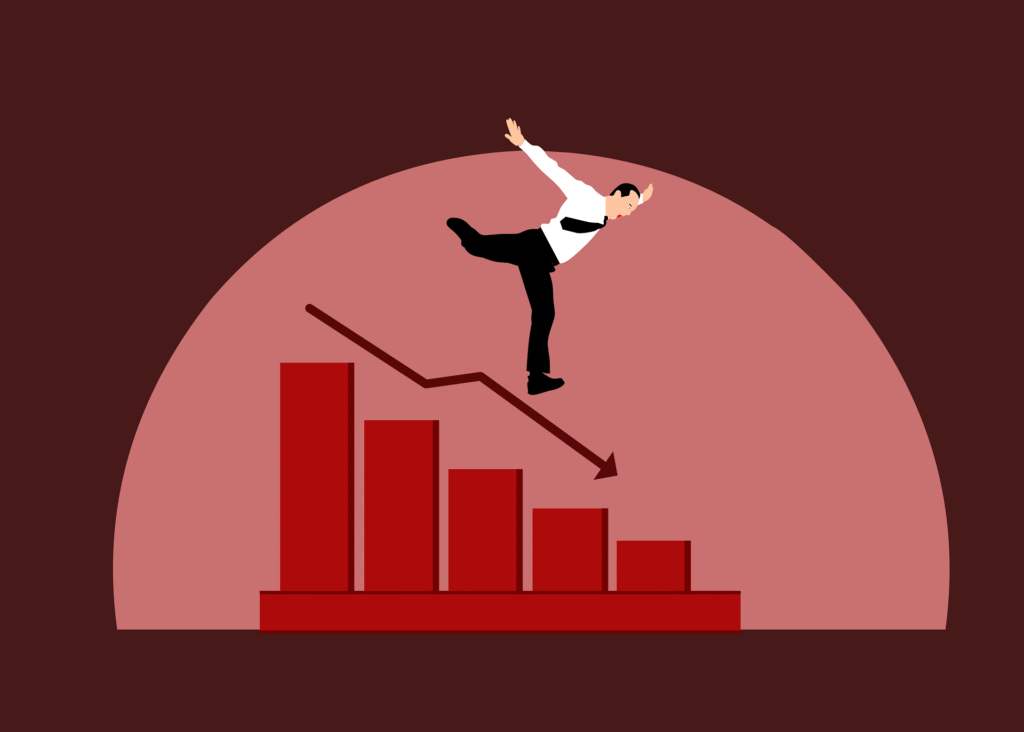
The 2025 shutdown has triggered a sharp reaction from financial markets. Within days of the closure, the Dow Jones fell 600 points, while the S&P 500 dropped over 1%.
Investors are nervous that halted government operations could delay infrastructure projects, federal spending, and defense contracts.
Technology and airline stocks have been hit hardest.
Market strategist Alan Grayson commented,
“Markets rely on government stability. When Washington stops functioning, Wall Street starts trembling.”
Expert Warnings and Economic Forecasts
A report from Moody’s Analytics estimates that every week of the shutdown costs the U.S. economy around $6 billion in lost output.
Small businesses, tourism, and transportation sectors are suffering immediate losses.
Former Treasury official Mark Elson stated,
“This isn’t just a political debate — it’s an economic wound that grows deeper every day.”
The Ripple Effect: Jobs, Dollar, and Daily Life
The U.S. dollar has weakened slightly against major currencies, reflecting declining investor confidence.
Thousands of federal employees are waiting for delayed paychecks, while contractors and service providers see their work paused indefinitely.
A labor study by Harvard University found that consumer spending drops sharply within 10 days of a shutdown, especially among families relying on government income.
Dr. Rachel Moore, a labor economist, said,
“When government money stops, local economies suffer first. Air travel, tourism, and retail feel the pressure immediately.”
Historical Context: Lessons from the Past
Since 1976, America has witnessed over 20 shutdowns — but 2025 stands out for its timing and scale.
Unlike earlier shutdowns, this one comes during a fragile global recovery and record-high travel demand.
During the 2019 shutdown, flight delays were manageable, but today’s post-pandemic staff shortages and AI-driven systems make the aviation sector more vulnerable.
An aviation union spokesperson summed it up:
“We’re not only managing flights anymore; we’re managing uncertainty.”
Conclusion: How Long Can the U.S. Afford This?
The 2025 government shutdown is more than a political standoff — it’s a national stress test.
Every passing day adds billions in lost productivity and erodes confidence in America’s institutions.
Economist Dr. Harlan Quinn summarized,
“Every shutdown weakens the backbone of America’s economy. The question now is how long before it cracks.”
Until leaders in Washington reach an agreement, the U.S. economy will continue to pay the price — one delayed flight and one red-market day at a time.
Frequently Asked Questions (FAQ)
1. What caused the 2025 U.S. government shutdown?
The shutdown began after Congress failed to agree on the federal budget. Disputes over spending cuts, defense funding, and tax reforms caused a funding gap that forced non-essential government offices to close.
2. How is the shutdown affecting air travel?
The FAA and TSA are operating with limited staff, causing widespread flight delays and cancellations. Air traffic control and maintenance schedules are disrupted, impacting flight safety and reliability.
3. What impact does the shutdown have on the stock market?
Major U.S. indices like the Dow Jones and S&P 500 have seen declines as investors react to uncertainty. Prolonged shutdowns often lead to weaker consumer confidence and delayed business investments.
4. How long can a shutdown last?
It depends on how quickly Congress and the President reach an agreement. Past shutdowns have lasted from a few days to over a month. Economists warn that if this one continues beyond two weeks, long-term recovery will be difficult.
5. How much is the shutdown costing the U.S. economy?
According to Moody’s Analytics, the 2025 shutdown could cost around $6 billion per week in lost productivity, government contracts, and tourism revenue.
6. Will the shutdown affect international travelers?
Yes. Visa and passport services are slowed, and international flights may face increased delays. Many travelers are rescheduling or canceling U.S. trips due to uncertainty.
7. What are experts predicting next?
Most analysts believe that a short-term funding deal may be reached soon, but if the political divide continues, the effects could spread globally through trade and financial markets.
Your writing style is very interesting. Keep up !
💨💨💨