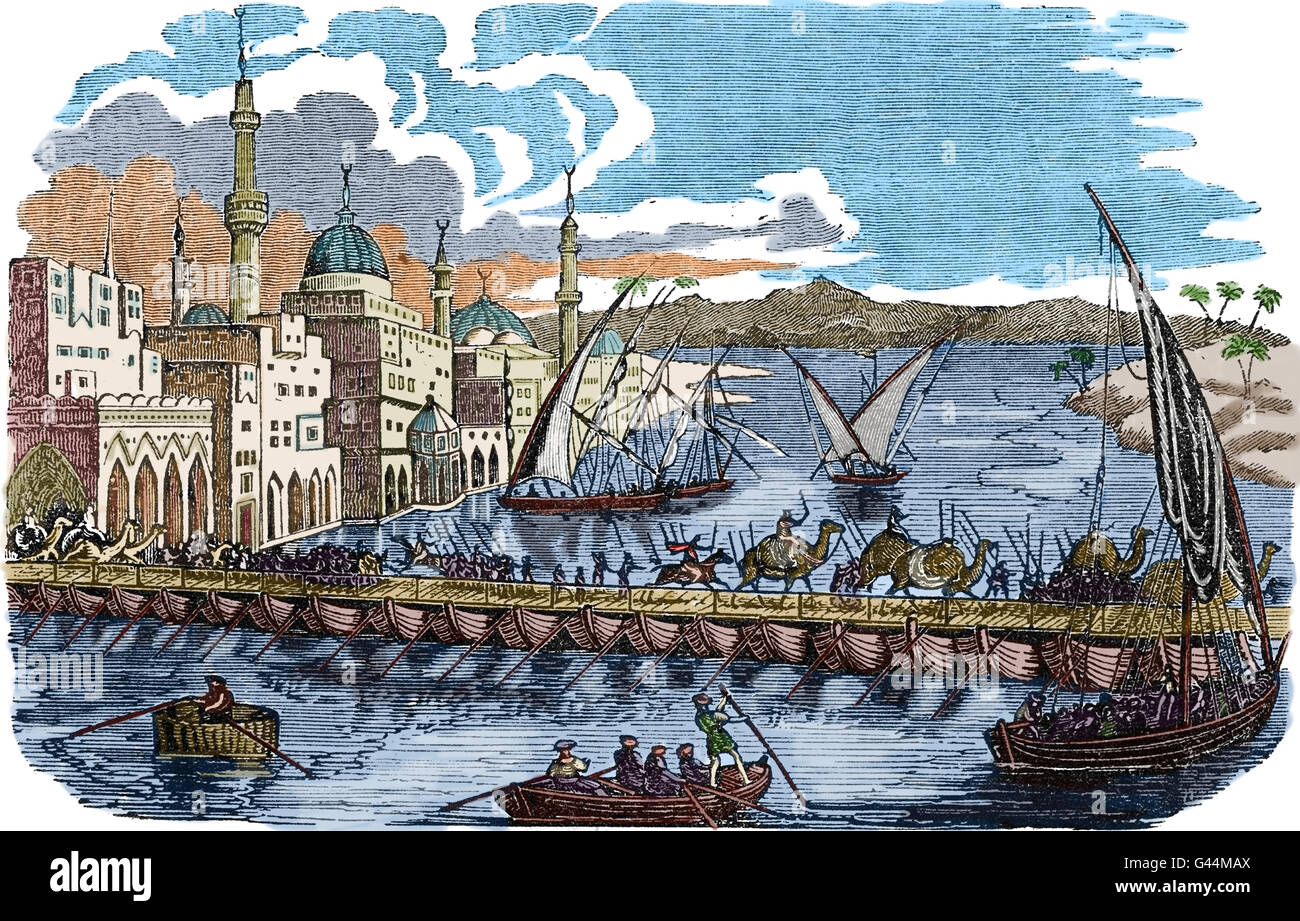
The House of Wisdom: How Islamic Civilization Built the World’s Greatest Knowledge System
Introduction: When Knowledge Became a Moral Duty
Most civilizations used knowledge as a tool.
Islamic civilization treated knowledge as a responsibility.
The House of Wisdom was not born from curiosity alone. It emerged from a worldview where seeking knowledge was considered an act of worship, where learning was inseparable from ethics, and where preserving truth was seen as a duty owed to future generations.
Located in Baghdad during the Abbasid Caliphate, the House of Wisdom (Bayt al-Hikma) became the most influential intellectual institution of the medieval world. It was not simply a library, nor merely a translation center. It was a knowledge ecosystem — one that transformed how humanity learned, recorded, and transmitted ideas.
1. Baghdad Before the House of Wisdom
Before Baghdad became the heart of global scholarship, it was a carefully planned political capital. Founded by Caliph Al-Mansur, Baghdad was designed not only as an administrative center but as a symbol of Abbasid vision.
The Abbasids believed that legitimacy did not come only from lineage or conquest, but from intellectual leadership. This belief laid the groundwork for an unprecedented investment in scholars, books, and institutions.
The House of Wisdom did not appear suddenly. It evolved from:
- Private scholarly collections
- Royal libraries
- Translation offices
Over time, these elements merged into a single institution devoted to knowledge.
2. What Exactly Was the House of Wisdom?
The House of Wisdom was a multi-functional institution, unlike anything that existed before it.
It functioned simultaneously as:
- A vast library of manuscripts
- A translation bureau
- A research academy
- A scholarly meeting space
There were no rigid departments. A historian could debate with a mathematician. A physician could consult a philosopher. Knowledge flowed freely across disciplines.
This interdisciplinary approach prevented intellectual stagnation and encouraged innovation.
3. Abbasid Philosophy of Knowledge
The Abbasids held a revolutionary idea:
Power without knowledge is temporary. Knowledge without power is eternal.
They funded scholars generously, paid translators by the weight of their books in gold, and protected intellectual freedom. Scholars were encouraged to question, verify, and even disagree.
This culture of debate produced confidence, not fear — a sign of a civilization secure in its foundations.
4. The Translation Movement: Rescuing Human Memory
Perhaps the greatest achievement of the House of Wisdom was the translation movement.
Texts were translated from:
- Greek (Aristotle, Galen, Hippocrates)
- Persian (administration, ethics)
- Indian (mathematics, astronomy)
- Syriac (medicine, philosophy)
But translation was not mechanical. Muslim scholars:
- Compared multiple manuscripts
- Corrected errors
- Added explanatory commentary
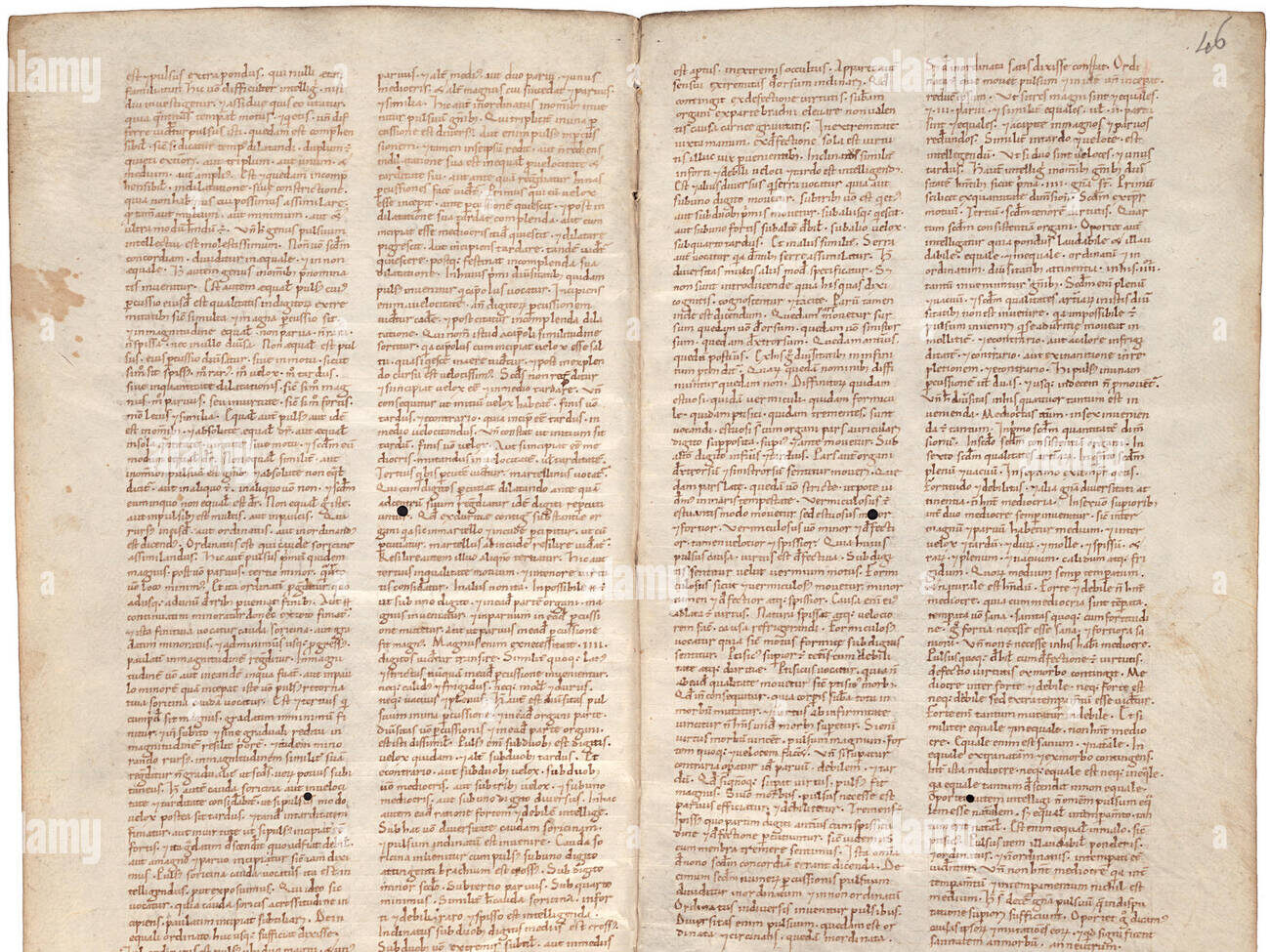
In many cases, the Arabic version is the only surviving version of ancient texts today.
Without the House of Wisdom, vast portions of ancient knowledge would have vanished permanently.
5. Paper Technology: The Silent Revolution
Knowledge cannot spread without a medium.
The introduction of paper technology into the Islamic world was transformative. After learning papermaking techniques from China, Muslims refined and industrialized the process.
Baghdad became home to paper factories, allowing:
- Cheaper book production
- Mass copying of texts
- Private libraries for scholars
This democratization of knowledge ensured that learning was no longer limited to elites.
Paper was the hidden engine behind the intellectual explosion of the Islamic Golden Age.
6. Scholars of the House of Wisdom
The House of Wisdom attracted scholars of exceptional caliber. They were not isolated geniuses but collaborators.
Fields advanced included:
- Algebra (Al-Khwarizmi)
- Medicine (clinical methods, pharmacology)
- Astronomy (accurate star charts)
- Geography (world mapping)
- History and philosophy
These scholars did not simply preserve knowledge; they expanded it.
7. Knowledge Without Religious or Ethnic Barriers
One of the most misunderstood aspects of the House of Wisdom is its inclusivity.
Muslims worked alongside:
- Christians
- Jews
- Persians
Faith was not erased, but intellectual merit mattered most. This pluralism strengthened scholarship and reduced dogmatism.
The House of Wisdom proved that strong religious identity does not require intellectual isolation.
8. The Role of History and Historians
History occupied a central place in the House of Wisdom. Scholars believed that civilizations must study their past to avoid repeating mistakes.
Historians had access to:
- Royal archives
- Oral reports
- Earlier manuscripts
This environment produced historians who combined narrative with analysis, laying the groundwork for thinkers like Ibn Khaldun.
9. Knowledge as a System, Not a Collection
What made the House of Wisdom unique was its systemic approach.
Knowledge was:
- Catalogued
- Cross-referenced
- Critiqued
- Updated
Books were living documents, not sacred artifacts immune to correction.
This mindset allowed Islamic civilization to remain intellectually dynamic for centuries.
10. Transmission to Europe and the World
The impact of the House of Wisdom did not end in Baghdad.
Through Al-Andalus, Sicily, and translation centers in Europe, Arabic works entered Latin scholarship. They influenced:
- Medicine
- Mathematics
- Philosophy
- Scientific method
The European Renaissance did not emerge in isolation. It stood on foundations laid in Baghdad.
11. The Fragility of Knowledge Institutions
Despite its brilliance, the House of Wisdom was vulnerable.
Political instability, factionalism, and eventually the Mongol invasion devastated Baghdad. Libraries were destroyed, manuscripts lost, and scholars killed.
This loss was not just Islamic — it was a loss for all humanity.
12. Lessons for the Modern World
The House of Wisdom teaches timeless lessons:
- Knowledge requires investment
- Scholars need freedom
- Translation builds civilizations
- Intellectual decline precedes political collapse
Modern societies that neglect knowledge repeat ancient mistakes.
Conclusion: Wisdom as a Civilizational Choice
The House of Wisdom was not an accident of history. It was the result of deliberate choices — to value learning, protect scholars, and preserve truth.
Islamic civilization did not dominate the world through force alone. It led through wisdom.
Where books were honored, civilizations flourished. Where they were destroyed, darkness followed.

References & Sources
- Dimitri Gutas – Greek Thought, Arabic Culture
- Franz Rosenthal – Knowledge Triumphant
- George Saliba – Islamic Science and the Making of the European Renaissance
- Jim Al-Khalili – Pathfinders
- Ibn al-Nadim – Al-Fihrist
- Al-Qifti – History of Learned Men
- Marshall Hodgson – The Venture of Islam