Introduction
In February 1959, nine young hikers set out on an adventure across the icy Ural Mountains of Russia.
Led by Igor Dyatlov, the group—students from the Ural Polytechnic Institute—was full of skill, enthusiasm, and courage. Their mission was to reach Mount Otorten, but what they encountered instead was something that defied explanation.
Weeks later, when rescuers found their bodies, what they saw was beyond human understanding.
The story that unfolded became one of the darkest and most mysterious unsolved tragedies in history.
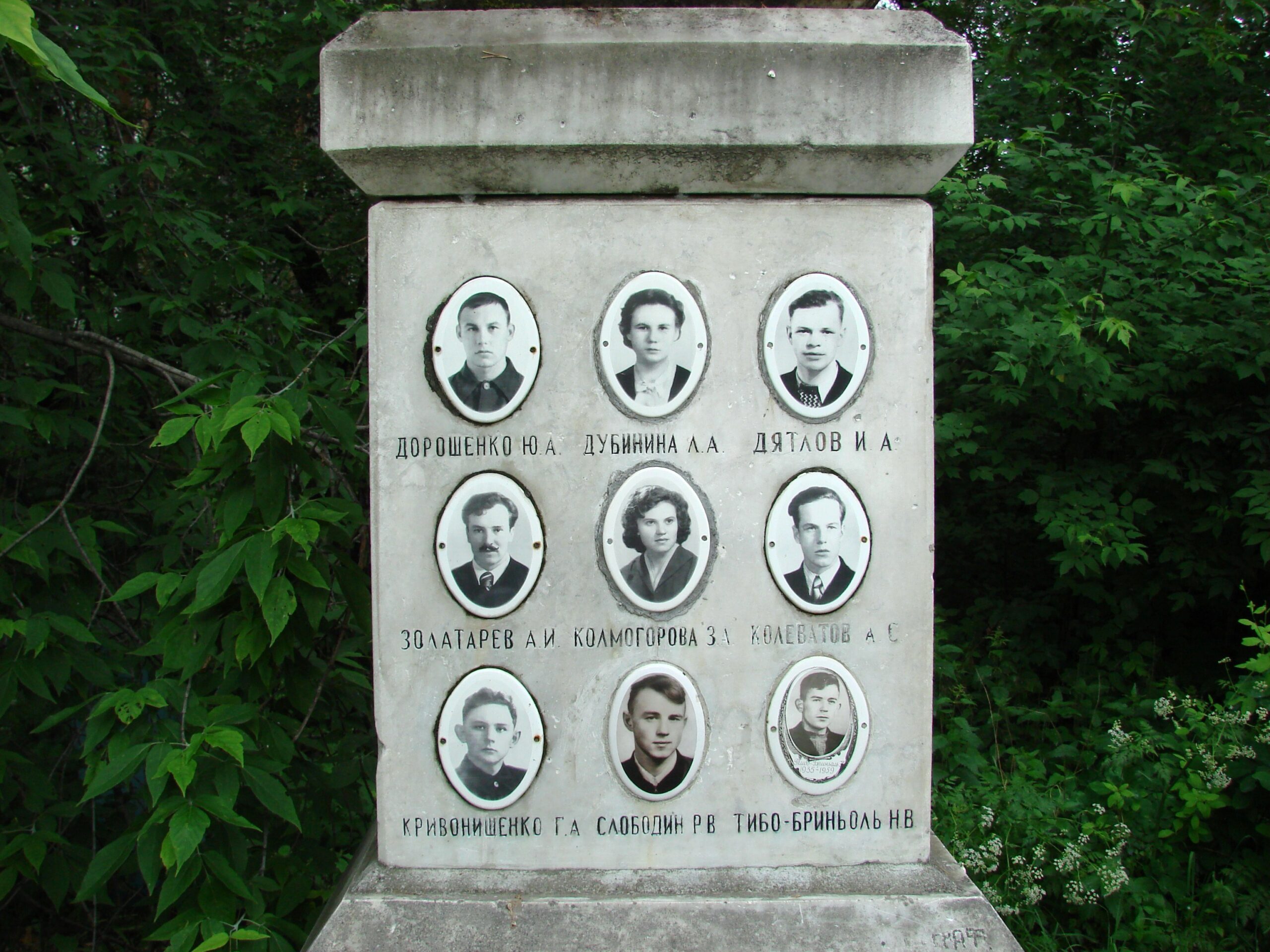
The Journey Begins
On January 27, 1959, ten hikers began their expedition.
Soon, one member, Yuri Yudin, fell ill and turned back. That decision saved his life.
The remaining nine continued forward into the frozen wilderness.
When they didn’t return on schedule, rescue teams were sent to search for them.
What the searchers discovered in the snow still haunts investigators and historians to this day.
The Tent in the Snow
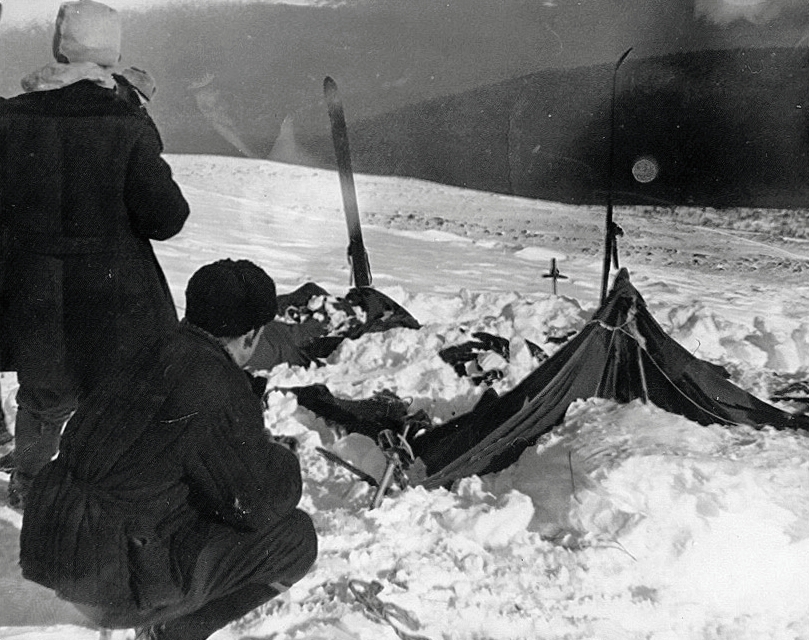
Days later, the hikers’ tent was found slashed open from the inside.
Their boots, coats, and supplies were still inside—but the group had fled into the freezing night barefoot and half-clothed.
Footprints led away from the tent toward a nearby forest.
Under a cedar tree, searchers found two bodies lying near a burnt-out campfire, wearing only underwear.
Others were found scattered across the slope and buried under the snow—some with fractured skulls and broken ribs, but no external wounds.
One woman’s eyes and tongue were missing.
The temperature was below -30°C. What could make experienced hikers run from safety into certain death?
The Unanswered Questions
The discovery raised horrifying questions:
- Why was the tent cut open from inside?
- Why did they run barefoot into the cold?
- How did they suffer internal injuries without visible trauma?
- Why was there radiation on some of their clothes?
- What caused the missing eyes and tongue?
No theory has ever explained every detail perfectly.
The Most Popular Theories
1. The Avalanche Theory
Some believe a sudden avalanche terrified the group.
They may have thought the snow was collapsing and escaped in panic.
But the slope was too shallow, and no signs of an avalanche were ever found.
The tent remained visible for weeks—something impossible if an avalanche had struck.
2. The Radiation Theory
Investigators discovered traces of radioactive material on some hikers’ clothing.
This led to speculation that they had wandered into a Soviet nuclear test site or handled contaminated materials.
The Soviet Union’s secrecy about the case only deepened suspicion.
3. The UFO or Alien Encounter Theory
That same night, locals reported seeing bright orange lights in the sky above the mountains.
Some theorists suggest the hikers witnessed something they shouldn’t have—perhaps a UFO—and were killed or affected by unknown forces.
While it sounds unbelievable, no one has ever fully disproved it.
4. The Military Experiment Theory
Another idea is that the group accidentally entered a secret military testing zone where weapons like parachute mines or sound waves were being tested.
The strange internal injuries and the burned skin could match explosions without direct impact.
Many documents about the case remained classified for decades, adding weight to this theory.
The Official Soviet Report
In May 1959, Soviet authorities closed the investigation.
Their final statement said:
“The hikers died due to a compelling unknown force.”
That single phrase—compelling unknown force—has become legendary.
Why didn’t they specify the cause? What were they hiding?
When files were declassified years later, many pages were missing.
Modern Investigations
In 2019, Russian officials reopened the case.
Once again, they concluded an avalanche was the cause.
But most scientists and experts still disagree.
Satellite photos, terrain studies, and even survivor interviews suggest something much stranger occurred.
To this day, no one knows what truly happened that night in the Ural Mountains.
Legacy of the Dyatlov Pass Incident
The Dyatlov Pass tragedy has inspired books, films, documentaries, and research papers around the world.
It stands as a symbol of how fragile human life is against nature—and how some mysteries remain forever unsolved.
Every February, visitors and researchers still travel to that remote mountain pass, now named after Igor Dyatlov, to honor the lost hikers.
But each gust of wind across the snow still whispers the same question:
What really happened here?
Conclusion
The Dyatlov Pass Incident remains one of history’s greatest unsolved mysteries.
Nine young hikers faced something so terrifying that they ran into the deadly cold—something unseen, unexplainable, and still unknown.
“Some mysteries aren’t meant to be solved; they exist to remind us of the limits of our knowledge and the power of the unknown.”

Image Credit: Wikimedia Commons (CC BY-SA 4.0)
Great content! You have got a talent for storytelling.