Introduction
There are people who come into this world and leave quietly.
And then there are a few — rare souls — who leave behind a light so strong that even death cannot dim it.
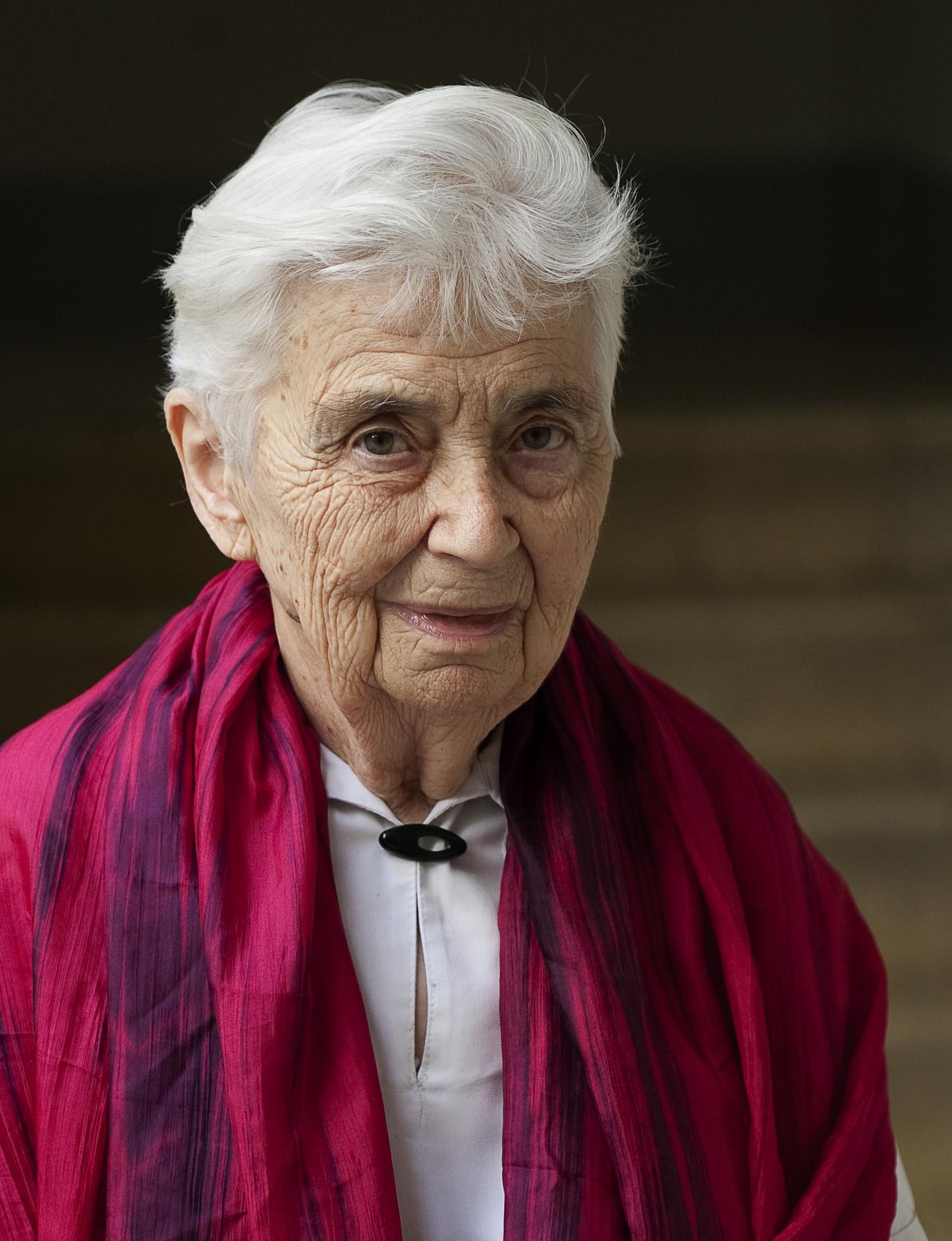
Dr. Ruth Pfau was one of those souls.
A woman who left her homeland of Germany to dedicate her life to the forgotten, the rejected, and the dying people of Pakistan.
Her story is not about medicine — it’s about humanity, faith, and the courage to heal when the world looks away.
Early Life: A Journey of Faith and Pain
Ruth Pfau was born in 1930 in Leipzig, Germany, during a time when the world was preparing for war.
As a child, she saw cities burn and people die during World War II. Her family lost everything.
The destruction, suffering, and cries of the helpless left a deep mark on her soul.
In her own words, she once said:
“When you have seen what hate can do, you are bound to choose love.”
That love guided her life.
After the war, Ruth studied medicine in Mainz and Marburg. But she didn’t dream of wealth or status — she wanted purpose.
She joined the Daughters of the Heart of Mary, a Catholic order that believed faith should live through service, not just words.
The Unexpected Journey to Pakistan
In 1960, destiny brought her to Karachi, Pakistan — by accident.
She was supposed to travel to India for missionary work, but a visa delay forced her to stop in Karachi for a few days.
Those few days changed everything.
One morning, she visited a small area near McLeod Road (now I.I. Chundrigar Road) where she saw something that shattered her heart.
In the narrow alleys of Lepers’ Colony, men, women, and children with leprosy lived abandoned — their bodies deformed, their faces scarred, their spirits broken.
She described that moment later:
“That was the day I decided — I cannot leave these people behind. I found my home among the lepers of Pakistan.”
And she never left.
The War Against Leprosy Begins
In the 1960s, leprosy was one of the most feared diseases in the world.
People believed it was a curse — and those suffering from it were treated worse than criminals.
They were abandoned by their families, shunned by society, and left to die in isolation.
Dr. Ruth Pfau refused to accept that.
She began treating patients in a small, crumbling hut with almost no equipment.
With the help of local volunteers and donations, she established the Marie Adelaide Leprosy Centre (MALC) in Karachi — the first of its kind in Pakistan.
It was more than a hospital — it was a place where the outcasts of society were welcomed with dignity and compassion.
Facing Challenges: Faith vs. Fear
Dr. Pfau faced impossible odds.
She was a foreigner, a woman, and a Christian — trying to fight disease and stigma in a conservative society.
There were days when she had no medicines, no funds, and no support.
But she had one thing — unshakable faith.
She often said:
“You cannot save the whole world, but you can start with one person. That is how love begins.”
Her courage inspired hundreds of doctors, nurses, and volunteers to join her mission.
With their help, the MALC expanded from one room to 157 centers across Pakistan.
The Results: A Nation Healed
By the 1990s, thanks to her tireless work, leprosy was officially controlled in Pakistan — a monumental achievement recognized by the World Health Organization (WHO).
Pakistan became the first country in Asia to defeat leprosy as a public health problem.
Dr. Pfau’s name became a symbol of hope and humanity.
She didn’t just heal wounds — she restored dignity.
She didn’t preach religion — she lived it.
Even in her old age, she could be seen driving her old Suzuki through Karachi’s streets, visiting patients herself.
When asked why she never returned to Germany, she replied:
“My heart is in Pakistan. These are my people.”
Recognition and Awards
Dr. Ruth Pfau received countless honors for her work, including:
- Hilal-e-Imtiaz (1989)
- Hilal-e-Pakistan (2002)
- Sitara-e-Quaid-e-Azam
- Jinnah Award
- Nishan-e-Quaid-e-Azam (the highest civil award of Pakistan)
But to her, the true reward was every smile she restored and every life she saved.
Her Final Days
Even in her later years, she never retired.
She continued visiting hospitals, comforting patients, and guiding young doctors.
On August 10, 2017, Dr. Ruth Pfau passed away in Karachi at the age of 87.
The government of Pakistan honored her with a state funeral — a rare tribute for a foreign national.
As her coffin, wrapped in the Pakistani flag, was carried by soldiers, people of every faith and background gathered to say goodbye to the woman they called:
“Pakistan’s Mother Teresa.”
Her Legacy
Dr. Ruth Pfau’s life is a lesson — that one person’s love can heal a nation’s wounds.
She proved that humanity has no religion, no boundary, and no race.
Her center, MALC, continues to serve thousands of patients, carrying forward her mission.
In a time when the world is divided by hate and fear, her life stands as a light of compassion and unity.
“God does not ask us to be successful.
He only asks us to be faithful.”
— Dr. Ruth Pfau
Conclusion
Dr. Ruth Pfau did not just fight disease — she fought hopelessness.
She gave a new meaning to what it means to serve humanity.
Her story reminds us that even one small act of kindness can change thousands of lives.
She once said:
“The greatest gift you can give someone is not medicine or money — it is love.”
And that is exactly what she gave to Pakistan.

Image Credit: Wikimedia Commons (CC BY-SA 4.0)
This post was exactly what I needed to read today . Thanks for the motivation . Sach a good blogger.
♥️