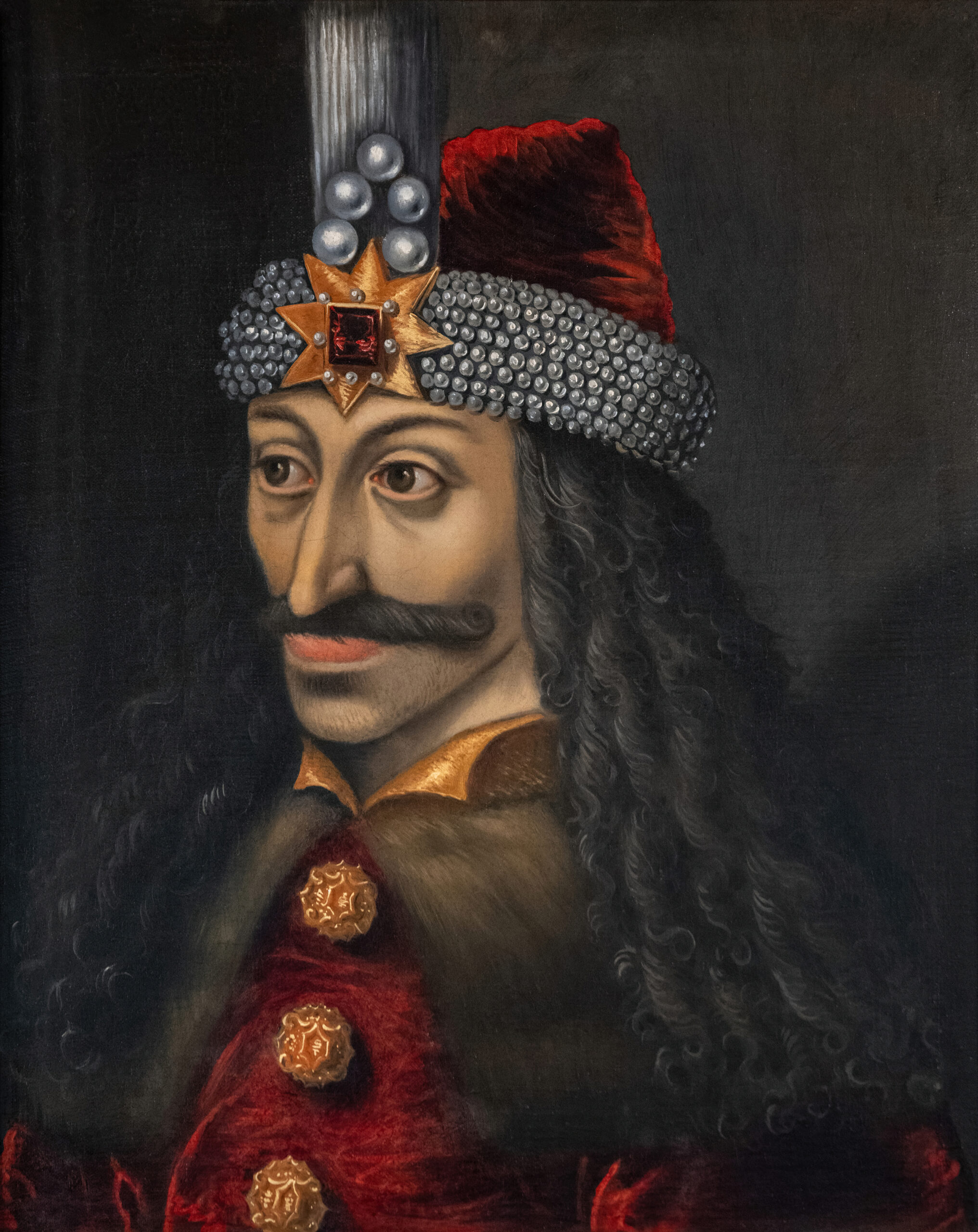
The legend of Dracula has haunted imaginations for centuries, but the real story behind this infamous figure is far more terrifying, complex, and rooted in history than any vampire tale.
Table of Contents
- Who Was the Real Dracula?
- The Origins of Vlad the Impaler
- Vlad’s Rise to Power
- The Bloody Methods of Rule
- Fear as a Political Tool
- Vlad’s Reputation in Europe
- Dracula in Folklore and Literature
- The Connection to Bram Stoker’s Dracula
- The Cultural Legacy of Dracula
- Lessons from History: Power, Cruelty, and Leadership
- Conclusion
- References & Further Reading
1. Who Was the Real Dracula?
When people hear “Dracula,” they often imagine a pale, fanged vampire lurking in castles. But the real Dracula was Vlad III of Wallachia, also known as Vlad the Impaler. He ruled Wallachia, a region in modern-day Romania, during the 15th century. Unlike the fictional vampire, his terror was very real, grounded in brutal tactics, war, and the ruthless consolidation of power.
The name “Dracula” comes from his father, Vlad II, who was a member of the Order of the Dragon (“Dracul” in Romanian). Vlad III inherited the nickname, which meant “son of the dragon,” not “bloodsucker” — though blood would soon define his reputation.
2. The Origins of Vlad the Impaler
Vlad III was born in 1431 in Transylvania, into a family of nobility. He grew up amidst political turmoil: his father, Vlad II, had allies and enemies vying for control over Wallachia and neighboring regions. As a child, Vlad and his brother were taken as hostages by the Ottoman Empire to secure his father’s loyalty. This period shaped his outlook on power, violence, and survival.
His childhood was a mix of education in military tactics and witnessing the harsh realities of political imprisonment — a combination that forged the ruler who would become known for extreme cruelty and cunning strategy.
3. Vlad’s Rise to Power
Vlad became ruler of Wallachia in 1456, amid a backdrop of constant political instability, invasions, and internal betrayals. He inherited a country threatened by Ottoman expansion, as well as rival claimants to his throne.
Strategies for Consolidation:
- Eliminating rivals: Vlad didn’t hesitate to eliminate boyars (noblemen) who opposed him.
- Building loyalty through fear: Impalement was used not only as punishment but as a warning.
- Military tactics: Vlad was a skilled commander, employing guerrilla warfare and scorched-earth tactics to protect Wallachia.
This blend of military skill and psychological warfare allowed him to consolidate power faster than most rulers of his time.
4. The Bloody Methods of Rule
Vlad III earned his infamous nickname “the Impaler” because of his favored method of executing enemies: impalement. Victims were often skewered alive on stakes, a horrific punishment designed to terrorize opponents.
Other Brutal Tactics:
- Public executions for criminals and traitors
- Mass punishments for betrayal
- Strategic massacres of invading armies
While modern readers may see this as cruelty beyond reason, in his time, these acts were both a deterrent and a statement of authority. Vlad’s extreme methods ensured that fear kept Wallachia stable.
5. Fear as a Political Tool
Fear was Vlad’s most effective weapon. He understood that fear could maintain order, reduce rebellion, and dissuade foreign invasions.
- Foreign emissaries often left Wallachia horrified by his public executions.
- Ottoman forces feared Vlad so much that some surrendered or retreated without a fight.
Historians argue that fear, rather than sheer military might, allowed Vlad to maintain power in a volatile region. This intertwining of blood and politics is why the historical Dracula fascinates scholars and storytellers alike.
6. Vlad’s Reputation in Europe
Despite ruling a small region, Vlad’s reputation spread across Europe. Reports of his brutality were recorded by merchants, diplomats, and chroniclers.
- German and Hungarian pamphlets painted him as a monstrous tyrant.
- Local Romanian folklore remembered him as a protector of the people, punishing corrupt boyars while defending the country against Ottoman incursions.
This dual perception — cruel tyrant versus national hero — makes Vlad a complex historical figure, not just a legend.
7. Dracula in Folklore and Literature
After his death in 1476, tales of Vlad’s cruelty became intertwined with myths. Folk stories in Romania described him as terrifying but also just, punishing wrongdoers and protecting villagers from invaders.
- Stories emphasized impalements and blood — key elements that inspired the vampire myth.
- His name became synonymous with fear, blood, and justice.
Over time, folklore began to blur historical facts with the supernatural, laying the foundation for modern Dracula legends.
8. The Connection to Bram Stoker’s Dracula
Bram Stoker, an Irish author, published “Dracula” in 1897, drawing inspiration from Vlad III’s name and historical reputation.
- Stoker never visited Romania but studied reports of Vlad’s life.
- The book transformed a historical prince into a fictional vampire, embedding elements of Eastern European folklore, superstition, and horror.
- While Stoker’s Dracula is fictional, it borrows heavily from the blood, power, and fear associated with Vlad the Impaler.
9. The Cultural Legacy of Dracula
Today, Dracula is both a tourist attraction and a cultural symbol:
- Bran Castle in Romania is often called “Dracula’s Castle,” attracting millions annually.
- Films, books, games, and TV shows perpetuate the vampire myth.
- Historians continue to debate Vlad’s morality: tyrant or national hero?
Dracula represents a blend of history and myth, reminding us how human fear, legend, and storytelling intertwine.
10. Lessons from History: Power, Cruelty, and Leadership
Vlad’s life provides lessons beyond horror stories:
- Power requires strategy — leadership isn’t only about force; it’s about perception and psychological tactics.
- Fear is a tool, not a solution — extreme methods can work short-term but often carry long-term consequences.
- Legacy is complex — history often remembers leaders both for their accomplishments and their crimes.
By studying Vlad, we gain insight into how power, blood, and fear shaped European politics in the 15th century.
Conclusion
The real Dracula, Vlad the Impaler, was a man of blood, power, and fear — a ruler whose methods were extreme but undeniably effective. He lived in a brutal era where survival and political control demanded ruthless strategies. While Bram Stoker transformed him into a vampire, the historical truth is more fascinating: a figure whose life blends terror, folklore, and the realities of medieval politics.
Understanding Vlad III teaches us that history is often stranger, bloodier, and more complex than fiction, and that legends often start with real people and real fear.
References & Further Reading
- Encyclopedia Britannica: Vlad the Impaler
- History Extra: Vlad the Impaler
- National Geographic: Dracula

Image Credit: Wikimedia Commons (CC BY-SA 4.0)