Introduction – Shadows Over China
In the 19th century, the world witnessed one of the darkest chapters of colonial exploitation: the British Opium Wars. These conflicts were not merely military confrontations—they were the culmination of a global trade system where profit often outweighed morality. Britain, seeking to expand its influence in Asia, forced China into submission through opium, a potent and addictive drug.
The wars forever altered the political, social, and economic landscape of China, leaving scars that resonate even today. Understanding this history sheds light on the human cost of empire and commerce.
Background – Britain, China, and the Rise of the Opium Trade
By the early 1800s, China was a self-sufficient empire with thriving agriculture, sophisticated trade, and a strong economy. Foreign trade, however, was tightly controlled, with only select ports open to Western merchants under strict regulations.
Britain, meanwhile, had a growing trade deficit with China. British demand for tea, silk, and porcelain was high, but China demanded silver in return, draining Britain’s reserves. To balance trade, British merchants began smuggling opium—grown in India—into China.
“Profit was king,” according to historians, “and human suffering was an acceptable cost of empire.”
The First Opium War (1839–1842)
The Spark – Lin Zexu and the Opium Destruction
The First Opium War was triggered when the Chinese government, under Lin Zexu, seized opium shipments in Canton (modern Guangzhou) and destroyed them. Lin famously wrote to Queen Victoria, appealing to her sense of justice:
“It is not our way to harm foreigners, but your merchants bring poison to our people.”
Britain responded with military force, marking the start of a conflict driven by commerce rather than sovereignty.
Military Campaigns and Key Battles
British naval and technological superiority overwhelmed Chinese forces. Steam-powered gunboats and modern artillery allowed Britain to capture key ports along the coast. The war culminated in a series of humiliating defeats for China.
Treaty of Nanking – Unequal and Humiliating
In 1842, the war ended with the Treaty of Nanking, which forced China to:
- Open five ports to British trade
- Cede Hong Kong to Britain
- Pay a massive indemnity in silver
This treaty marked the beginning of the “Century of Humiliation” in China and set a precedent for future unequal treaties with Western powers.

The Second Opium War (1856–1860)
Escalation and International Pressure
The Second Opium War began after disputes over Chinese enforcement of trade regulations. The conflict intensified when the Arrow Incident—a minor Chinese seizure of a ship—was used as a pretext for war.
Sack of the Summer Palaces
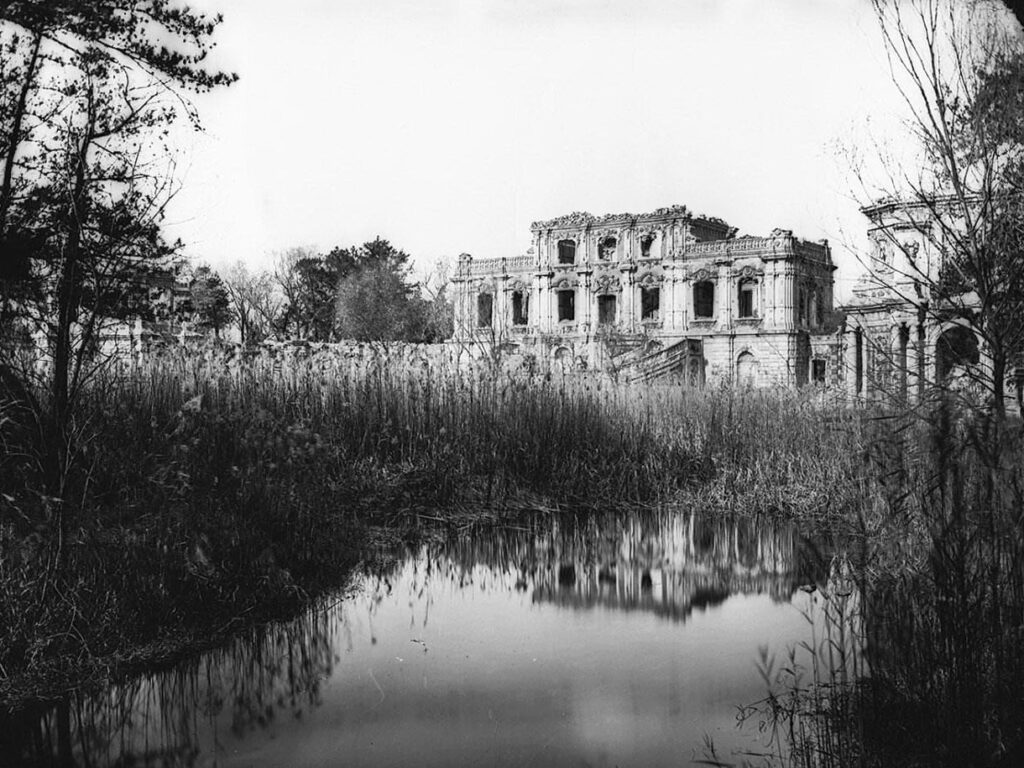
British and French troops captured Beijing in 1860, looting and burning the Old Summer Palace (Yuanming Yuan). The destruction was both symbolic and punitive, demonstrating the power imbalance between Western empires and Qing China.
Treaty of Tientsin and Convention of Beijing
The conflict ended with treaties that expanded trade rights, legalized opium, and allowed foreign embassies in Beijing. China’s sovereignty was further eroded, illustrating how colonial greed overshadowed diplomacy.
Consequences and Legacy
The British Opium Wars reshaped East Asia in profound ways:
- Economic Exploitation: China’s economy was destabilized by indemnities and opium addiction, leading to social unrest.
- Colonial Expansion: Britain secured ports, trade privileges, and territorial gains that fueled imperial dominance.
- Cultural Impact: The wars triggered a period of humiliation and reform in China, inspiring movements to modernize the military, economy, and education system.
- Global Awareness: The wars exposed the dark side of global trade, where profit and power often took precedence over ethics and human life.
Lessons from the Shadows of History
The Opium Wars are a cautionary tale about the human cost of greed and imperialism. They remind us that trade and commerce, when unregulated by morality, can devastate nations and communities. Today, historians, educators, and policymakers reflect on this era as a warning against the exploitation of power in the global arena.