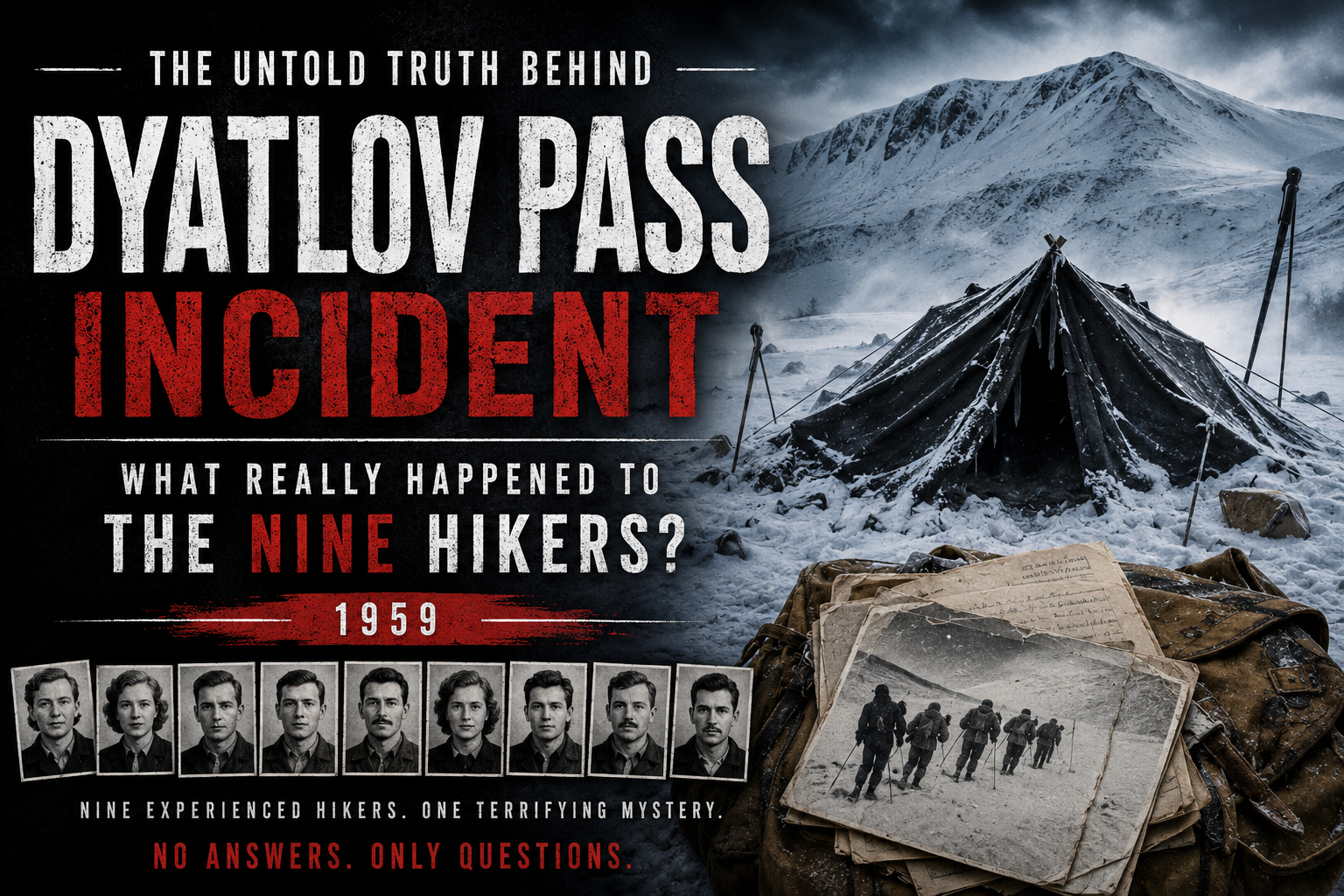
On the night of February 1, 1959, nine experienced Soviet hikers fled their tent in the middle of a freezing Ural Mountains night — without shoes, without coats, in temperatures of minus 30°C. Six died of hypothermia. Three died of injuries so severe that Soviet investigators compared them to a car crash. No explanation has ever been officially confirmed. The Dyatlov Pass Incident remains one of history’s most disturbing unsolved mysteries.
| 📅 Updated: July 2026 | 🕒 20 Min Read | 🏔 Ural Mountains, USSR · 1959 | ⚠ Disturbing Content |
📷 The Dyatlov Pass, Ural Mountains, USSR — February 1959. Nine experienced hikers died here under circumstances that have never been fully explained. Their tent was found cut open from the inside. Their bodies were scattered across the frozen mountainside. Some had injuries consistent with extreme physical force. None had their shoes. (Historical record)
The Dyatlov Pass Incident is one of the most chilling and most studied unsolved mysteries in history. On the night of February 1, 1959, nine young Soviet hikers — experienced, fit, and well-equipped — abandoned their tent in complete darkness, in minus 30°C temperatures, and ran barefoot into the freezing Ural Mountains night. None survived. When searchers found them weeks later, the evidence raised questions that Soviet investigators, Russian authorities, and researchers around the world have been unable to fully answer in over 65 years.
Their tent had been cut open from the inside — meaning they chose to exit through the canvas rather than through the door. Six died of hypothermia. Three died of catastrophic internal injuries — fractured skulls, broken ribs, a missing tongue — injuries so severe that the lead Soviet investigator said they were consistent with being struck by a car at high speed. And yet there were no external wounds. No signs of struggle. No footprints from any other person.
What terrified nine experienced hikers so badly that they chose certain death in a blizzard over staying in their tent? Over 65 years later, we still do not know for certain. This is the complete story of the Dyatlov Pass Incident — every fact, every theory, and every unanswered question.
☰ TABLE OF CONTENTS
- Who Were the Dyatlov Nine? The Hikers
- The Expedition: Route and Plan
- The Last Known Night: February 1, 1959
- The Discovery: What Searchers Found
- The Bodies: Injuries That Defied Explanation
- The Soviet Investigation and Its Verdict
- The Major Theories — Ranked and Explained
- Theory 1: Avalanche or Snow Slab
- Theory 2: Infrasound and Mass Panic
- Theory 3: Soviet Military Weapons Test
- Theory 4: Kholat Syakhl — The Mansi People
- Theory 5: Hypothermia Paradoxical Undressing
- Theory 6: UFOs and the Orange Orbs
- The 2019 and 2021 Russian Investigations
- The Most Disturbing Unanswered Questions
- Why the Dyatlov Pass Incident Still Haunts Us
- Frequently Asked Questions
1. Who Were the Dyatlov Nine? The Hikers Behind the Dyatlov Pass Incident
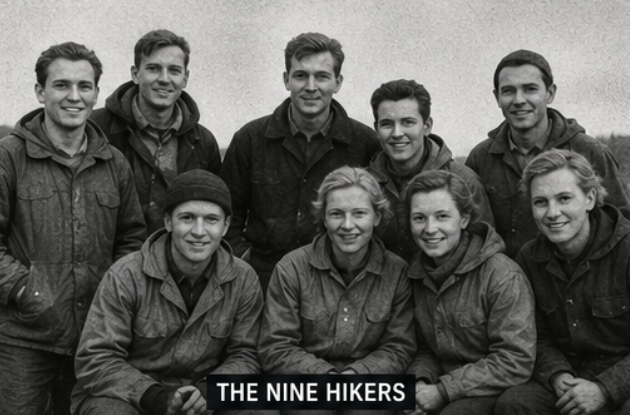
The nine hikers who died in the Dyatlov Pass Incident were not amateurs. They were experienced, physically fit students and graduates of the Ural Polytechnic Institute in Sverdlovsk (now Yekaterinburg), Russia. Most were engineering students in their early twenties. They had completed multiple difficult winter expeditions before this one.
The group was led by Igor Dyatlov, 23, a skilled hiker and radio engineering student after whom the pass would later be named. The other members were Zinaida Kolmogorova, Rustem Slobodin, Yuri Doroshenko, Yuri Krivonischenko, Alexander Zolotaryov — a 37-year-old experienced hiker who had joined the group for this specific trip — Lyudmila Dubinina, 20, Alexander Kolevatov, and Nicolas Thibeaux-Brignollel.
One additional member, Yuri Yudin, had turned back early due to illness — a decision that saved his life and made him the only person who would spend the rest of his days knowing he had walked away from his friends’ final journey. Yudin died in 2013, at age 75, having never stopped trying to find out what happened to them.
■ THE DYATLOV NINE — WHO THEY WERE
► Igor Dyatlov, 23 — Group leader, radio engineering student, experienced hiker
► Zinaida Kolmogorova, 22 — One of two women in the group, engineering student
► Lyudmila Dubinina, 20 — The youngest member; found with her tongue missing
► Rustem Slobodin, 23 — Found with a fractured skull but died of hypothermia
► Yuri Doroshenko, 21 — Found near the cedar tree with Krivonischenko
► Yuri Krivonischenko, 23 — Found with burned hands near a fire
► Alexander Zolotaryov, 37 — Oldest member; had multiple broken ribs
► Nicolas Thibeaux-Brignollel, 23 — Found with catastrophic skull fracture
► Alexander Kolevatov, 24 — Found in the ravine with others
| 9 Hikers — all died |
−30°C Temperature that night |
65+ Years unsolved |
3 Died of catastrophic injuries |
2. The Expedition: The Route That Led to Dyatlov Pass
The Dyatlov Pass expedition was classified as a Category III difficulty hike — the highest level in the Soviet classification system. The group planned to ski across the northern Ural Mountains to reach Mount Otorten, covering approximately 300 kilometers in total. It was a challenging but achievable route for experienced hikers of their level.
The group departed Sverdlovsk by train on January 23, 1959, and reached the last inhabited settlement — a logging village called Vizhai — on January 25. From there, they proceeded into the wilderness. Yuri Yudin turned back on January 28 due to knee pain and joint inflammation. The remaining nine continued into the mountains.
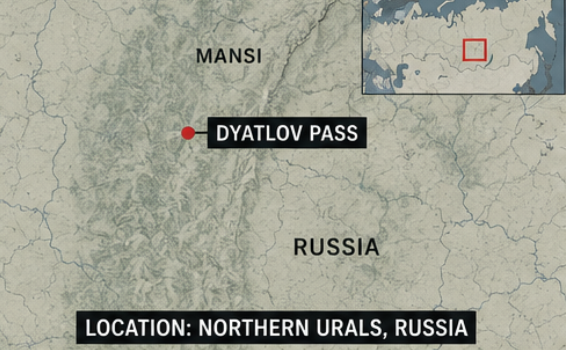
On the evening of February 1, 1959, the group set up camp on the slope of Kholat Syakhl — a mountain whose name in the local Mansi language translates to “Dead Mountain.” This decision has puzzled researchers ever since: there was a forested valley nearby that would have offered far better shelter from the wind. Why camp on an exposed slope? The most common explanation is that the group did not want to lose altitude they had already gained. It was a decision that may have sealed their fate.
“Now we know that snowmen exist. We saw them!!”
— The last entry in the group’s humorous camp newspaper, written on their final evening, February 1, 1959 — the night they all died
3. The Last Known Night: What Happened at Dyatlov Pass on February 1, 1959
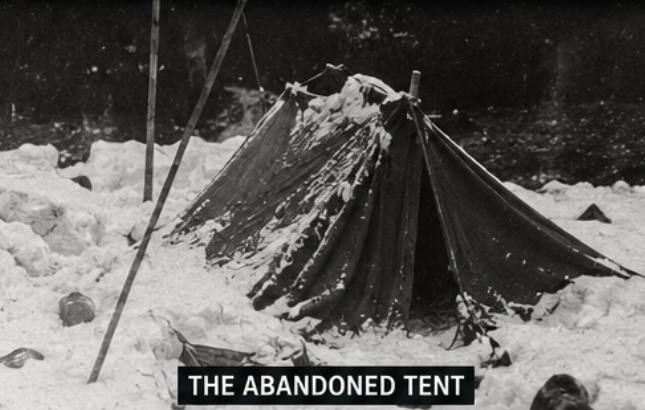
📷 The tent as found by searchers in February 1959 — half-buried in snow, collapsed, and cut open from the inside. The hikers had slashed through the canvas to escape rather than using the entrance. This single detail is the central puzzle of the Dyatlov Pass Incident: what terrified nine experienced hikers so badly that they chose to flee into minus 30°C temperatures without shoes or coats? (Historical record)
What we know about the last night of the Dyatlov Pass Incident comes entirely from physical evidence — because there were no survivors to describe it. The group set up their tent on the slope of Kholat Syakhl around 5 PM on February 1. They ate dinner. Some wrote in their diaries. They wrote a final humorous entry in their camp newspaper. The evidence suggests they then began preparing for sleep.
At some point — probably between 9 PM and midnight — something happened that caused all nine hikers to cut through the tent from the inside and flee onto the mountainside. They left behind all their food, all their equipment, and almost all of their clothing. Several had only one shoe. Some were completely barefoot. They ran downhill, away from the tent, in temperatures that kill exposed humans within minutes.
This detail is the central puzzle of the Dyatlov Pass Incident: whatever happened was so suddenly terrifying that nine experienced, rational, competent hikers chose certain death in a blizzard over whatever was happening inside or near that tent. They did not panic and run individually — they cut through the canvas together and descended together. This was a collective decision, made in seconds, by people who knew exactly what minus 30°C meant for a human body without clothing.
4. The Discovery: What Searchers Found at Dyatlov Pass
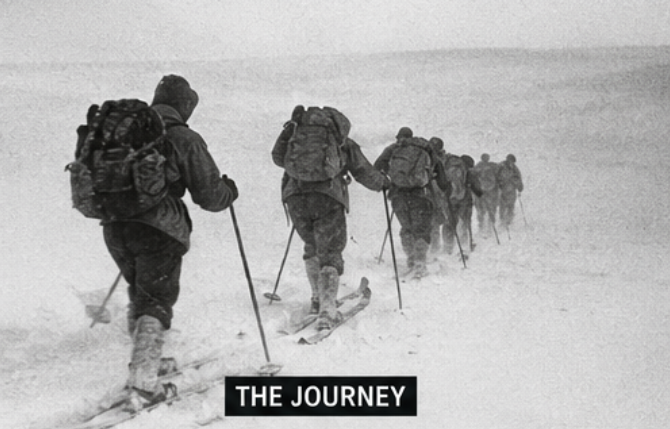
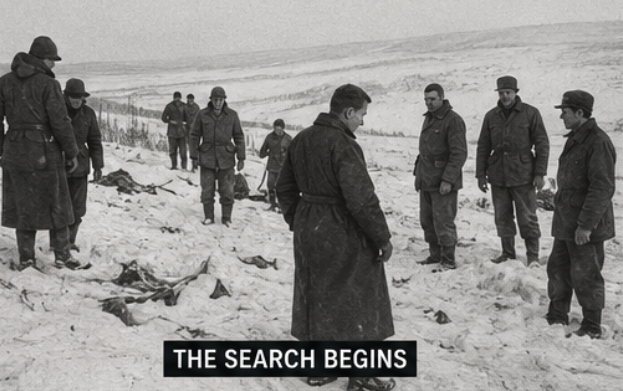
The group was due to return to Vizhai by February 12, 1959. When they failed to arrive, relatives raised the alarm and search parties were dispatched. On February 26, searchers found the tent — collapsed, half-buried in snow, and slashed open from the inside. Inside were all the group’s supplies, their shoes, their coats, and most of their food. The tent had been abandoned in a hurry.
Following footprints in the snow — eight or nine sets, several barefoot — searchers descended toward a cedar tree about 1.5 kilometers from the tent. There they found the first two bodies: Doroshenko and Krivonischenko, lying near the remains of a small fire. Both were barefoot and wearing only underwear. The cedar tree’s upper branches had been broken — as if someone had climbed it to look back toward the tent.
Between the cedar and the tent, three more bodies were found — Igor Dyatlov, Zinaida Kolmogorova, and Rustem Slobodin — each alone, scattered across the slope, as if they had been trying to return to the tent. Their postures suggested they had died while still moving. The remaining four bodies were not found until May — buried under four meters of snow in a ravine 75 meters from the cedar tree.
5. The Bodies: Injuries That Defied Explanation at Dyatlov Pass
📷 The injuries found on four of the Dyatlov Pass victims have never been satisfactorily explained. The force required to cause them without external wounds puzzled Soviet medical examiners in 1959 and continues to baffle forensic experts today. (Historical record)
The first five bodies — Dyatlov, Kolmogorova, Slobodin, Doroshenko, and Krivonischenko — died of hypothermia. Shocking but explicable given they had fled their tent in minus 30°C with no clothing. Slobodin had a hairline skull fracture, but this was not considered the cause of death. The real mystery came when the remaining four bodies were found in May.
The four bodies found in the ravine — Dubinina, Zolotaryov, Thibeaux-Brignollel, and Kolevatov — had catastrophic internal injuries with almost no corresponding external wounds:
■ THE MOST DISTURBING INJURIES — DYATLOV PASS AUTOPSY FINDINGS
► Nicolas Thibeaux-Brignollel — Catastrophic skull fracture. Brain damage. No external head wounds.
► Alexander Zolotaryov — Multiple broken ribs on the right side. No external bruising.
► Lyudmila Dubinina — Bilateral rib fractures. Tongue, eyes, and lips missing. No external chest wounds.
► Alexander Kolevatov — Severe neck deformity suggesting trauma. No external wounds.
► Soviet forensic examiner stated the force required was “equal to that of a car crash” — yet no external injuries
► Some clothing showed elevated radiation levels when tested months later
► Some bodies had orange or grey skin discoloration noted at the time of discovery
► Krivonischenko and Doroshenko had burned hands despite the fire being small
The missing tongue of Lyudmila Dubinina deserves special attention because it has driven decades of speculation. The official Soviet explanation was that natural decomposition in the water of the ravine caused soft tissue loss. Critics point out that other soft tissues were largely intact. The mystery of the missing tongue remains one of the most discussed details of the entire Dyatlov Pass Incident.
“The force that caused these injuries was greater than any human could exert. It is comparable to the force of a car accident at high speed. And yet there were no external wounds.”
— Boris Vozrozhdenny, Soviet forensic medical examiner who performed the autopsies, 1959
6. The Soviet Investigation and Its Deeply Unsatisfying Verdict
The Soviet investigation into the Dyatlov Pass Incident was led by investigator Lev Ivanov and lasted several months in 1959. The investigation gathered extensive physical evidence, conducted autopsies, interviewed witnesses, and examined the scene repeatedly. Its final conclusion was one of the most cryptic official verdicts in criminal history:
The hikers had died as a result of “an unknown compelling force.” No criminal charges were laid. The case was classified. The files were sealed by Soviet authorities and not made publicly available for decades.
Lev Ivanov himself, in an interview shortly before his death in the 1990s, admitted that he had been pressured to close the case quickly and had never been satisfied with the conclusion. He said he believed the evidence pointed toward some form of phenomenon that Soviet authorities were unwilling to acknowledge publicly — potentially related to military activity in the area, or something else entirely.
7. The Major Dyatlov Pass Theories — Every Explanation Examined
Over 65 years, the Dyatlov Pass Incident has generated more theories than almost any other unsolved mystery in modern history. Some are scientifically grounded. Some are speculative. Some are extraordinary. Here is every major theory — what evidence supports it, and what evidence argues against it.
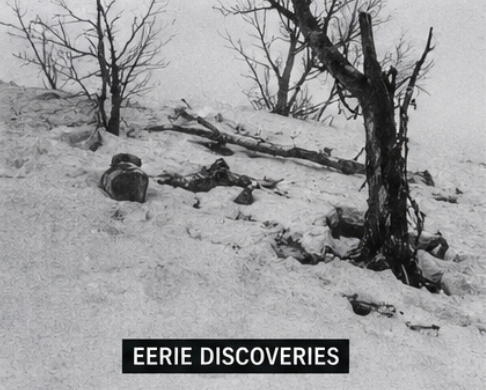
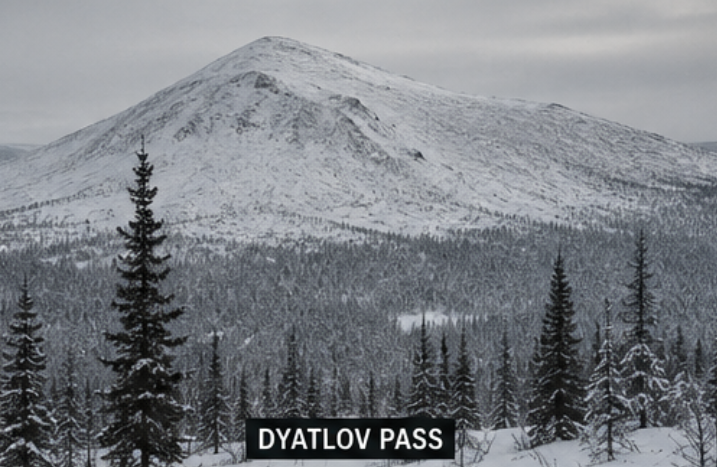
📷 The Dyatlov Pass in the Ural Mountains as it appears today. The mountain where the hikers died is called Kholat Syakhl — which translates from the local Mansi language as “Dead Mountain.” The pass itself was renamed after the expedition’s leader Igor Dyatlov. (Historical record)
8. Theory 1: Avalanche or Snow Slab — The Most Scientifically Supported Dyatlov Pass Theory
The avalanche theory is the explanation most favored by scientific researchers studying the Dyatlov Pass Incident. The 2021 Russian government investigation officially concluded that a small snow slab avalanche — a specific type where a flat slab of compacted snow breaks free and slides — was the most likely cause of the disaster.
How it could work: The group dug into the slope to create a platform for their tent. This excavation may have destabilized the snow above. In the night, a snow slab broke loose and struck the tent. The hikers, partially buried and unable to exit through the blocked entrance, cut the tent open from the inside. The injuries — broken ribs and skull fractures without external wounds — are consistent with being struck and compressed by a heavy snow slab. Disoriented, buried, and terrified, they fled downhill.
Problems with this theory: The original Soviet investigators noted no evidence of an avalanche — no displaced snow, no avalanche debris field. The slope angle (approximately 20–23 degrees) is generally considered below the threshold for most avalanches. The footprints leading away from the tent were described as calm and orderly — not the chaotic scramble you would expect from avalanche survivors. And why would experienced mountaineers camp on an avalanche-prone slope in the first place?
9. Theory 2: Infrasound and Mass Panic — The Science of Terror at Dyatlov Pass
The infrasound theory is one of the most scientifically interesting explanations for the Dyatlov Pass Incident. Infrasound — sound waves below the threshold of human hearing (below 20 Hz) — has been shown in laboratory studies to cause severe psychological effects: overwhelming feelings of dread, panic, disorientation, and even visual hallucinations.
Infrasound can be generated naturally by certain wind conditions over mountain ridges and valleys. The Kholat Syakhl slope has a shape that, under specific wind conditions, could theoretically generate infrasound. Under this theory, the hikers were subjected to a sudden burst of infrasound that caused overwhelming, irrational panic — triggering their flight from the tent even though no external physical danger existed.
Problems with this theory: The infrasound effect on humans is less dramatic in real-world conditions than laboratory studies suggest. It has never been documented as causing anything close to mass evacuation of a tent. And it does not explain the catastrophic physical injuries found on the ravine bodies.
10. Theory 3: Soviet Military Weapons Test — The Most Sinister Dyatlov Pass Theory
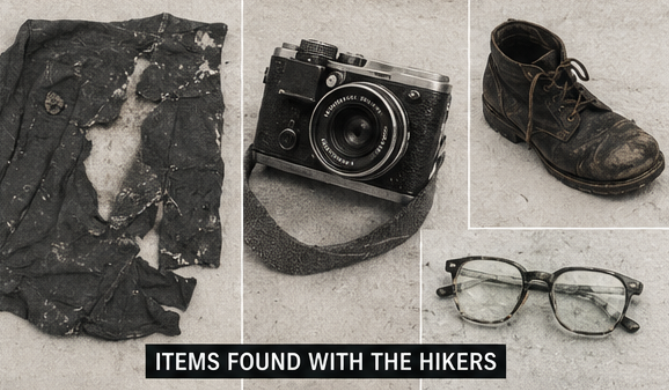
The military weapons test theory is the darkest explanation for the Dyatlov Pass Incident and the one that best explains why the Soviet government was so eager to close the case quickly and classify the files. The Northern Ural region in 1959 was an active area for Soviet military testing — rocket launches, parachute mine tests, and classified weapons experiments were all documented in the region.
Multiple witnesses in villages near the Dyatlov Pass region reported seeing glowing orange spheres in the sky on the night of February 1, 1959, and in the weeks before and after. These reports came from military personnel, weather station operators, and ordinary villagers — credible witnesses with nothing to gain from false reports.
Under this theory, the hikers witnessed a secret military test — possibly an accidental weapon or rocket impact near or on their campsite. The injuries consistent with a pressure wave, the radiation found on some clothing, the orange discoloration of some bodies, and the rapid Soviet decision to classify the investigation all support this explanation. And it would explain why Soviet authorities never wanted the full truth to come out.
■ EVIDENCE SUPPORTING THE MILITARY THEORY
► Multiple credible witnesses reported glowing orange spheres in the sky that night and surrounding weeks
► Some clothing tested showed elevated radiation levels months after the deaths
► Internal injuries consistent with a pressure wave or explosive blast without external wounds
► Soviet investigators were pressured to close the case quickly — Ivanov confirmed this before his death
► The area was documented as a Soviet military testing zone in 1959
► Case files were classified for decades — unusual for a simple hiking accident
► Orange/grey skin discoloration on some bodies — consistent with certain types of blast or radiation exposure
11. Theory 4: The Mansi People and Kholat Syakhl — “Dead Mountain”
The Mansi people are an indigenous group who have inhabited the northern Ural region for centuries. The mountain the hikers died on — Kholat Syakhl — is named in the Mansi language, and the name translates as “Dead Mountain” or “Mountain of the Dead.” According to some versions of Mansi tradition, the mountain was considered sacred or forbidden ground.
Early in the Soviet investigation, Mansi men were briefly detained as suspects. They were released without charge — investigators found no evidence of Mansi involvement, and the Mansi people themselves were cooperative with the search. The theory that the hikers were attacked by Mansi tribesmen has been largely discredited: the footprint evidence showed no additional people near the tent, and the injuries were inconsistent with human attack.
What the Mansi connection does add to the Dyatlov Pass mystery is the intriguing question: why was this particular mountain called “Dead Mountain” by a people who had lived in the region for centuries? Did they know something about this location that the hikers did not?
12. Theory 5: Paradoxical Undressing — The Hypothermia Explanation
One of the more scientifically grounded explanations for some of the Dyatlov Pass evidence involves a well-documented hypothermia phenomenon called “paradoxical undressing.” In advanced stages of hypothermia, the brain malfunctions in a specific way that causes the dying person to feel intensely, paradoxically hot — and to remove their clothing in response.
This explains why some bodies were found with less clothing than they should have had — particularly the bodies near the cedar tree, who were found in underwear. It also explains why pieces of clothing from the better-dressed ravine bodies were found on the underwear-clad bodies near the cedar — the less-clothed hikers were still alive longer than their companions and shared or removed clothing from those who had already died.
What paradoxical undressing does NOT explain: The catastrophic internal injuries without external wounds. The missing tongue. The elevated radiation. The orange spheres. The initial flight from the tent. It explains some of the physical evidence — but not the most disturbing aspects of the Dyatlov Pass Incident.
13. Theory 6: The Orange Orbs — UFO and Unknown Phenomenon Theories
The orange orbs — glowing spherical lights reported by multiple credible witnesses in the sky above the Ural Mountains in early 1959 — are one of the most difficult aspects of the Dyatlov Pass Incident to explain away. These reports came from weather station personnel conducting routine observations, military personnel on duty, and ordinary villagers — spread across a large geographic area and timeframe.
The Soviet investigator Lev Ivanov, in his later-life interviews, said he believed the orange orbs were real phenomena and were connected to the deaths — and that he had been pressured by Soviet authorities to omit any reference to them from his official report. Whether the orbs were Soviet military rockets (the most mundane explanation), some other atmospheric phenomenon, or something more exotic remains unknown.
The UFO/extraterrestrial theory has captured the popular imagination precisely because the combination of unexplained injuries, radiation, missing organs, orange lights, and government secrecy maps almost perfectly onto the classic structure of alien encounter reports. Most serious researchers consider the Soviet military explanation more likely — but acknowledge that no one has definitively proven what the orange orbs were.
“I believed then and believe now that the fireballs were directly connected to the deaths of the hikers. I was ordered to close the case and classify the findings.”
— Lev Ivanov, Soviet lead investigator of the Dyatlov Pass Incident, interview shortly before his death in the 1990s
14. The 2019 and 2021 Russian Investigations: Did They Solve the Dyatlov Pass Incident?
In 2019, Russian prosecutors reopened the Dyatlov Pass Incident investigation for the first time since 1959. In July 2020, they announced their official conclusion: a snow avalanche was the most likely cause. In 2021, a scientific study published in the journal Communications Earth & Environment used snow simulation models to support the theory that a small delayed snow slab could have struck the tent and caused the internal injuries found on the ravine bodies.
The study was conducted by researchers at the Swiss Federal Institute of Technology and was generally well-received in the scientific community as the most rigorous technical analysis of the Dyatlov Pass mystery ever conducted. It demonstrated, through computer modeling, that a small delayed slab avalanche — triggered by the hikers’ digging — could theoretically have produced exactly the pattern of injuries found.
However, the mystery is not fully solved. The avalanche theory still struggles to explain the elevated radiation on some clothing, the missing tongue and eyes, the orange lights witnessed by multiple credible observers, and why original Soviet investigators found no evidence of an avalanche at the site. Most researchers now consider the avalanche theory the most probable — but many continue to argue that key questions about the Dyatlov Pass Incident remain completely unanswered.
15. The Most Disturbing Unanswered Questions About Dyatlov Pass
16. Why the Dyatlov Pass Incident Still Haunts Us After 65 Years
The Dyatlov Pass Incident endures as one of history’s most compelling mysteries for a very specific reason: it combines elements that genuinely resist easy explanation, even after 65 years of investigation by some of the world’s best researchers. Every proposed solution explains some evidence but struggles with other evidence. There is no clean, complete answer — and there may never be one.
But there is something deeper that makes this case impossible to forget. The nine people who died on Kholat Syakhl were not in a war zone. They were not taking a risk any experienced hiker would consider unusual. They were nine young people doing exactly what millions of hikers do every year — camping in a mountain wilderness, eating dinner, writing in their journals, making jokes in their camp newspaper. They were safe. And then something happened.
That something — whatever it was — was terrifying enough that nine rational, experienced, competent people chose to die in a blizzard rather than face it. The Dyatlov Pass Incident is a reminder that the world still contains things we do not understand. And that is why, more than six decades later, we cannot stop trying to find out what happened on that frozen mountain slope.
17. Frequently Asked Questions About the Dyatlov Pass Incident
❓ What is the Dyatlov Pass Incident?
The Dyatlov Pass Incident refers to the mysterious deaths of nine Soviet hikers in the Ural Mountains of Russia on the night of February 1, 1959. The group, led by Igor Dyatlov, were experienced hikers from the Ural Polytechnic Institute. Their tent was found cut open from the inside, and their bodies were found scattered across the mountainside with injuries ranging from hypothermia to catastrophic internal trauma with no external wounds. The case was closed by Soviet investigators with the conclusion that the hikers died due to an “unknown compelling force” and has never been fully explained.
❓ What is the most likely explanation for the Dyatlov Pass Incident?
The current scientific consensus, supported by a 2021 study in Communications Earth & Environment and the 2019 Russian government reinvestigation, is that a small delayed snow slab avalanche is the most likely explanation. The theory holds that the hikers’ digging destabilized the slope, a snow slab struck the tent at night, the hikers cut through the canvas to escape, and the catastrophic internal injuries were caused by being struck and compressed by the slab. However, this theory still struggles to explain all the evidence, including the elevated radiation, missing tongue, and reported orange lights.
❓ Why was Lyudmila Dubinina’s tongue missing at Dyatlov Pass?
The official Soviet explanation was that natural decomposition in the stream water where Dubinina’s body was found caused the soft tissue loss of her tongue, eyes, and lips. Critics of this explanation point out that other soft tissues on her body and on nearby bodies were largely intact. The missing tongue remains one of the most discussed and least satisfactorily explained details of the Dyatlov Pass Incident. Some researchers suggest animal predation; others point to the injury pattern as evidence of something more violent.
❓ What were the orange orbs seen near Dyatlov Pass in 1959?
Multiple credible witnesses — including weather station personnel, military observers, and ordinary villagers — reported seeing glowing orange spherical lights in the sky above the Ural Mountains in early 1959, including on the night of February 1. The most widely accepted explanation is that they were Soviet military rocket launches from nearby testing facilities. Some researchers connect them to the deaths directly. Soviet investigator Lev Ivanov stated before his death that he believed the fireballs were connected to the deaths and that he was ordered to omit them from his official report.
❓ Was the Dyatlov Pass Incident ever officially solved?
No. The Soviet investigation in 1959 concluded only that the hikers died due to an “unknown compelling force” and was closed and classified. A 2019 Russian government reinvestigation concluded that an avalanche was the most likely cause, and a 2021 scientific study provided computer modeling supporting this theory. However, many researchers argue that the avalanche theory fails to explain all the evidence — particularly the elevated radiation, the missing soft tissue, the reported glowing orbs, and why original Soviet investigators found no evidence of an avalanche at the scene.
❓ What does Kholat Syakhl mean and why is it significant?
Kholat Syakhl is the Mansi language name for the mountain where the Dyatlov Pass Incident occurred. It translates as “Dead Mountain” or “Mountain of the Dead.” The Mansi are an indigenous people who have inhabited the northern Ural region for centuries. The name suggests the mountain may have had a dark reputation among the Mansi long before 1959, though the specific reason for the name is not fully documented. The pass itself was renamed Dyatlov Pass after the tragedy.
❓ Where can I learn more about the Dyatlov Pass Incident?
Donnie Eichar’s Dead Mountain: The Untold True Story of the Dyatlov Pass Incident (2013) is the most comprehensive English-language account. Keith McCloskey’s Mountain of the Dead (2013) offers detailed forensic analysis. The Dyatlov Pass Foundation (dyatlovpass.com) maintains the most comprehensive archive of original documents, photographs, and research in both Russian and English. The 2021 scientific study by Gaume and Puzrin in Communications Earth & Environment is available open-access and is the most rigorous technical analysis. Netflix’s documentary series about the case is also a good starting point for general audiences.
▪ RELATED DARK HISTORY & UNSOLVED MYSTERY ARTICLES
→ Jonestown Massacre: How Jim Jones Killed 918 People in One Day (1978)
→ King Leopold II’s Congo Free State: The Forgotten Genocide
→ Project MKUltra: The CIA’s Secret Mind Control Program (1953–1973)
→ The Voynich Manuscript: The Book Nobody Can Read
→ D.B. Cooper: The Only Unsolved Hijacking in American History
▤ SOURCES & FURTHER READING
▸ Donnie Eichar — Dead Mountain: The Untold True Story of the Dyatlov Pass Incident (Chronicle Books, 2013)
▸ Keith McCloskey — Mountain of the Dead: The Dyatlov Pass Incident (The History Press, 2013)
▸ Johan Gaume & Alexander Puzrin — Mechanisms of slab avalanche release and impact, Communications Earth & Environment (2021)
▸ Dyatlov Pass Foundation — dyatlovpass.com (comprehensive archive of original documents and photographs)
▸ Russian Prosecutor General’s Office — Reinvestigation findings (2019–2020)
▸ Lev Ivanov interviews — Ural Worker newspaper (1990)
▸ Netflix — Dead Mountain: The Dyatlov Pass Incident (Documentary series)