Introduction: The Man Behind the Public Persona
Public figures are often judged by their loudest moments—fiery speeches, political scandals, or monumental victories. However, real understanding doesn’t come from a podium; it stems from the silence of childhood rooms, ancestral habits, and the emotional atmosphere a person breathes before they ever learn to perform for the masses. Imran Khan is globally recognized as a legendary cricketer, a populist politician, and a polarizing leader. Yet, long before the world knew him, he was being meticulously shaped by a specific family structure, a rigid cultural code, and a high-status social class. His unwavering confidence, characteristic rigidity, and refusal to retreat did not appear overnight. They were built brick by brick at home through high expectations and personal loss. Exploring the Imran Khan family background is not just about history; it is about decoding the DNA of his identity.
1. Ancestral Lineage: The Pashtun Spirit of the Niazi Tribe
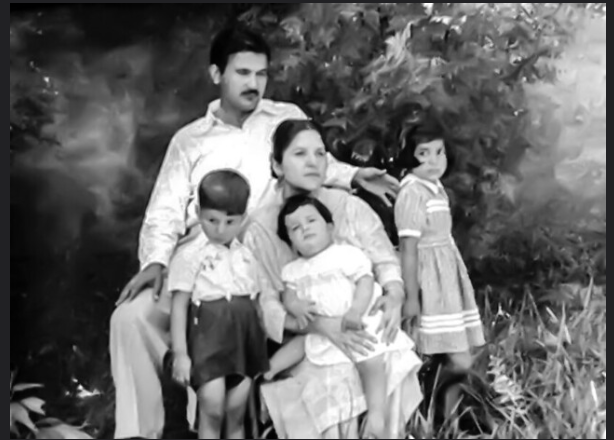
The foundation of Imran Khan’s personality lies in his Niazi Pashtun heritage. The Niazi tribe, historically settled in the Mianwali region, is known for its fierce independence. In Pashtun culture, “Honor” (Ghairat) and “Resistance” are not just words; they are the pillars of existence. This tribal identity carries a heavy sense of self-worth where submission is often equated with moral death. Even though Khan grew up in the urban setting of Lahore, the “Mianwali spirit” remained a dominant force in his upbringing. This explains why he views political compromise not as a strategic necessity, but often as a betrayal of one’s dignity. His stubbornness in the face of adversity is a direct inheritance from a lineage that historically preferred struggle over surrender.
2. The Grandfather’s Shadow: A Legacy of Anti-Colonialism
To truly understand the Imran Khan family background, one must look at the generation of his grandfathers. Living through the peak of British colonial rule and the traumatic upheaval of the 1947 Partition, this generation developed a deep-rooted distrust of foreign imposition. In the Khan household, this translated into an emphasis on self-reliance and internal strength. Complaining was seen as a sign of weakness, and dependence on others was strictly frowned upon. This environment produced a family culture where children were expected to grow strong rather than expressive. This early conditioning is likely why Khan, even when surrounded by millions of followers, often appears as a solitary figure who relies solely on his internal compass.
3. The Silent Influence of Matriarchal Endurance
While history books often focus on the men, the women in Imran Khan’s family provided the emotional scaffolding for his life. In traditional South Asian elite homes, grandmothers and aunts often regulate the emotional climate. They normalize patience (Sabr) and teach endurance without the need for grand speeches. From them, Khan learned that pain is a private matter and true strength is quiet. This reflects in his public life today; even in moments of extreme political humiliation or physical injury, he rarely displays vulnerability. His emotional control is a byproduct of a household that valued stoicism over outward displays of emotion.
4. Ikramullah Khan Niazi: A Father’s Discipline
His father, Ikramullah Khan Niazi, was a highly educated civil engineer. Unlike the populist son he raised, Ikramullah was a man of structure and professional discipline. He was not one for flashy displays or political ambitions. In such a household, parental approval isn’t handed out easily—it is earned through achievement. For a young Imran, this meant that excuses were never an option. This relationship shaped his “Type A” personality—the intense drive for success and the deep-seated discomfort with failure. He didn’t just play to participate; he played to win, largely because his domestic environment equated worth with excellence.
5. Shaukat Khanum: The Heart and the Turning Point
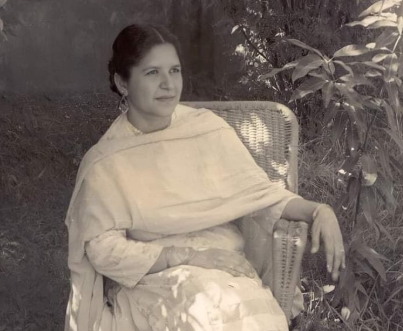
If his father provided the “structure,” his mother, Shaukat Khanum, provided the “soul.” She was the emotional anchor of his life—gentle, deeply religious, and compassionate. Her influence is the reason Khan’s politics often feel like a mix of moral outrage and spiritual appeal. The most pivotal moment in the Imran Khan family background was her battle with cancer. Her suffering and eventual death transformed Imran from a glamorous sports star into a philanthropist. The Shaukat Khanum Memorial Hospital was not a calculated political move; it was grief transformed into a mission. This loss hardened his resolve but also gave him a sense of purpose that transcended the cricket field.
6. The Unique Dynamics of Being the Only Son
Growing up with four sisters (Rubina, Aleema, Uzma, and Rani), Imran Khan occupied a unique psychological space as the only male child. In many Pakistani families, the only son is a focal point of both immense privilege and immense pressure. He was protected by his sisters but also carried the weight of the family’s future expectations. This duality created a man who is comfortable being the center of attention but is also used to standing alone. This “only son” syndrome often results in a leadership style that is more visionary and less collaborative—he is used to being the one everyone looks toward for a solution.
7. Elite Education: Aitchison and Oxford

The Imran Khan family background is also defined by its upper-middle-class privilege. Attending Aitchison College in Lahore and later Oxford University provided him with a global lens. He wasn’t just a local boy; he was a global citizen who could debate with the British elite as an equal. This education gave him the “intellectual arrogance” needed to challenge the status quo in Pakistan. However, it also created a gap between him and the grassroots political reality of the country, a gap he spent decades trying to bridge through his “dharnas” and mass rallies.
8. Financial Integrity and Moral Judgement
Unlike many politicians who rose from poverty and used politics for wealth accumulation, Khan came from a background where basic needs were always met. His anger toward corruption doesn’t come from personal deprivation, but from a place of moral judgment. Because his family raised him with a sense of “aristocratic dignity,” he views financial corruption as a “low” act. This ethical grounding makes him appear “clean” to his supporters but “inflexible” to his political opponents who operate on pragmatism rather than pure morality.
9. Early Competitive Patterns
The competitive streak that defined his cricket career was visible in his childhood. Whether it was sports or academics, the Khan household was one where “coming second” wasn’t celebrated. This early emotional pattern developed into a lifelong obsession with being the best. When he entered politics, he didn’t see it as a game of compromise; he saw it as a match to be won. His inability to accept what he perceives as a “rigged” defeat stems from this childhood belief that merit should always result in victory.
10. The Synthesis of Faith and Identity
In his later years, the influence of his family’s religious roots became more prominent. While he lived a very Westernized life in his youth, the “Sufi” and “Islamic” values of his mother’s side eventually took over. The Imran Khan family background provided him with a circular journey—from the tribal roots of Mianwali to the elite halls of Oxford, and finally back to a spiritual identity. This synthesis is what makes him a unique figure in Pakistani history: a man who can speak to the West but whose heart is firmly rooted in the traditions of his home.
Conclusion: Why the Family Background Matters
Imran Khan’s journey was not a series of random events. It was the natural progression of a man built by a specific heritage. His family gave him the strength to stand against the tide, but also the rigidity that makes him a difficult ally. They gave him the compassion to build hospitals, but also the certainty that he is always on the right side of history. To understand the leader he is today, we must look at the boy he was—a Niazi, a son, and a brother.
References
Dawn News – Imran Khan Profile
https://www.dawn.com/news/687806/imran-khan
Encyclopaedia Britannica – Imran Khan Biography
https://www.britannica.com/biography/Imran-Khan
University of Oxford – Famous Oxonians
https://www.ox.ac.uk/about/oxford-people/famous-oxonians
Aitchison College Lahore – Notable Alumni
https://www.aitchison.edu.pk/alumni/famous-aitchisonians
Public interviews, political biographies, and memoirs related to Imran Khan available in trusted media archives.
If you want to learn more about the life of Allama Iqbal, his poetry, and his vision for Pakistan, you can read the full article here:
https://hiddentruths.blog/allama-iqbal-the-poet-who-dreamed-a-nation/